Follow Us on Google

From Adanna Nnamani, Abuja and Henry Uche
The race to recapitalisation in Nigeria’s insurance sector has reached fever pitch.
With the July 31, 2026 deadline on the horizon, a quiet but firm power play is obvious as 58 insurers race to meet sharply higher capital requirements under the Nigerian Insurance Industry Reform Act (NIIRA) 2025.
While sources suggest about 17 to 21 firms have already met the new thresholds based on full-year 2024 accounts, and eight others have announced recapitalisation plans worth roughly N132 billion, the final picture remains uncertain.
The National Insurance Commission (NAICOM) has not released an official list of compliant operators.
To close the gap, NAICOM has engaged KPMG, Deloitte, EY and PwC to independently verify insurers’ capital positions, with the exercise expected to run through June 2026. NAICOM Commissioner, Olusegun Omosehin, has stressed that no firm will be deemed compliant until the audit process is concluded.
The reform law, signed by President Bola Ahmed Tinubu on July 31, 2025, repealed five legacy statutes and raised minimum capital thresholds to N10 billion for life insurers, N15 billion for non-life, N25 billion for composite firms and N35 billion for reinsurers. It also grants NAICOM powers to impose higher capital buffers based on risk profiles and gives composite insurers five years to separate their businesses.
With recapitalisation plans already submitted and key verification processes ongoing, the industry now awaits a definitive regulatory verdict on which operators will survive the new capital era.
Nonetheless, insurance brokers, whose core mandate is to protect client interests, are increasingly hesitant to place large risks with smaller insurers whose capital strength and recapitalisation pathways remain uncertain.
The concern, analysts note, is largely rooted in counterparty risk, as no intermediary wants exposure to an insurer that may struggle to meet regulatory thresholds or withstand future claims obligations.
The caution is steadily redirecting corporate clients toward large-cap insurers perceived to be more financially resilient and better positioned for the new capital regime.
Industry operators note that the shift became more visible during the 2026 renewal season, with leading insurers capturing a larger share of policies that were once widely dispersed across the market.
The trend reflects a rational flight to safety, as brokers and clients prioritise certainty in an environment of regulatory tightening.
More so, Nigeria’s insurance sector has a history of collapse triggered by weak capital buffers, leaving policyholders stranded and trust badly damaged.
The current recapitalisation drive is aimed at closing those gaps and preventing a repeat of past failures.
Large insurers with access to capital markets, strong shareholder backing and diversified portfolios are better positioned to comply and may even expand their market share in the process.
For these firms, recapitalisation is not just a regulatory obligation but a strategic opening to strengthen and consolidate their dominance.
Journey so far
Operators are scrambling to raise capital ranging from N10 billion for life insurers to N35 billion for reinsurers. While the industry broadly welcomes the reform, the key issue is no longer whether firms will meet the regulatory thresholds, most are expected to do so through rights issues, private placements, or mergers and acquisitions.
SUNU Assurances Nigeria Plc has secured approval to raise N9.34 billion through a rights issue, while Lasaco Assurance Plc has obtained formal commitment letters from shareholders to support its capital drive. Linkage Assurance Plc is also in the market with a rights issue of 12.3 billion ordinary shares, and Guinea Insurance plans to issue 5.3 billion shares to strengthen its capital base. Universal Insurance has received shareholder approval for a N15 billion raise through a mix of instruments. Market intelligence further indicates that Heirs Insurance Group has already met the N25 billion threshold for its category.
Amid these moves, industry watchers note a growing wave of Tier-1 and Tier-2 consolidation discussions, as smaller operators increasingly acknowledge that organic growth alone may be insufficient to meet the new capital requirements.
These capital raises are largely mechanical in nature, existing shareholders are diluting equity through rights issues, institutional investors are providing placement support, and firms are focused on regulatory documentation and treasury processes to meet compliance timelines. However, what is largely missing from public disclosures is a clear articulation of how these enlarged capital bases will be deployed, whether toward market expansion, distribution network strengthening, technology investment, or trust-building initiatives that could address Nigeria’s deep structural penetration challenges.
At the same time, consolidation discussions are gaining momentum among smaller operators, who increasingly acknowledge that organic capital generation alone is unlikely to meet the new thresholds before the deadline. This shift points to a likely industry rationalisation, as Nigeria’s roughly 60 licensed insurers and reinsurers appear excessive for a market of about $1 billion in premiums. A consolidation to 30–40 stronger institutions could improve scale efficiencies, reduce regulatory strain, and enhance competitive resilience.
However, consolidation only delivers meaningful gains when it is backed by disciplined integration, cultural alignment, and a coherent strategic vision. Experience from Nigeria’s banking sector shows that merging weak institutions without real operational transformation often results in larger but still structurally weak entities.
As the industry regulator, NAICOM has reiterated strict compliance with laws and guidelines to maintain market integrity and consumer confidence. Through proactive supervision and sound regulatory frameworks, it has averred to protect policyholders and promote sustainable industry growth.
Regulatory action
First, NAICOM had already established recapitalisation Framework and Committee to oversee and coordinate the recapitalisation process. The Committee was to issue guidelines and circulars as well as monitor compliance across the industry.
Following above, insurers were required to mandatorily submit detailed recapitalisation plans by Sept 30, 2025.
Also, within the last 10 months, the regulator has issued a guideline on eligible capital and verification rules. This is even as the ongoing monitoring and regulatory engagement remains in top gear.
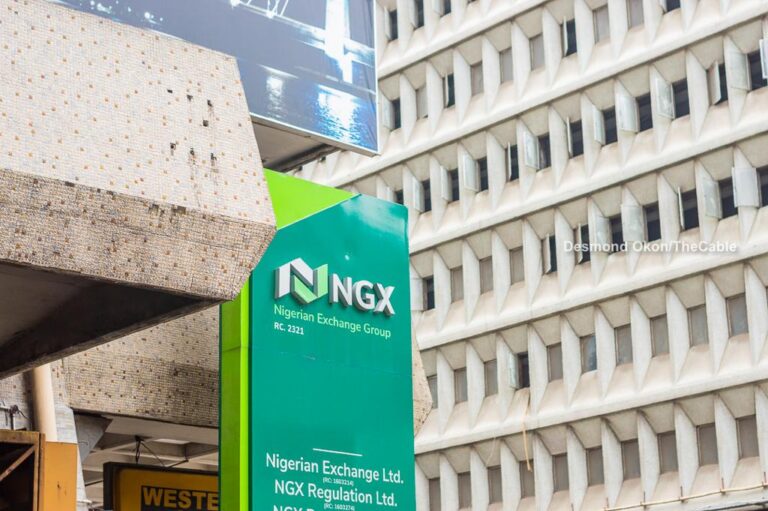
NAICOM has collaborated with the Security and Exchange Commission (SEC), Corporate Affairs Commission (CAC), Nigerian Exchange (NGX). The aim is to facilitate capital raising and reduce compliance bottleneck.
Despite calls from some quarters for an extension, NAICOM has repeatedly maintained that the July 31 deadline is sacrosanct. The Commission has warned that non-compliant firms could face deregistration, forced mergers or acquisitions, or outright liquidation. This firm stance has continued to fuel debate among industry watchers and analysts.
Other News
Firms that meet the stipulated requirements will be issued new operating licences, effectively resetting the market and ensuring that only financially sound insurers remain in operation.
Likely frontrunners in meeting capital requirements
An industry analyst who spoke anonymously said some leading insurers, including Leadway Assurance, AIICO Insurance and AXA Mansard Insurance, are well positioned to scale through the recapitalisation exercise. Explaining his confidence, he noted: “By their history we shall know them. They have strong capital buffers, solid underwriting performance and access to institutional investors.”
Without naming specific firms, he added that companies backed by foreign parents or strong group structures also have a clear advantage, as they can draw on additional capital injections, supported by robust governance frameworks and global risk management systems.
He further identified another category of players described as “aggressive capital raisers,” noting that these firms typically rely on rights issues, private placements and retained earnings to meet regulatory requirements and strengthen their balance sheets.
In essence, this is a good decision to remain in business. To this group, they believe ‘in extreme cases, extreme measures are taken’, in order words, hard times call for hard decisions.
Just last week, Sovereign Trust Insurance Plc completed the structuring phase of its planned N5 billion Rights Issue capital raise, marking a key milestone ahead of its recapitalisation plan in line with NIIRA 2025. The Underwriting Firm disclosed this at the signing ceremony of all related parties to the Rights Issue at its Corporate Head Office in Lagos.
At the signing ceremony, the company signalled the effective conclusion of all internal processes and professional engagements required for the Rights Issue.
With the structuring phase concluded, the shareholders of Sovereign Trust Insurance Plc now have the opportunity to pick up their rights totaling 2,510,848,144 units, (two billion, five hundred and ten million, eight hundred and forty-eight thousand, one hundred and forty-four units) ordinary shares of 50 kobo each at N2.00 per share on the basis of 3 new ordinary shares.
The management enjoined all shareholders of the company to take advantage of the unique opportunity by maximally taking up their rights in the Rights Issue with a view to increasing their stake in the company and as well grow their wealth in the very near future as the company is poised to moving on to the next phase of its growth stage as NIIRA signals a new direction for the insurance industry in the country.
Dr. Lucas Durojaiye, Managing Director/Chief Executive Officer of Sovereign Trust Insurance Plc, revealed that the Management of the company has set a growth agenda, aimed at positioning Sovereign Trust Insurance as one of the top five in the insurance industry in Nigeria.
The Managing Director’s appeal to shareholders of the company was unequivocal. “In achieving this aspiration, we have identified that a very robust capital base is critical to the success of the set agenda; hence the need to call on our Shareholders to fully exercise their rights by subscribing fully to the Rights Issue and ultimately grow their investments in the company”.
Similarly, Guinea Insurance Plc recently signed its Rights Issue, comprising 5,295,200,000 ordinary shares of 50 kobo each at N1.10 per share on the basis of two new shares for every three existing shares held.
According to the company, the drive was a strategic move to see expansion and long-term value. The Board Chairman, Mr. Temitope Borishade had expressed optimism about the offer, noting that it represents a major step in the company’s long-term vision of scaling up operations, driving innovation, and delivering greater value to shareholders.
The Managing Director, Mr. Ademola Abidogun had earlier highlighted that the capital raise was not merely about compliance with regulatory capital requirements, but it is fundamentally about building a stronger platform for growth, innovation, and long-term value creation. He further highlighted the impact of the capital raise to the company.
He explained that the transaction represents a strategic step towards building a stronger company that is better capitalised, more competitive, more innovative, and better positioned to deliver value to its shareholders and protection to its customers.
“The additional capital will strengthen Guinea Insurance’s financial stability and regulatory compliance, expand underwriting capacity across key sectors of the Nigerian economy, support investments in technology and operational efficiency, and enable greater expansion into the underpenetrated retail and SME insurance markets to drive growth and financial inclusion”
While reaffirming its resolve to make insurance a viable sector, NAICOM Chief, Mr. Olusegun Ayo Omosehin, has advised players to stick to a specific market and remain a specialist therein to underwrite profitably and meet statutory obligations.
Hope for weaker insurers
At a recent forum of insurance industry leaders in Lagos, the regulator reassured stakeholders that no licensed insurer will be allowed to collapse as the July 31, 2026 recapitalisation deadline approaches.
NAICOM Commissioner Olusegun Omosehin said the Commission has already identified financially weak operators and is engaging them through structured interventions, including restructuring, mergers, and acquisitions, to safeguard policyholders and prevent systemic disruption in the sector.
“We have made it clear that no insurance company will be allowed to fail. We are engaging weaker firms and supporting them through restructuring, mergers or acquisitions to ensure continuity,” he said.
Similarly, the Chairman of the Nigerian Insurers Association (NIA), Kunle Ahmed, noted that the industry is responding with renewed urgency, as operators actively explore various pathways to meet the new capital requirements.
While the recapitalisation drive has exposed underlying structural weaknesses—particularly among undercapitalised firms with limited claims-paying capacity and constrained underwriting strength—a Lagos-based economic analyst observed rising investor interest. “We are seeing increased due diligence activity from offshore investors. The recapitalisation is creating entry opportunities, but investors are being selective, focusing on firms with strong governance and growth potential,” he said.
NAICOM has meanwhile confirmed that the ongoing capital verification exercise, expected to conclude by June 2026, will determine which operators meet the new thresholds and retain their operating licences.
Impact
The exercise would lead to a fewer but stronger companies. The survived one would be able to take bigger ticket transactions and increased competition at the top. Though there would be job losses from consolidation, operational restructuring and maybe temporary policy and other operational disruptions, uncertainty for the new regime, but it is expected to boost public confidence in the shortest possible time.
“It’s either you meet the requirements or you don’t, and if you don’t, we do the needful.
We are not ruling out anything at the moment, we might call the laggards to the table, to have heart to heart talk, a frank talk, we will have the last option if there are no other ways to strengthen everyone. At the end, insurance Will stand tall with confidence restored” Omosehin assured.
While several corporate managers and chief executive officers declined to comment on the matter, those who spoke with Daily Sun urged the public to observe developments closely as events unfold in the coming weeks.