Follow Us on Google
From Uche Usim, Washington DC
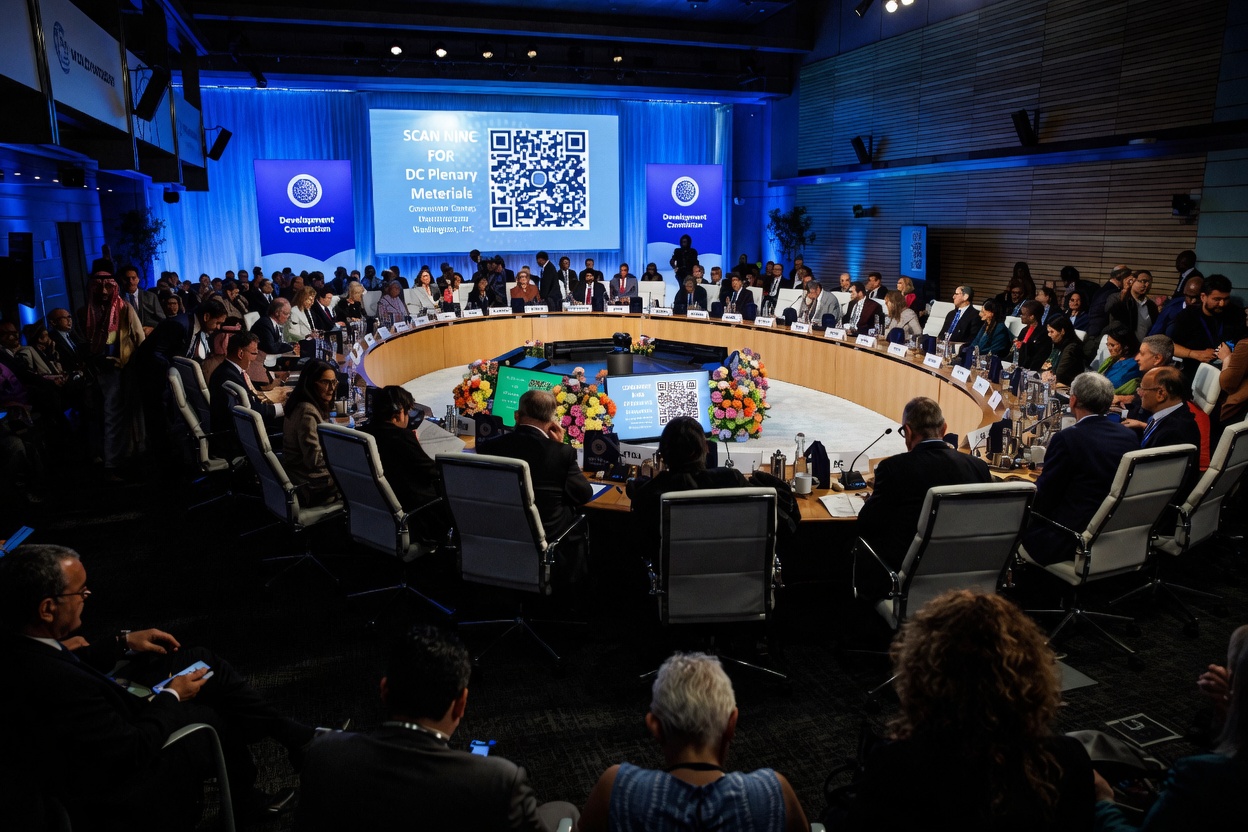
Tech and economic experts rose from a panel at the ongoing Spring Meetings of the IMF-World Bank in Washington DC on Wednesday, articulating reasons why Artificial Intelligence (AI) may promise sweeping productivity gains but is battling a stubborn “last mile” problem.
The problem, mainly the costs of adoption, they noted, is a major brake on real-world adoption.
Speaking on the panel, Neil Thompson of MIT said the biggest hurdle is not building powerful AI models but embedding them into everyday business operations.
“It’s awfully easy to get broadband or something else within a mile of your home and very, very expensive to get that last mile inside,” he said.
He emphasised that the same logic applies to AI, where integrating systems into workflows and fine-tuning models often proves far more expensive and complex than anticipated.
That cost barrier, he stated, is shaping how AI’s benefits are distributed across economies and industries.
Also speaking, Anu Madgavkar of the McKinsey Global Institute noted that workforce impact will be uneven.
Other News
She maintained that roughly one-third of jobs could be enhanced by AI, allowing workers to shift toward higher-value tasks.
However, another third, particularly roles dominated by routine cognitive functions, face a higher risk of automation.
The shift, she explained, requires a fundamental rethink of how people work. Employees will increasingly move from executing tasks to overseeing and managing intelligent systems, a transition that demands new skills and organisational changes.
Peter McCrory of Anthropic stressed that deploying advanced AI systems goes beyond technical capability. Companies must modernise their data infrastructure and redesign workflows to ensure AI models receive the right context at the right time.
Without this foundation, even the most sophisticated tools may fail to deliver value.
For smaller and less digitised economies, the barriers are even steeper.
Mihnea Constantinescu, Deputy Governor of the National Bank of Moldova, warned that gaps in digital infrastructure directly limit AI adoption. “Incomplete digitalisation means incomplete AI adoption and clearly incomplete AI benefits,” he said, urging smaller countries to focus on specialised data niches rather than competing at the cutting edge.
IMF Deputy Managing Director Bo Li called for flexible policy responses, advising governments to stress-test economic frameworks against multiple AI-driven scenarios. Policymakers, he said, must be ready to absorb disruptions while positioning their economies to capture AI’s long-term productivity gains.