Follow Us on Google
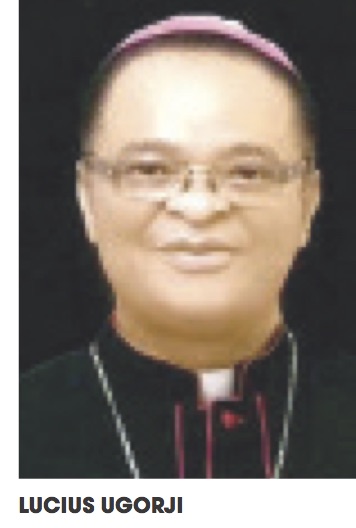
President of Catholic Bishops’ Conference of Nigeria (CBCN), Archbishop Lucius Iwejuru Ugorji, has opened up on the qualities expected in the next president of Nigeria, which he said, should be all the qualities of a gentleman, a patriot, an astute administrator, amongst others.
In this interview with Aidoghie Paulinus in Abuja, the Archbishop of Owerri Archdiocese also said the deplorable security situation in the country does not augur well for a healthy democratic atmosphere.
Ugorji further said the security agencies were performing far below expectation, even as he said that they should be sincere and do the right thing, particularly during the elections.
Today, Nigerians are voting for a new president. What are the qualities expected in the next president of Nigeria?
All the qualities of a gentleman, a patriot and an astute administrator are expected of the next president. Thus: sincerity, global exposure, truly educated, accountability, capability, decency, selfless, prudence, and what have you. The next president must be people-oriented and someone ready and capable of uniting the country. The next president must desire to win the presidency for the people; to serve the people and not to satisfy few aides and personal friends.
How has the political season been, in your view?
By political season, I guess you mean the mood and activities associated with the elections. I will say that it has been both good and not so good. First, the not so good. Unfortunately, one notices that the nation is still plagued by those many ugly anti-democratic attitudes of the past, like political thuggery and violence, manipulations using tribe or religion, registration of the underage voters, threats, financial inducements, lack of party manifestoes on the part of most candidates, resulting in very shallow and clueless campaign speeches targeted at maligning the integrity of opposition. The deplorable security situation in the country does not augur well for a healthy democratic atmosphere.
On a positive note, it is heart-warming to observe that there is currently a greater level of political awareness and participation by a good number of the citizens, especially among the young generation. One only hopes that the new energy is translated to actual voting at the polls and following through the electoral process by protecting and defending their votes so that they count.
What are your views about INEC’s preparedness?
One must acknowledge the daunting task of conducting elections in Nigeria because of its size, complexity and technological challenges. However, there seems to be some remarkable improvement in the external workings and operations of INEC. I consider the management of the voter registration process fair, bearing in mind the high turn-out of citizens for the exercise.
It was good that INEC listened to the people by extending the PVC collection date and for ensuring the use of the BVAS for the forthcoming elections. One only hopes that INEC officials will endeavour to sincerely do everything in their power to ensure that nothing compromises the smooth and peaceful delivery of this whole process. Nigerians are looking up to INEC. I pray they do not fail the people so that history will be fair to them.
There is still insecurity. How would that affect the elections?
Surely, in any community, security and elections are correlated. Poor security can cause fear and voter apathy. One therefore expects that since the government is already aware of the situation, they will make effort to put necessary measures in place in order to assure the voters of their safety. Beyond what the government should do, there seems to be a blazing die-hard spirit growing among the citizens who currently have already manifested a strong determination to protect and defend not just their votes, but the nascent democracy in Nigeria.
What are your views about the CBN new policy on naira redesign and the cash crunch?
To start with, one must not fail to acknowledge that Nigeria is a very complex country where nothing should be taken on its face value. Whereas a change of currency is undertaken in many countries, usually to the advantage of the nation and the common good, but since Nigerians are used to being deceived and policies skewed in favour of a few people, even otherwise good policies are viewed with suspicion. While one is not too sure of the veracity of the many conflicting conspiracies flying around concerning the motive for this financial policy, however, one is particularly worried about the untold hardships and pains which the implementation of the policy has caused Nigerians. Many Nigerians are stranded today, deprived of access to their funds and means of livelihood. This is highly condemnable. Those in power must stop toiling with the life of the people; they must stop playing politics with the life and wellbeing of Nigerians. Governance should be geared towards making life good for the people and not to cause them hardship and pain.
Could the cash crunch affect the conduct of the polls? If yes, how?
No modern society can function well when the legal tender is not available. Therefore, the chaos we are experiencing is not surprising. When the people are pauperired, and for those who have, even the little they have is denied them, then you make the people more vulnerable and easily broken. Financial inducement becomes easier and cheaper. These can definitely impact voting attitude. I have heard people advise voters to feel free to collect money from any politician ready to give, but that they should not vote such politicians. Maybe that is the way to go. But surely, the cash crunch may have some effects on the conduct of the polls. The government must do everything to immediately tidy up the mess we are in and restore order in the society.
How would you rate the performance of the security agencies so far? How should they perform during the election?
Far below expectation. They should be sincere and do the right thing. They should put the well-being of the people and the sovereignty of the nation above every other considerations.