Follow Us on Google
From Juliana Taiwo-Obalonye, Abuja
Civil society organisations (CSOs) have warned that the outcome of primaries conducted so far points to a disappointing reality for women’s political representation for the 2027 elections.
Women civil society organisations stated this while addressing a press conference, held under the banner “Broken Promises. Missing Women: Audit of the Primaries So Far” in Abuja. They noted that a review of early results, especially from the All Progressives Congress (APC), shows a steep decline in the number of women cleared to contest, raising concerns that public commitments to inclusion are not translating into real candidacies.
Toun Okewale of the Voices of Women Empowerment Foundation said the primaries held to date have underscored a widening gap between promises and practice. “These commitments raised national expectations,” she said, referring to President Bola Tinubu’s International Women’s Day pledge this year that “when Nigerian women rise, Nigeria rises,” and the Nigeria Governors’ Forum’s 2025 commitment to integrate the Nigeria for women programme into state plans. “However, the primaries conducted so far have revealed a troubling gap between those promises and political reality.”
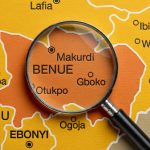
The coalition’s audit indicates that early APC House of Representatives primary results showed a sharp decline in female representation. Only six states, comprising Katsina, Edo, Imo, Ogun, Abia and Benue, delivered a handful of women’s tickets amid disqualifications, forced withdrawals and consensus arrangements. Ebere Ifendu, president of the Women in Politics Forum, said the primary cycle has been “heavily defined by targeted screening decisions and intense internal pressure,” which frequently sidelined female aspirants.
Ifendu pointed to specific high-profile screening decisions as symptomatic of the wider problem. She highlighted the disqualification of Dr. Ipalibo Banigo, the incumbent Rivers West senator and former deputy governor, noting Banigo is one of only four female senators in the 10th National Assembly.
“Senator Banigo stands out as one of only four serving female senators,” Ifendu said, adding that Noimot Oyedele Salako was reportedly not cleared in Ogun State. In Imo State, the APC’s use of the Option A4 open-ballot voting system, promoted as transparent, produced major upsets that sidelined sitting female lawmakers, including Miriam Onuoha, chairperson of the House Committee on TETFUND.
Other News
“Reports from multiple state chapters reveal that numerous other female candidates across the federation were actively pressured to step down in favour of consensus arrangements,” Ifendu said, describing how informal gatekeeping and political settlements filtered qualified women out of the candidates’ lists.
The coalition warned that if the pattern seen in the APC primaries spreads to other parties, the 2027 elections would replicate past underrepresentation. Several parties still have primaries ahead and were urged to change course.
The Social Democratic Party (SDP) is scheduled for May 19 to 22, the African Democratic Congress (ADC) May 21 to 26, Action Alliance (AA) May 26, while the Labour Party and the New Nigeria Peoples Party (NDC) have primaries set for May 27 to 29. The women coalition described this as a narrow window to turn public commitments into concrete candidacies.
Irene Ikyegh of League of Women Voters of Nigeria outlined why parties stand to lose by sidelining women: women expand the voter base, improve party credibility and deliver measurable governance outcomes. She stressed that women, who make up 49.7 percent of Nigeria’s population, remain under-mobilised politically and that visible female candidates activate women voters and communities focused on education, healthcare and food security. “Parties that give women a real chance do not weaken themselves politically; they strengthen their electoral advantage,” Awunna said.
The civil society coalition set out specific expectations for parties yet to complete primaries: publish clear selection criteria before primaries begin, track and disclose the number of male and female aspirants at every stage and use party structures to ensure qualified women emerge on final candidate lists submitted to INEC. “Political will is not measured by speeches, press statements or conference communiqués,” the coalition said. “It is measured by who finally appears on the ballot.”
The groups pledged continued monitoring of inclusion across the 2027 election cycle and said they would publish their findings to show which parties convert commitments into candidacies and which allow women’s political inclusion to remain rhetorical.
“The time for course correction is now,” Okewale said. “The primaries are days away. Nigerians are now watching to see whether those promises will become reality.”