Follow Us on Google

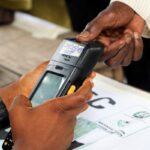
On February 25, 2023, Nigerians turned out in their numbers to elect their President and National Assembly members. This was sequel to the promise of President Muhammadu Buhari to bequeath a legacy of free, fair and credible elections to Nigeria. The introduction of the Bimodal Voter Accreditation System (BVAS) was touted as the game changer. Almost everything the Independent National Electoral Commission (INEC) asked for was provided. Many Nigerians were hopeful that their votes would count this time. And they were determined to exercise their franchise no matter the odds.
Unfortunately, the high expectations of many Nigerians turned out to be an anti-climax with what happened on the Election Day. INEC bungled the election big time. In many polling centres, the officials of the electoral umpire came late for the election. In some places, the officials did not come with some of the necessary materials like stamp and ink needed for the election. In some areas, they did not turn up at all.
To worsen matters, political thugs had a field day in some places, attacking perceived political opponents. In some parts of Lagos, those who would not vote for a particular party were asked not to come and vote at all. In Rivers State and some other parts of the country, there were stories of intimidation, harassment and physical assault on the electorate. Nevertheless, some Nigerians, especially the youths, still managed to cast their votes. Some stayed back after voting to ensure that their votes counted. In some places, voting didn’t end until late in the night. Some even stayed until the following day just to ensure that everything was in order.
Incidentally, certain things didn’t quite go down well with some Nigerians. Some opposition parties, especially the Peoples Democratic Party (PDP) and the Labour Party (LP), accused INEC of not following its own guidelines and constitutional provisions. They said INEC had announced a process which would require the use of BVAS for accreditation and voting, and that all election results would be transmitted electronically from each of the 176,606 polling units real time to INEC servers. The opposition parties stated that the failure of INEC to upload election results from the poling units gave room for manipulation of results. Some foreign and local observers agreed largely with the opposition parties.
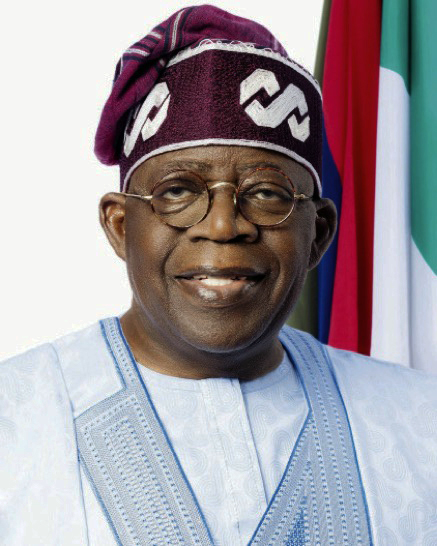
INEC blamed technical glitches for its inability to upload the election results to its server. The PDP and the LP have threatened to go to court. If the aggrieved parties legally challenge the outcome of the presidential election, it is likely that the courts will take the final decision on the matter. In handling such matters, let justice prevail.Nevertheless, INEC in the wee hours of Wednesday, March 1, 2023, declared the candidate of the All Progressives Congress (APC), Asiwaju Bola Ahmed Tinubu, as the winner of the election. Tinubu polled 8, 794,726 votes (36 per cent of the 24,965,218 votes cast) to beat his closest rivals, Atiku Abubakar of the PDP, who scored 6,984,520 votes and Peter Obi of the LP who got 6,101,533 votes. Rabiu Kwankwaso of the New Nigeria People’s Party (NNPP) came a distant fourth with 1,496,687 votes. He won only in Kano State.
The turnout in the election was the lowest since the advent of this democracy in 1999. About 28 per cent of the voters cast their votes on February 25. This means that fewer than three out of 10 registered voters cast their votes. Buhari was re-elected with about 34.8 per cent of the votes in 2019. SBM Intelligence had estimated that more than 40 per cent of registered voters turned out to vote in the morning of the Election Day in about half of the country’s 36 states and Abuja. It is obvious that most of the people who turned out to vote were disenfranchised one way or the other. This raises serious questions about legitimacy issues.
Notwithstanding, the electoral umpire has presented certificate of return to Tinubu. In his acceptance speech, the President-elect thanked the Nigerian people for their abiding belief in our democracy and promised to be fair to all Nigerians. He offered the olive branch to his main opponents, telling Nigerians he would charge up their energies and harness their talents to deliver a nation we could be proud of.
In his congratulatory speech, President Buhari said Tinubu was the best man for the job and that he would work with him and his team to ensure an orderly handover of power. He urged those who were aggrieved to go to court. We strongly believe that what happened on February 25 was not a reflection of Buhari’s promise of a credible election. INEC should learn some lessons from the presidential election so that it won’t repeat its mistakes in the upcoming governorship election on March 11. There is need for strong democratic institutions in Nigeria for our democracy to thrive. INEC should be truly independent.
We congratulate the President-elect and urge him to be magnanimous in victory.