Follow Us on Google
By Adewale Sanyaolu
Persistent electricity outages and escalating energy costs are pushing many Nigerian businesses to the brink.
Operational bills are at stratospheric heights with no hope of an imminent fall.
Manufacturers and other players in the Small and Medium-sized Enterprises (SMEs) space are lamenting that they are currently on ventilators, no thanks to the rising cost of diesel, gas and grid inefficiency.
Across major commercial and industrial hubs in Lagos, Ogun, Ibadan and Port Harcourt, companies report increased reliance on diesel generators as relying on erratic public power supply is tantamount to economic suicide.
The resulting surge in operational expenses is already squeezing profit margins and in some cases, forcing firms to reduce staff or scale down production.
Business owners and industry analysts say the twin challenges of unreliable power supply and high energy prices are undermining investor confidence and threatening economic growth.
Small and medium-sized enterprises (SMEs), which form the backbone of Nigeria’s economy, are among the hardest hit, with some warning of imminent closures if the situation persists.
The energy crisis comes amid rising global oil and gas prices, local fuel shortages and policy gaps in the power sector.
Economists caution that without urgent intervention, businesses across sectors, from manufacturing to services, may continue to grapple with unsustainable costs, affecting employment and consumer prices nationwide.
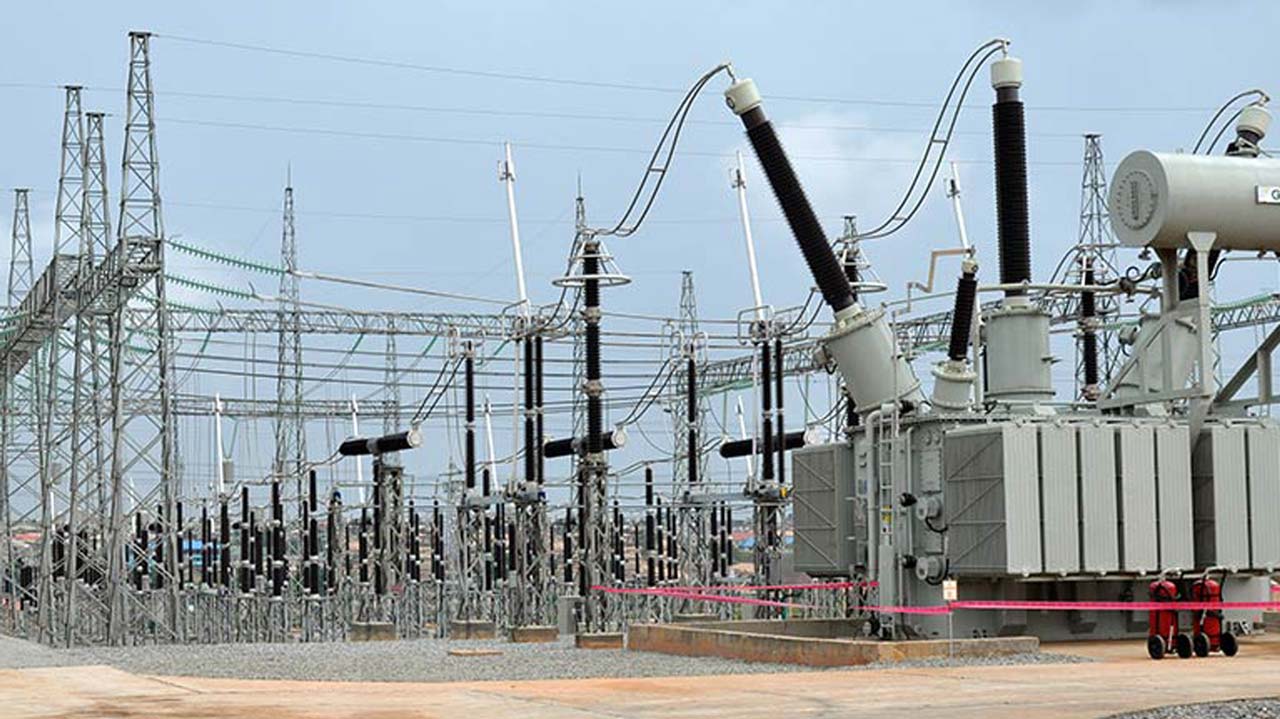
The Nigerian Independent System Operator (NISO), has attributed the drop in national power generation to below 4,000MW as of March 6, 2026, to severe gas supply shortages.
Further tracking by Daily Sun on the NISO portal revealed that real time power generation as at 8am on Sunday (yesterday), dipped to 2,796.73 megawatts for over 200 million Nigerians as reported by 12 GenCos.
The shortage of gas has forced multiple thermal power plants to shut down or operate at reduced capacity, causing widespread load shedding and reduced allocations to Distribution Companies (DisCos).
Further findings by Daily Sun revealed that Ikeja Electricity Distribution Company (IKEDC), recently apologised to customers over the ongoing power supply disruptions across parts of its network.
The power utility firm in a notice to its customers attributed the situation to gas supply constraints affecting electricity generation on the national grid.
Some of the business operators, especially SMEs who spoke to Daily Sun lamented the poor state of power supply.
A business center operator in Ogba, Lagos, Mr. Jude Ezeoke, said the poor state of power supply coupled with the increase in petrol was almost crippling his business.
Other News
He lamented that the recent hike in the cost of petrol from N830 to N1,230 per litre has left him in dire straits.
He noted that for the past three weeks, power supply has been erratic, forcing him to switch to his generator which now comes at a premium due to the recent hike in the cost of petrol.
His lamentations were not different from commercial tricycle operators, popularly called “Keke NAPEP”.
A cross section of the operators who spoke in separate interviews at the ever busy Oja Oba market bus stop in Abule Egba, Lagos said over 70 per cent of their profit margins have been eroded.
“From the look of things, it appears we’re just working for filling station owners. Buying fuel at N1,230 per litre is a death warrant for our business because at the close of work, we can no longer boast of N5,000 profit”.
A hotel operator in Abule Egba, Lagos, Mr. Sunday Adetiba, said the poor state of power supply has crippled his business.
“I have lost most of my customers due to poor power supply”, he wailed.
He explained that the recent rise in the cost of diesel to N1,500 per litre no longer makes economic sense as there is literally no profit.
“The least of my room is N20,000 per night. If I were to run a generator for 24 hours, that means the least of my room would be N30,000 per night. How many customers can afford that?
“Any attempt to jack up prices will mean that I will lose more than 60 per cent of my customers”, he lamented.
In her views, the Chief Executive Officer of the Association of Power Generation Companies (APGC), Mrs Joy Ogaji, warned that Nigeria’s electricity crisis may worsen in the coming weeks as gas suppliers halt supply to thermal power plants over an estimated N3.3 trillion debt owed by GenCos.
Ogaji, disclosed this during an interview on Fresh FM last week, warning that the mounting debt across the power value chain is pushing the sector toward a major crisis.
She explained that the crisis stems from the failure of the Nigerian Bulk Electricity Trading Plc to fully pay for electricity generated by GenCos since the sector’s privatisation.
According to her, the government currently owes generation companies about N6.8 trillion, with roughly 70 per cent of the amount relating to thermal plants.
She explained that about 70 per cent of whatever the government owes gas-fired power plants belongs to gas suppliers, meaning gas companies are owed about N3.3 trillion out of the N4.76 trillion tied to thermal generation.
Ogaji added that gas suppliers have informed generation companies that they will no longer supply gas to power plants unless payments are made.
She noted that power generation companies have continued to keep records of all outstanding payments owed to them by the Nigerian Bulk Electricity Trading Plc.