Follow Us on Google

From Uche Usim, Bangkok, Thailand
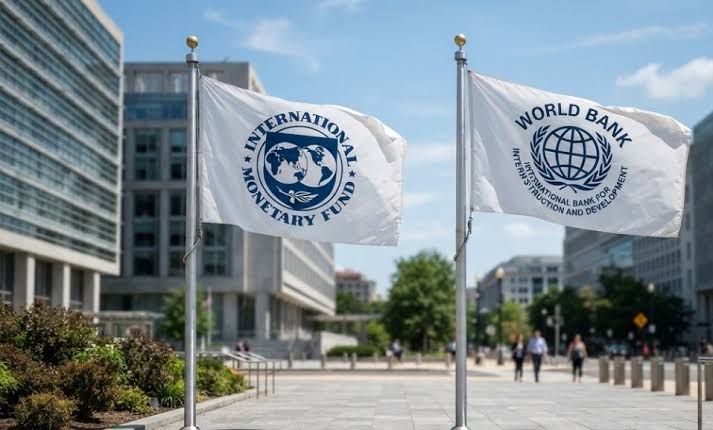
Developing countries have been left with more questions than answers following the 2026 Annual Meetings of the International Monetary Fund (IMF) and the World Bank, as rising debt costs, global conflicts and uncertainty over artificial intelligence threaten their economic prospects.
The meetings, held in Bangkok, Thailand, from October 12 to 18, ended without concrete solutions to help poorer nations manage the growing economic challenges, with participants expressing concerns over the limited support available to countries struggling with rising costs and weak growth.
Instead, the two global financial institutions maintained their longstanding advice that governments should reduce budget deficits, accelerate economic reforms and attract more private investment.
However, the recommendations have raised concerns about whether developing countries can overcome their challenges without stronger international support, particularly as conflicts in the Middle East and Ukraine continue to unsettle the global economy.
IMF Managing Director, Kristalina Georgieva, said developing countries were bearing the consequences of economic decisions and financial pressures originating in wealthier nations.
She noted that although debt levels in developing countries had declined in recent years, rising bond yields in advanced economies had pushed up borrowing costs worldwide.
According to her, average debt-servicing payments in poorer countries have more than doubled over the past decade to 14 per cent of government revenue, leaving less money for essential services such as healthcare and education.
Georgieva also acknowledged that several major questions remained unanswered, particularly over how countries should prepare for the economic consequences of artificial intelligence.
“We are in a place where we have many more questions than we have answers,” she said and warned against claims that anyone had all the solutions to the emerging challenges.
Also commenting, the Vice-President of International Economics at the Atlantic Council, Josh Lipsky, said the meetings had missed an opportunity to provide practical guidance and assistance to developing countries.
He argued that advanced economies were preoccupied with their own fiscal problems and political challenges, making development assistance a lower priority.
Other News
Colombia’s former finance minister and a research scholar at Columbia University’s School of International and Public Affairs, Mauricio Cardenas, also expressed concern that policymakers were leaving the meetings without a clear plan for navigating future economic shocks.
He said the IMF and World Bank were not adequately prepared for the emerging phase of global economic uncertainty, particularly the unpredictable effects of artificial intelligence.
Beyond debt and technology, the meetings exposed growing concerns about the ability of developing countries to sustain economic growth amid geopolitical tensions, higher energy costs and declining development assistance.
World Bank Deputy Chief Economist, Ayhan Kose, said the global economy had avoided a recession despite a major energy shock linked to the conflict involving the United States, Israel and Iran.
However, he warned that growth prospects had weakened in both advanced and developing economies. Growth in developing countries had slowed to about 3.6 per cent from 4.4 per cent.
Kose cautioned that the ability of economies to withstand recent shocks did not guarantee they would be able to cope with future disruptions.
The World Bank said it remained focused on helping developing countries prepare for technological changes, including artificial intelligence, partly by mobilising more private capital.
However, the institution faces growing challenges from declining official development assistance and persistent difficulties in attracting foreign investment to poorer countries.
Meanwhile, Kate Pickett, a professor at the University of York, urged policymakers to place greater emphasis on inclusive economic growth rather than imposing difficult structural reforms without sufficient consideration for their social consequences.
She warned that rising inequality and deepening poverty could increase economic and social costs in the long term.
The meetings also highlighted divisions among member countries, with geopolitical tensions complicating cooperation within the international financial system.
For developing countries, the outcome reinforced concerns that conventional economic prescriptions may not be sufficient to address a world increasingly shaped by conflict, rising borrowing costs, technological disruption and uncertain global growth.