Follow Us on Google


Chairman of the Federal Civil Service Commission (FCSC), Prof. Tunji Olaopa, has blamed Nigeria’s persistent gap between policy formulation and implementation for growing public distrust, poor development outcomes and reform fatigue, calling for a fundamental transformation of the federal civil service into a results-driven institution capable of delivering government programmes.
Olaopa said successive administrations had produced development visions, strategies and policies without corresponding implementation capacity, resulting in recurring failures that had undermined public confidence in government and slowed national development.
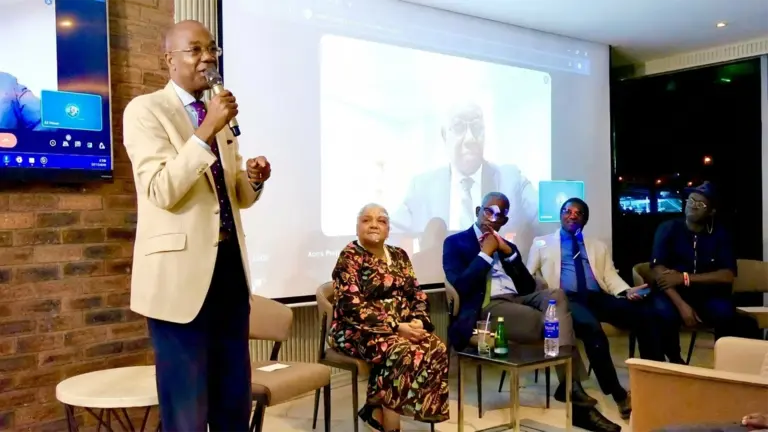
Speaking on Wednesday in Abuja at a colloquium organised by the Council of Retired Federal Permanent Secretaries (CORFEPS), where the council’s journal was also unveiled, he said the next phase of civil service reforms must focus on strengthening institutional capacity, improving policy intelligence and ensuring that government decisions translate into measurable results.
“Indeed, for decades, the gap between development vision, plans and strategies as well as well-formulated policies and poor execution and outcomes has fueled public distrust; it has created praxis that has encouraged the benchmarking of failures from one administration to another; and has consequently not only slowed developmental progress but created reform fatigue,” he said.
The FCSC chairman argued that Nigeria could no longer afford a civil service preoccupied primarily with administrative procedures and compliance while government policies failed to deliver the intended benefits to citizens.
According to him, the next level of institutional reform should transform the federal civil service from a reactive bureaucracy into a high-performing execution engine capable of driving productivity and responding effectively to the country’s economic and governance challenges.
He identified weak institutional capacity, inadequate policy intelligence, fiscal constraints, macroeconomic instability and increasing socioeconomic demands as major obstacles to effective governance.
Olaopa said overcoming the challenges would require significant investment in data infrastructure, professional development and institutional systems that would enable public officials to make decisions based on reliable evidence rather than assumptions.
Other News
He called for stronger institutional intelligence and the deployment of real-time analytics to improve policy formulation, implementation and performance monitoring.
“A policy is only as effective as the workforce tasked with its implementation. Professionalizing the civil service is therefore not rhetoric, it involves deep talent management reforms and investment in capacity development, training and retraining,” he said.
The FCSC chairman maintained that public service reforms must go beyond changes in administrative structures to address the attitudes, competencies and management practices of personnel responsible for implementing government policies.
He advocated a gradual transition from a compliance-driven institutional culture, where emphasis was placed on following established procedures, to an outcome-oriented system in which public officials would be assessed by the results they delivered.
Olaopa said navigating the country’s governance challenges required an agile managerial mindset, sustained investment in bureaucratic capability and a deliberate departure from short-term, fragmented reform initiatives.
“Ultimately, building implementation readiness means moving away from ad-hoc, short-term reforms toward a sustained investment in bureaucratic capability. When the civil service is capable, resilient, and structurally sound, it ceases to be a barrier to development and becomes Nigeria’s most reliable tool for navigating political and economic uncertainty,” he stated.
Speaking on the theme of the symposium, which examined the headwinds confronting governance, Olaopa described such obstacles as structural and systemic pressures capable of frustrating decision-making, slowing