Follow Us on Google
Reels out fresh controversial poverty figures
____________________
From Sola Ojo, Abuja
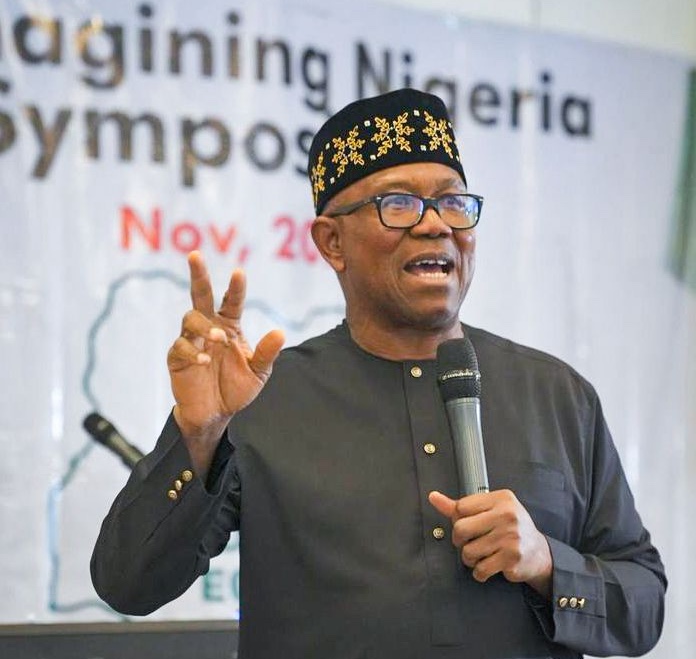
Former Labour Party presidential candidate Peter Obi ignited a fresh wave of political controversy on Thursday, accusing Nigeria’s political elite of prioritising power struggles over poverty to catastrophic proportions.
Obi, on his verified X handle, in a post titled “While Politicians Jostle, Poverty Deepens,” lamented that while politicians scramble for positions and share party offices “even before elections are concluded,” Nigeria has quietly become one of the world’s largest poverty capitals.
According to figures cited by Obi, 62 per cent of Nigerians, representing about 141 million people, now live in poverty.
He noted that Nigeria has moved backwards while peer countries have made dramatic progress.
Obi referenced World Bank data showing that Nigerians living in poverty increased from 81 million in 2019 to about 139 million in 2025, with projections suggesting the figure could rise to 141 million by 2026.
He stressed that between 2023 and 2026 alone, an estimated 26 million Nigerians would be newly pushed into poverty.
He said: “The numbers are not just statistics; they represent human suffering on a massive scale.”
Other News
He argued that weak income growth, high food prices and persistent inflation have made survival increasingly difficult for ordinary Nigerians.
Citing the Nigeria Economic Outlook 2026 report titled “Turning Macroeconomic Stability into Sustainable Growth,” Obi said most Nigerians would not earn enough to offset soaring living costs, especially as food accounts for up to 70 per cent of spending among low-income households.
He further warned that rising poverty was already crippling purchasing power, weakening small businesses and threatening economic recovery, while placing enormous strain on public finances and human capital.
Obi contrasted Nigeria’s trajectory with countries such as India and Indonesia, which he said drastically reduced poverty through sustained investments in education, health and social protection.
“While India reportedly cut extreme poverty to about 5.3 per cent and Indonesia to roughly 8 per cent, Nigeria’s poverty rate has risen from about 40 per cent in 2000 to 62 per cent today,” he compared.
Obi also highlighted Nigeria’s stagnation in human development, noting that while countries with similar Human Development Index (HDI) scores in 2000 have advanced significantly, Nigeria remains stuck in the low human development category after 25 years.
“Can we continue to accept that a child born in Nigeria today faces one of the highest risks of being born into poverty anywhere in the world?” he queried.
Obi, however, doubled down, insisting that macroeconomic stability, agricultural investment, education, health, productivity and large-scale job creation are no longer optional but urgent necessities.