Follow Us on Google

Romanus Ugwu, Abuja
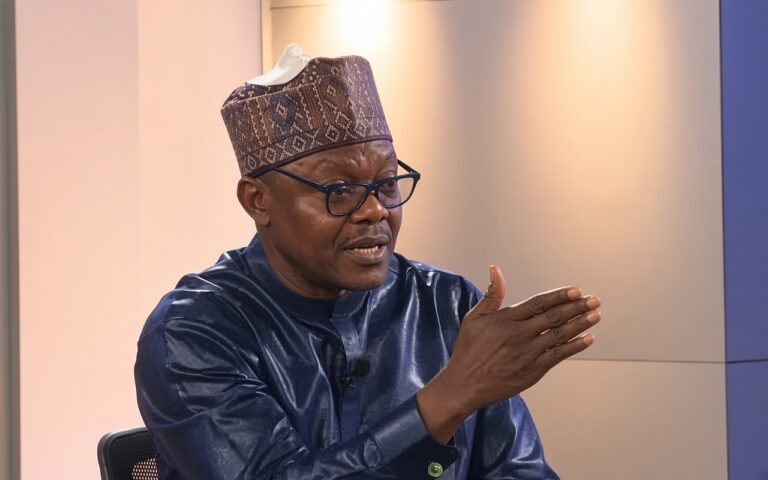
The Director General, All Progressives Congress (APC) Progressive Governors Forum (PGF), Salihu Moh Lukman, has lamented that leadership succession in Nigeria is still based on individual decisions of current office occupants.
The PGF DG, who dropped the hint while speaking with newsmen in Abuja during the unveiling of his new book, “APC and Progressive Politics in Nigeria”, noted that such leadership succession is prone to lots of challenges.
Revealing how Atiku Abubakar, Rabiu Musa Kwankwaso and Owelle Rochas Okorocha ensured the emergence of President Muhammadu Buhari in 2015, he advised a return to era of unity and holding of regular meetings in APC without criminalise those with opposing views.
While calling for credible and verifiable membership register from the leadership of the APC, Lukman said: “Credible and verifiable membership register should be the foundation for internal democracy within the party. Secondly, our leaders should work to win the votes of party members in order to emerge as candidates.
“Difficult as it is, we need to begin to develop strategy that move our leaders away from the strategy of controlling party structures through imposing leaders in order to emerge as candidates for elections. This is virtually the source of almost all internal conflicts.
“The third and perhaps final issue is that of leadership succession. As a progressive party our leaders need to begin to move to a situation whereby leadership succession arrangement at all levels are planned and criteria for leadership recruitment are set.
“At this moment, leadership succession is based on individual decisions of current office occupants and is prone with a lot of challenges. We need to appeal to our leaders to kindly give this very close consideration.
“No specific proposal is made but it is a matter, which if our leaders are able to revive the 2013/2014 framework of regular all-inclusive meetings without the criminalising posture around possible ambitions of leaders, these matters could be debated, and some minimum strategy put in place,” he noted.
Other News
Going down history lane on the making of President Buhari, the PGF DG said:
“Part of what is needed in the circumstance, is to remind our leaders that one of the factors that ensured that our leaders were united, which made the electoral victory of 2015 possible was that they were meeting almost on weekly basis. It wasn’t factional meetings, all our leaders attended almost all these meetings and they respected every decision.
“I can recall with nostalgic feelings that between 2013 and December 2014, President Buhari, Alh. Atiku Abubakar, Sen. Rabiu Musa Kwankwaso and Owelle Rochas Okorocha were in attendance in virtually every meeting. The only person who later emerged as Presidential aspirant under the party but wasn’t at such meetings was Sam Nda Isiah. This was perhaps because he wasn’t qualified as a political stakeholder to be among those to be invited.
“I will continue to remind our leaders that at no time did any of our leader who aspired to emerge as Presidential candidate get criminalised. As a very junior appointee of the party, some of us even took hardline public positions against the aspiration of President Buhari for instance.
“But, at no time did President Buhari or any of the other leaders who aspired to be the party’s Presidential candidate made it an issue. They related with all of us with the full knowledge of our public position.
“The truth is, our leaders were united because they exhibited high level of tolerance, which contributed to making the party attractive. These are progressive credentials which the party and our leaders must return to.
“In addition, there are other issues that should define the progressive credentials of the party, which are highlighted in Chapter I, Chapter XI and the Epilogue. Between Chapters II to X, other functional issues related to operational challenges and management of political dynamics were the focus.
“The approach is basically to simulate contestation based on relying on knowledgeable presentations. Most of the issues in the book are already in the public domain. The book only pulls everything together and present them as integrated position with logical conclusions,” he said.