Follow Us on Google
By Adémólá Òrúnbon
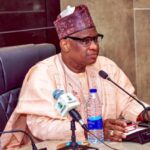
The recent Plateau massacre has been one among too many. Condemnations have since trailed the unfortunate development. Vice President Kashim Shettima, like many others, took time to visit the affected areas. His message was resounding, including his earlier repeated calls for an overhaul of the nation’s security apparatus. The VP was emphatic and stressed that whatever it takes, ‘we have to defeat violence’ in Nigeria.
The Vice President gave the assurance that President Bola Tinubu’s administration would not rest on its oars until victims of the gruesome murders and attacks in the Bokkos and Barkin Ladi Local Government Areas of Plateau State get justice. He said that in the attacks, which began on Sunday, Christmas eve and lasted for about 48 hours, where gunmen killed over 200 villagers and razed many houses, with over 10,000 people reportedly displaced were barbaric and acts of genocide.
Shettima, who was accompanied by the National Security Adviser, Nuhu Ribadu, said President Tinubu was heartbroken about the killings, vowed that the perpetrators would not go scot-free. He said: “President Tinubu is deeply shaken by this tragedy and shares in this unspeakable sorrow that has shattered the joy of Christmas across the country. When a community bleeds, the entire nation feels the pain. The pain we feel now transcends ethnicity or religion, geography and politics. The grief that binds us is a testament to our shared humanity, not differences.”
Nigeria’s past, present and even the future, makes the establishment and operation of a Federal, State and Local Government Policing or Law Enforcement un-debatably mandatory! Nigeria needs and should have Federal Police, State Police and Local Police! It just makes sense! The local people, the local authorities know the neighborhoods, the local people and local circumstances better!
It is in the opinion of many analysts today, both within and outside the country, that human lives have become so cheap in the country that when people die, there is hardly the expected feeling of loss. Irrespective of the circumstances, it always seems as a glaring act of man’s inhumanity against his fellow, and usually the number involved becomes the yardstick of government’s action.
Arguments have been put forward against the oddity of comparing the lives of humans to cows, and also the present government’s responses to issues of the lingering killings across the country, especially on the eccentric excuses of more lives being lost when a political party held sway in governance than today.
So, when calls are made with stern concerns, especially from highly placed political actors whose ordinary considerations should be listened to, it becomes of essence that such concerns are drummed louder for purposes of the needed actions. Nigeria has been seen as gradually heading towards the Rwandan experience.
If the killings are not curtailed as soon as possible, it may lead to a scale that may even play out outside the territory known as Nigeria, with international implications. It is, therefore, our collective responsibility to ensure this doesn’t occur again, and if we’re determined, we’ll be able to stamp it out. Working for peace is really not easy; it should involve the government, faith-based organizations, the church and its builders, leaders from the Islamic faith, community-based organizations and leaders, and if we’re finding it difficult, nothing stops us from calling for assistance from the international community in order to deal with this problem.
In the past, it was the case that Native Authorities or also called NA and or Local Authorities or called LA, these primary level authorities maintained law and order through the NA or LA police departments. These NA or LA police enforced local ordinances, bylaws, rules and regulations of the localities or municipalities over which the NA or LA presided. It is also a fact of Nigeria’s political history, that some regional government leaders abused local policing as the local police was used as instruments of political intimidation and harassment and other manners of illegalities. All these called for reforms, checks and balances, such as the Police Service Commission with clear oversight over each command.
There is also need to have a Civil Complaint Review Board for each Police Command, to handle police misconduct, corruption, abuse of power, police brutalities and extrajudicial killings by the police. The Nigeria Police should be enlarged, reformed and decentralized and fine-tuned for more efficiency and effectiveness. But with the advent of military form of government that turned the three-tier form of federal government system on its head, and instead, Nigeria remained a federal system in name-only, but in actuality, an over-centralized unitary system of government was in place and that is what has been practiced.
In the present democratic system, the federal form of government has started to ascend to its pride of place, there is now a clear distinction between the federal, state and local government. Indeed, some instances actually now exist, where the political party in control at the federal level, may not necessarily be the political party in control at the state and or local government levels. And, this is quite dissimilar to what Nigeria endured during the military. The military operated as if it was a one political party running the administration of the country. The military, very unlike the democrats, had a command structure from the federal levels to state to local government or the smallest unit of government that were compelled to do the bidding of the federal military government which is centrally controlled without dissension. This was to be expected, in a true military tradition. Orders are orders! Military orders are to be obeyed!
All the misgivings about the likelihood or possibilities of regional governments or state governments misusing or abusing their control over the police command must be abandoned or jettisoned for a greater good, but of course with adequate safeguards and safety nets, some of which I have already addressed above.
We must all realize by now, especially with the recent Rivers State power tussle between Governor Siminalayi Fubara and his godfather, Immediate past governor, Nyesom Wike, where Wike wanted to usurp the power from Fubara by using federal might and 27 State House of Assembly members, who recently decamped to All Progressives Congress (APC), that even the federal police can be misused by a state governor, deputy governor or by a political godfather who sponsors a governor like what Wike did. The checks and balances and reforms of the police will tackle all these, the police can be misused by individuals, by states or the federal government, the police even as presently constituted and controlled. Reform is and safeguards are therefore what are needed. Will ensure that the police in Nigeria are no longer subject to the whims of individuals, state or federal governments.
In America like Nigeria, a federal system of government is in operation. At the federal level in the US, there is the Federal Bureau of Investigations, The Bureau of Firearms and Tobacco, The Secret Service and the National Security Agency, there are also the Customs, the Drug Enforcement Agency, US Postal Police etc. All these are federal law enforcement agencies that take care of mostly domestic crimes while the Central Intelligence Agency takes care of mostly overseas espionage and enforcement of US policy wishes.
At the state level in all the 50 states of the United States, there are individual state police that enforce state laws, rules and regulations, without much interference from the federal law enforcement agencies except where the US federal government may want to exercise some supremacy. A recent example was the attack in New York on September 11, 2003. State Troopers are what the state police in New York State are called. New York State is like Lagos State while New York City is like Lagos Island or Lagos Mainland Local Government. New York City has its own Police Department of about 40,000 personnel. Until recently, it had separate departments and separate chiefs of departments such as in Housing Police, Transportation Police and Sanitation Police etc, but which merged to cut cost and avoid the duplication. The merger was debated for more than 20 years before it eventually happened. Also, sanitation Police are like War Against Indiscipline enforcers with the WAI draconian enforcement tactics. Sanitation police in New York enforce rules of garbage collection and ensure compliance with summons and fines.
Nigeria needs aggressive but fair policing with police officers on the beat or patrolling the neighborhood with their thorough familiarity. The police officer should know every area boy. Knowing the neighbours and the neighborhood is of key importance. People would be willing to give useful information against those who prefer to operate outside the laws. The establishment of local police will happen in Nigeria sooner or later, as our country develops and expands, it simply just makes a great lot of sense to have more police officers, and to have law enforcement that has thorough familiarity with all the nooks and crannies of our republic.
Imagine sending a guy who cannot swim to be a marine police officer in Burutu, Bomadi or Epe or such other riverine areas of Nigeria? Does it not make more sense to send a policewoman or man who knows all the tricks of swimming and the rivers and marshlands in Nigeria? Is it not simply easier for someone from Numan to know who the troublemakers in Numan are? Is it not likely that the citizen police woman or man from Damaturu or Gombe knows the troublemakers in these towns? Local policing just makes logistical and law enforcement sense, it is also more cost effective. The federal treasury will be spared the expense of moving federal police officers from state to state in Nigeria, and spared the expense of accommodating them.
It is time for the government to act in tune with suggestions such as those recommended by the security experts and well meaning Nigerians. There is a need for the government to heed the clarion call, by establishing state or community policing as put forward by security experts and many other people.
Òrúnbon writes from Epe, Lagos State, Nigeria.