Follow Us on Google

From Adesuwa Tsan, Abuja
The appearance of a purported government agency in Nigeria’s 2026 budget, despite the Presidency’s declaration that it did not exist, has raised troubling questions about the checks and balances meant to protect public funds. Beyond the controversy surrounding the alleged N1.3 billion allocation, the episode has exposed the need for tougher scrutiny of how budget proposals are prepared, amended, approved and implemented.
For a country where hospitals struggle with inadequate facilities, schools require urgent attention, roads remain unfinished and communities still lack basic amenities, the prospect of public money being earmarked for an entity whose legal existence is disputed is more than an administrative embarrassment. It is a warning about the vulnerabilities that may exist within the machinery of public finance.
The controversy surrounding the Presidential Foreign Intervention Promotion Council (PFIPC) has consequently become a test of Nigeria’s budget accountability system. It has also raised a fundamental question: if an entity that the Federal Government says it never established could find its way into a national appropriation, what other questionable provisions might escape scrutiny when the figures run into trillions of naira?
The Presidency declared the PFIPC fictitious and said it had no basis in law, presidential instrument, executive approval or any other lawful government act. President Bola Tinubu subsequently directed the Independent Corrupt Practices and Other Related Offences Commission (ICPC) to investigate the matter. The State House announcement identified questions surrounding allegedly forged appointment letters and other official documents among the issues to be investigated.
The controversy deepened when Adeniyi Adeyemi, who allegedly presented himself as the council’s director-general, was arraigned on charges including forgery and impersonation. He pleaded not guilty. The allegations remain subject to judicial determination, and the existence of an appropriation does not, by itself, establish that the money was released or spent.
Indeed, the Budget Office later stated that expenditure controls prevented the disputed provision from becoming public expenditure. But while that distinction is important, the questions of how the allocation entered the budget, who was responsible and whether any funds were improperly obtained require evidence and due process. The fact that such questions arose in the first place has made the case a compelling illustration of why public spending must be scrutinised from the earliest stages.
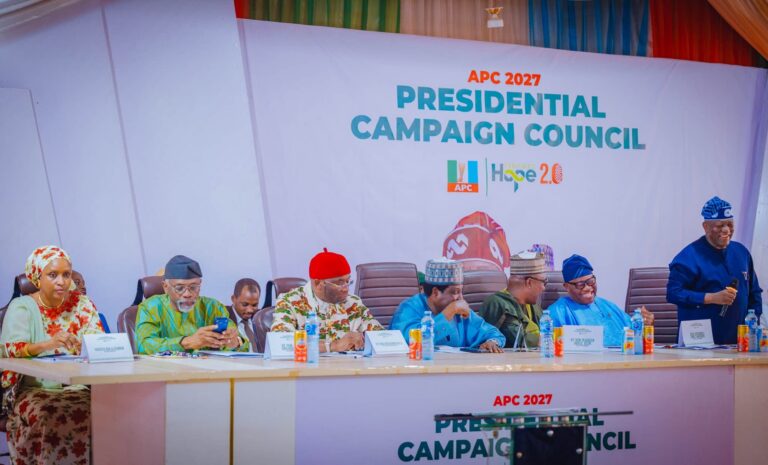
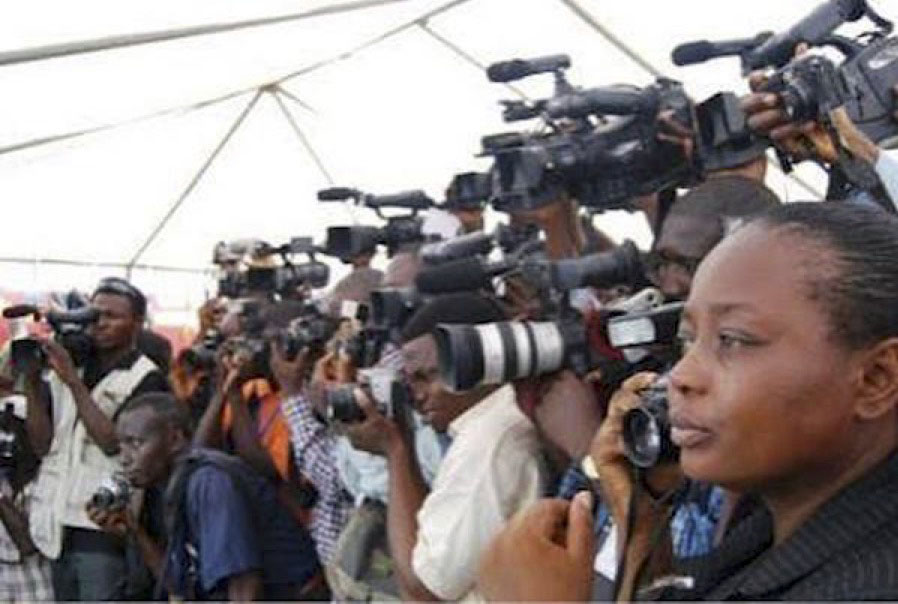
For the Senate Press Corps, the controversy provided the backdrop for a capacity-building workshop held at Hearing Room 231 of the National Assembly Complex, Abuja, on Monday, September 28, 2026. The workshop, themed “Leveraging Legislative Oversight and Media Collaboration to Safeguard the National Budget from Unlawful Insertions,” brought together journalists, budget experts, civil society advocates and government representatives to examine how closer scrutiny could help prevent questionable entries and ensure that public money serves its intended purpose.
At the heart of the discussions was a message that went beyond the immediate PFIPC controversy: journalists covering the National Assembly must do more than report budget presentations, legislative debates and the impressive totals attached to annual appropriations. They must understand the figures, investigate the changes, examine the assumptions behind the allocations and follow the money after the budget has been passed.
Opening the workshop, Chairman of the Senate Press Corps, Taiye Odewale, said the PFIPC episode underscored the need for stronger collaboration between parliamentary journalists and lawmakers exercising their constitutional oversight responsibilities.
Nigeria’s 2026 budget rose from the N58.47 trillion proposal submitted by the Executive to N68.32 trillion after legislative consideration. Odewale said the corps’ findings indicated that the disputed N1.3 billion allocation was not part of the N9.853 trillion increase made by the National Assembly.
The Senate spokesperson, Senator Yemi Adaramodu, had also maintained that the disputed allocation was external to the additions made by lawmakers, while the Executive pursued the matter through the relevant investigative and legal processes.
For Odewale, the lesson was not simply about determining which institution was responsible for the disputed provision. It was about strengthening the safeguards that should prevent questionable allocations from entering the national budget in the first place.
He said the workshop was organised to equip journalists with the knowledge needed to identify irregularities and improve their reporting of the budget process.
“We believe that the presentations by our eminent and highly respected resource persons will enrich us with the required knowledge and ways of detecting such irregularities,” he said.
The challenge is considerable. Nigeria’s national budget is a vast document containing thousands of proposed projects, programmes and expenditure lines spread across ministries, departments and agencies. The scale alone makes it difficult for a reporter to identify suspicious entries by reading isolated pages or relying exclusively on explanations offered by officials.
Yet it is precisely within those details that some of the most consequential questions may be found.
Beyond the headline figures
Director of BudgIT, Oluseun Onigbinde, represented by the organisation’s Country Director, Vahyala Kwaga, challenged journalists and lawmakers to examine the Executive’s budget proposal as part of a wider system of planning, expenditure and accountability.
In his presentation, titled “From Insertion to Interrogation: The National Assembly’s Role in Evaluating the Executive’s Budget Proposal,” Onigbinde argued that budget scrutiny should not begin and end with the amounts proposed or eventually approved.
Every budget line, he explained, should be traceable through the National Development Plan, the Medium-Term Expenditure Framework and Fiscal Strategy Paper (MTEF-FSP), sector strategies, annual appropriation, implementation and subsequent audit.
The process matters because an allocation that appears attractive on paper may not be consistent with national priorities, may duplicate an existing project or may repeat a provision that has failed to produce results in previous years.
Lawmakers, he said, must interrogate the revenue projections and deficit assumptions underpinning the budget, examine whether ministries and agencies have credible medium-term sector strategies, and assess their previous performance before approving new allocations.
The questions are straightforward but essential. What was appropriated for the project last year? How much was released? What was actually delivered? Was the project completed? If it remains unfinished, why is another allocation being proposed? And if the project is described as new, does it already exist under another name or in another agency’s budget? These questions become particularly important in a country where budget provisions do not always translate into completed projects or improved public services.
Onigbinde’s presentation urged the National Assembly to assess proposed expenditure against implementation records, audit findings, actual payments and demonstrable public needs. He also called for early submission of the MTEF-FSP and greater stakeholder participation to strengthen the credibility of the annual budget.
The underlying argument was that lawmakers cannot properly evaluate a new budget without first examining what happened to the money approved in previous years.
This is just as important for the media. A journalist who reports only that a ministry has received a larger allocation may miss the more consequential story: whether the ministry used its previous allocation, whether the projects were delivered and whether the additional money is justified.
The difference between reporting an allocation and interrogating it is the difference between reproducing official information and holding public institutions accountable.
When red flags are not proof
The need for evidence-based scrutiny featured prominently in the presentation by the Executive Director of the Civil Society Legislative Advocacy Centre (CISLAC), Auwal Rafsanjani, represented by Ebu Emmanuel.
His paper, “Critical Scrutiny of Budget Line Items: Preventing Garbage In, Garbage Out,” examined how vague descriptions, questionable costs, duplicated projects and inadequate documentation can weaken the budget process.
Emmanuel cited an ICPC analysis of 6,690 projects across 66 agencies which reportedly flagged 4,508 projects valued at about N434.5 billion in the 2022 Appropriation Act as inserted or padded. The analysis also identified 66 duplicated projects valued at approximately N6.43 billion.
Those figures are significant, but they require careful interpretation. A project flagged for further examination is not automatically proof of corruption or criminal conduct. The role of investigators, auditors and courts is to establish the facts and determine responsibility.
For journalists, the figures should prompt further questions rather than serve as a substitute for investigation.
What was the original proposal? What changed before the final appropriation? Which institution requested the change? Who justified it? What evidence supports the cost? Where is the project to be located? Who will benefit, and which agency is responsible for delivery?
Emmanuel said every budget provision should have a clear public purpose, credible costing, a defined location, identifiable beneficiaries, an implementing agency and a measurable outcome.
Without those details, it becomes more difficult for lawmakers, journalists and citizens to determine whether an allocation addresses a genuine need or simply adds another unexplained item to the spending plan.
CISLAC also stressed the importance of maintaining an audit trail from the Executive’s initial proposal to the final appropriation and through implementation. Such a record would make it easier to establish what changed, why it changed and who was responsible for the decision.
The accountability chain, the organisation argued, should cover the entire process: proposing, justifying, verifying, approving, disclosing, implementing, monitoring, auditing and accounting.
That approach would make it harder for questionable projects to disappear into the paperwork once a budget has been passed. It would also help distinguish an administrative error from deliberate wrongdoing, an important safeguard in reporting allegations involving public officials.
The Minister’s caution: not every unfamiliar project is unlawful
While the workshop placed strong emphasis on detecting irregularities, Minister of Budget and Economic Planning, Senator Abubakar Atiku Bagudu, urged participants to approach budget scrutiny with an understanding of the country’s economic realities and the needs that public spending is expected to address.
Other News
Bagudu argued that Nigeria’s fiscal resources remain limited relative to its population and development needs. He called for greater resource mobilisation and a larger budget base to support the ambition of building a $1 trillion economy under the administration’s economic agenda.
He also cautioned against assuming that every unfamiliar or unusual budget item must be unlawful.
Some constituency projects, he explained, might appear insignificant when viewed from Abuja but could answer a genuine need in a particular community. Water provision in an underserved settlement or freezers for women engaged in fishing, for example, might be more meaningful to the intended beneficiaries than the size of the allocation suggests.
The challenge, therefore, is to determine whether a project is justified, properly costed and likely to deliver the promised benefit, rather than dismissing it simply because its purpose is not immediately obvious.
“We are dealing with processes, human beings and human errors.
Therefore, vigilance is important. The media and legislative oversight should continue to be vigilant,” Bagudu said.
His position offered an important qualification to the workshop’s central message. Vigorous scrutiny must not become indiscriminate accusation. Nor should the defence of legitimate constituency projects become a reason to shield questionable expenditure from examination.
The minister also urged a balanced assessment of spending priorities, noting that recurrent expenditure can contribute to development when it pays the salaries of security personnel, health workers, teachers and other public servants whose services Nigerians depend on.
Ultimately, the issue is not whether every allocation can be classified neatly as capital or recurrent expenditure. It is whether public money is being deployed lawfully and effectively, whether the spending reflects genuine priorities and whether the results justify the cost.
For journalists, this requires a working understanding of budget policy, public finance and the constitutional responsibilities of the Executive and Legislature. It also requires the courage to ask difficult questions of both institutions without becoming an advocate for either.
Sharpening the media’s eagle eye
Publisher and Managing Director of Eagle Times, Ikechukwu Chukwunyere, represented by the newspaper’s Chief Operating Officer, Tabuko Kennedy, brought the discussion closer to the newsroom.
His presentation, “Making the Eagle Eye of the Media Sharper at Yearly Budget Scrutinies,” described the budget as more than a collection of figures. It is a social contract that expresses government priorities and makes public officials answerable for how they use public resources.
Chukwunyere warned that journalists often focus on the grand total announced at a budget presentation, quote the minister responsible and then move on to the next assignment. The figures may dominate the news for a day, but the individual projects and their outcomes can receive little attention afterwards.
That approach, he argued, leaves much of the real accountability work undone. He urged reporters to compare budgets across years, examine previous allocations and search for vague descriptions that may conceal poorly defined expenditure. Such words as “sensitisation,” “empowerment,” “rehabilitation,” “fumigation,” “provision,” “consultancy” and “miscellaneous” should prompt further questions when they appear without clear objectives, locations, costs or measurable outcomes, he stated, noting that the words in themselves do not prove wrongdoing but their significance lies in whether the supporting documentation explains precisely what the money will purchase, who will receive the benefit and how delivery can be verified.
He also advised that ournalists should also examine whether the same project appears repeatedly in the budgets of different agencies, whether a supposedly ongoing project has received fresh funding without evidence of progress, and whether the cost is reasonable when compared with similar work.
Chukwunyere proposed a more systematic approach to reporting: follow each project from allocation to release, expenditure, output and impact. That means examining documents, consulting procurement records, checking audit reports, seeking responses from responsible agencies and visiting project sites where necessary.
“A road listed in a budget, for instance, is not proof that the road was built. A release of funds is not proof that the intended work was completed. Even a completed project should be assessed against its stated purpose, quality and benefit to the community.”
The journalist’s task is to establish what happened at each stage and give the relevant institutions an opportunity to respond to the findings.
Chukwunyere proposed the establishment of a Senate Press Corps Budget Accountability Reporting Desk, a public searchable database of major projects and a joint budget scrutiny report within 72 hours of budget presentation. He also urged journalists to track a minimum of 10 projects from the budget document to their physical locations.
Such measures could move budget reporting from occasional bursts of attention to sustained monitoring. They would also help newsrooms share information, reduce duplicated effort and build stronger evidence around questions of public expenditure.
“The media must not become the loudspeaker of either the legislature or the executive. Our loyalty must be to facts and the Nigerian public,” he said.
That principle is particularly important when budget controversies become entangled in political disagreements. A credible report must follow the evidence, whether it points to a weakness in the rxecutive’s proposal, a questionable legislative amendment, an agency’s failure to implement a project or an allegation that cannot be substantiated.
Can artificial intelligence change the game?
The workshop also examined how technology could help journalists deal with the sheer volume of budget information.
During a technical session, Adeola Ademokoya of Mass Media TX Limited demonstrated how artificial intelligence tools could assist with searching lengthy budget documents, comparing versions of appropriation bills, identifying repeated project descriptions and flagging unusual amounts for further investigation.
For journalists who have struggled to compare thousands of pages manually, the prospect of using digital tools to identify patterns across multiple spreadsheets offers a practical advantage.
“A tool can help standardise project descriptions, compare allocations across years and highlight items that appear under different ministries or agencies. It can also help reporters identify unusually high unit costs, vague descriptions or projects that continue to receive allocations despite weak evidence of implementation,” she stated.
But technology is not a substitute for reporting, she warned, noting that
An AI system may flag two similar descriptions that refer to different projects, or overlook a duplicate because the wording has been changed. A high cost may be justified by the location, design or scope of a project. A suspicious-looking line item may have a legitimate explanation that is not immediately apparent in the document.
She warned that findings must therefore be checked against source documents, procurement records, official responses and evidence from the field.
She explained that while artificial intelligence can help journalists find the questions, it cannot, on its own, establish criminal intent, determine who authorised an allocation or prove that public money was stolen.
The final responsibility remains with the journalist, who must verify the information, seek responses from those implicated and distinguish established facts from allegations.
What does all this mean for Nigerians?
The importance of better budget reporting becomes clearer when the discussion moves away from the corridors of the National Assembly and towards the people whose lives depend on public spending.
Every questionable allocation carries an opportunity cost. Money tied up in an unnecessary or poorly executed project is money that cannot be used as effectively elsewhere. A duplicated road project, an inflated procurement contract or a provision that never produces a useful outcome can weaken the government’s ability to meet pressing needs.
For a community waiting for a functioning health centre, the consequences of waste are not abstract. For pupils learning in overcrowded classrooms, families struggling to access clean water or commuters navigating deteriorating roads, the quality of budget decisions can shape daily life.
This is why the media’s responsibility does not end when lawmakers pass an appropriation bill. It continues through implementation, procurement, releases, project delivery and audits. It also extends to examining whether completed projects provide the benefits promised to the public.
The Senate’s call for balanced reporting
President of the Senate, Godswill Akpabio, represented at the workshop by Adaramodu, urged parliamentary journalists to understand legislative procedures, report accurately and act as watchdogs over public spending. The Senate leadership’s call for balanced reporting reinforces the importance of a media that understands both the legislature’s constitutional role and its duty to question decisions made in the public interest.
However, the success of the workshop will not be measured by the number of presentations delivered, the sophistication of the technology demonstrated or the strength of the resolutions adopted. Its real value will emerge in the stories journalists produce in the weeks and months ahead. The PFIPC controversy has demonstrated why questions must continue to be asked after a budget has been approved. Stronger checks must operate at the proposal stage, during legislative consideration and throughout implementation.
Nigeria’s public purse cannot be protected by the Legislature alone, and until every questionable line item can be explained, every major allocation traced and every funded project checked against what exists on the ground, the work of the the parliamentary reporter is not done.