Follow Us on Google

Former Director-General of the Nigerian Maritime Administration and Safety Agency (NIMASA), Dr Dakuku Peterside, has called on the Nigerian media to intensify its scrutiny of the country’s ports and use investigative journalism to promote accountability and efficiency in the maritime sector.
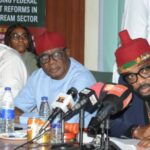
Peterside made the call while delivering a keynote address at the 2026 Nigeria Union of Journalists (NUJ) Press Week in Lagos, with the theme, “Politics, Ports and Public Interest: The Media’s Catalytic Role in Driving Economic Growth in Nigeria.”
He said the media had an important role to play in ensuring that Nigeria’s ports operate efficiently, stressing that the performance of the maritime sector has direct implications for businesses, consumers and the wider economy.
According to him, the ports should not be viewed only as points for cargo handling and revenue collection but as strategic economic infrastructure capable of supporting industrialisation, exports, investment and job creation.
Peterside said inefficiencies in port operations could increase the cost of food, machinery and manufactured goods, while prolonged delays in cargo clearance could affect business confidence and investment.
He urged journalists covering the maritime sector to move beyond reporting official statements and announcements by monitoring the actual outcomes of government policies and interventions.
The former NIMASA boss identified cargo dwell time, vessel turnaround time, cargo-clearance periods, inspection delays, documented charges, export processing and concession performance as some of the indicators that should receive sustained media attention.
He also called for the publication of quarterly port-performance scorecards to provide the public with regular assessments of the efficiency of port operations.
Peterside urged journalists to track government contracts, concessions, public expenditure and official commitments from announcement to completion, saying such monitoring would strengthen public accountability.
He noted that political governance remained important to the performance of the ports through regulation, institutional leadership, infrastructure development and coordination among agencies operating within the maritime sector.
However, Peterside cautioned journalists against attributing every disruption or delay at the ports to government failure.
He said the global maritime industry was also affected by factors such as geopolitical conflicts, adverse weather conditions, port congestion and disruptions to international trade routes.
He therefore urged the media to distinguish between domestic policy and institutional failures and external factors affecting international shipping.
Peterside also stressed the need to improve the technical capacity of journalists reporting the maritime industry, particularly in data journalism, maritime regulation, public procurement and international trade.
He said journalists with a deeper understanding of the sector would be better positioned to interrogate government policies and provide the public with meaningful information about port performance.
Peterside further drew attention to the reported 24.8 per cent increase in cargo throughput between 2024 and 2025, but cautioned that rising cargo volumes should not, on their own, be interpreted as evidence of broad-based economic prosperity.
He said the more important question for the media was how efficiently the ports enabled businesses to produce, trade and invest, as well as the extent to which port operations contributed to job creation and wider economic development.
He called for sustained investigative reporting that would connect developments at the ports with their impact on businesses, consumers and the Nigerian economy.