Follow Us on Google

From Godwin Tsa and Adanna Nnamani, Abuja
The final legal battle for the February 25 presidential election is set to unfold with the Labour Party (LP) and Peoples Democratic Party (PDP) standard bearers, Peter Gregory Obi and Alhaji Atiku Ababakar, respectively filing an appeal at the Supreme Court against the September 6, 2023 ruling of the Presidential Election Petition Court (PEPC).
No date yet has been fixed for the hearing of the cases but the Supreme Court is expected to give its final judgment on or before November 19, 2023, weekends inclusive.
While Obi and LP’s team of lawyers led by Dr. Livy Uzokwu complied with the statutory deadline for the filing of the appeal and approached the apex court on 51 grounds, which they termed an error in law to prove that the All Progressives Congress (APC) and President Bola Ahmed Tinubu did not win the election and that it was wrong for both INEC and the PEPC to declare him winner of the election when many incontrovertible points were proving otherwise, Atiku and PDP, in a 35 grounds of appeal dated September 18 urged the apex court to set aside the September 6 unanimous judgment of the Justice Haruna Tsammani led-five-member PEPC panel.
In enunciation their grounds Obi and the LP sought from the apex court, four key points; allow the appeal, set aside the perverse judgment of the PEPC, and grant the reliefs sought in the petition, either in the main or in the alternative.
On the issue of the 25 per cent requirement for Abuja, Obi and his party argued that the PEPC failed to appreciate that for the president to assume the office or position of the governor of Abuja, is also under a mandate to secure 25 per cent of the votes cast in the FCT.
They also accused the PEPC of overlooking the fuller purport of section 299 which will be more glaring on a calm examination of section 301 of the constitution.
On their part, Atiku and PDP lead counsel, Chris Uche contended that the judgment of the five-member PEPC was not only perverse, but laced with grave miscarriage of justice against him.
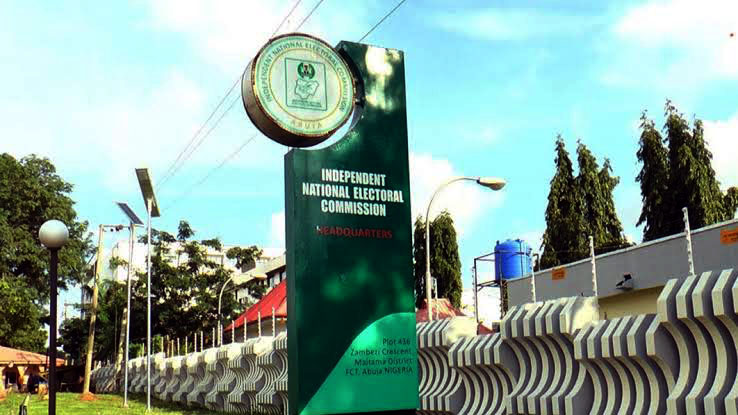
Atiku told the apex court that the PEPC erred in law, when it failed to nullify the presidential election on the grounds of non-compliance with the Electoral Act, 2022, even when evidence that was adduced before it, showed that the Independent National Electoral Commission, INEC, acted in breach of extant laws and regulations guiding the conduct of elections.
He accused the PEPC of reaching its unanimous decision based on gross misconstruction and misrepresentation of provisions of both the 1999 Constitution, as amended, and the Electoral Act, 2022.
The counsel contended that PEPC failed to adequately evaluate Atiku’s evidence before reaching its conclusions.
He faulted the court’s use of “disparaging words” against Atiku which “evinced bias.”
In another ground of the appeal, the senior lawyer drew the apex court’s attention to the lower court’s conclusions on the grounds that it “did not represent the true picture of the grounds of his petition” during trial.
Atiku equally contended that amongst other issues that the presidential election court erred in law when it “failed to nullify the presidential election held on February 25, 2023 on the grounds of non-compliance with the Electoral Act, 2022, when by evidence before the tribunal, INEC conducted the election based on grave and gross misrepresentation contrary to the principles of the Electoral Act 2022, based on the “doctrine of legitimate expectation.”
Accordingly, he prayed the Supreme to uphold his appeal and to set aside the decision of the lower which affirmed Mr Tinubu’s victory.
He said that in the alternative, the apex court should order a rerun election to be conducted for him with Tinubu being the 1st and 2nd runners up in the last presidential election.
While challenging the entire judgment of the tribunal, Atiku claimed that the lower court erred in law when it failed to determine his case with respect to the mandatory verification and confirmation required before the announcement of the results of the presidential election, pursuant to Section 64(4) of the Electoral Act, 2022.
He averred that all the Collation Officers, Returning Officers and INEC Chairman are under a statutory obligation to confirm and verify that the results being collated is consistent with the results directly transmitted from the polling units before making final announcement on the general elections.
Faulting the entire decision further, the appellant in ground eight claimed that the lower court erred in law when in its interpretation of Section 134(2) of the 1999 Constitution held that Tinubu does not need to score 25 per cent of lawful votes cast in the Federal Capital Territory (FCT).
According to Atiku, the issue submitted to the tribunal called for the interpretation of the material word “and” in the said Section 134(2), adding that the provisions of the Section are clear and unambiguous.
Atiku contended that the tribunal made grave error and miscarriage of justice in striking out the witness statement on oath and the entire evidence of his subpoenaed witnesses on the erroneous grounds that the said statements were not filed along with the petition.
According to him, the subpoenaed witnesses were essentially persons whose witness statement on oath could not practically be ready and available at the time of preparing and filing of his petition.
“PW 21 and PW 26 were witnesses whose witness statements on oath and experts reports were predicated upon the order of the same tribunal made pursuant to Section 146(1) of the Electoral Act, 2022, which authorized them on behalf of the appellants to proceed to inspect electoral documents in the custody of the 1st respondents (INEC) for the maintenance of the petition.
“The said witness statement on oath and the reports were products of the inspection conducted pursuant to the order of court and could not have been produced in advance before the filing of the petition, the same being dependent on access to electoral documents in the possession of an adverse party.”
Meanwhile, the Presidential candidate of the Labour Party(LP), Mr. Peter Obi is also expected to file his appeal before the apex court within 24 hours in line with the extant laws.
The decisions by Atiku and Obi to appeal the judgment of the PEPC is not uncommon in the nation’s post-election disputes.
Indeed, from Obafemi Awolowo V Shehu Shagari’s election petition in 1979 to Muhammadu Buhari V Olusegun Obasanjo in 2003, and Atiku V Buhari in 2019, presidential candidates who have lost elections in the past have consistently taken their cases to the Supreme Court.
By section 2 of the Supreme Court Election Appeals Practice Direction, the petitioners are expected to file their appeal with the Supreme Court within 14 days after the judgment of the tribunal.
At the tribunal level, the maximum time frame for the Appeal Court Justices to determine the petitioner’s case is 180 days from when the petitions were filed.
However, in accordance with section 132 (9) of the Electoral Act, 2022, “an appeal from a decision of an election tribunal shall be heard and disposed of within 60 days from the date of the delivery of the tribunal’s judgment.”
The decision of the apex court, whether it upholds or overturns the judgment of the tribunal, will be considered final.