Follow Us on Google

…calls for swift completion of Lagos-Calabar coastal highway
The Pan Niger Delta Forum (PANDEF) has demanded an increase in oil derivation to 50 per cent from the current minimum of 13 per cent, urging the National Assembly to abolish the onshore/offshore dichotomy in revenue allocation to oil-producing states.
The forum also insisted on the accelerated completion of the Lagos-Calabar Coastal Highway, renewed investment in gas infrastructure and the revival of modular refinery development, warning that the Niger Delta’s vast economic potential must not be allowed to remain untapped.
PANDEF, which marked its 10th anniversary, made the demands in a communiqué issued at the end of a meeting of its Board of Trustees and National Executive Committee held in Abuja on Tuesday.
On oil derivation, the forum said the current allocation had failed to reflect the environmental and developmental burdens borne by oil-producing communities over the decades.
“The meeting observed that this provision has remained unchanged for over two decades, notwithstanding the enormous environmental degradation, ecological challenges, and developmental burdens borne by oil-producing communities across the Niger Delta,” it said, referring to the constitutional provision for derivation.
PANDEF, therefore, called for an increase in the allocation “from the current minimum of 13% to a minimum of 50%” to enable oil-producing states and communities to address developmental deficits, environmental damage, health hazards and the social and economic consequences of petroleum exploration.
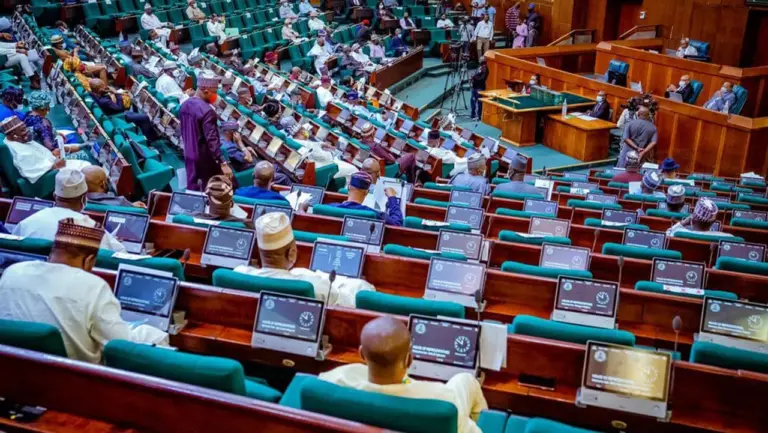
The forum also challenged the National Assembly to demonstrate the courage to abolish the contentious onshore/offshore dichotomy, which it said continued to undermine the interests of coastal communities.
It called on the Federal Government, the Revenue Mobilisation, Allocation and Fiscal Commission (RMAFC) and the National Assembly to “urgently address the longstanding and contentious issue of the onshore/offshore dichotomy in revenue allocation.”
Explaining its position, PANDEF said offshore oil and gas activities also affected the livelihoods of coastal populations, particularly through damage to marine ecosystems and fishing grounds.
“Consequently, oil spills and other incidents arising from offshore petroleum activities can have devastating effects on marine ecosystems, fishing activities, and the economic well-being of coastal populations, irrespective of whether the affected resources are located onshore or offshore,” the communiqué stated.
On infrastructure, the forum declared that the accelerated completion of the 750-kilometre Lagos-Calabar Coastal Highway was non-negotiable, describing the project as critical to connectivity, investment and economic integration across the coastal states.
“PANDEF demands that the accelerated, successful completion of the highway is non-negotiable,” it said.
The forum said the project would “boost connectivity across the coastal states, stimulate trade and investment, strengthen national integration, and unlock economic opportunities especially of the Blue and Marine resources throughout the Niger Delta and the wider Nigerian economy.”
It welcomed the Federal Government’s decision to retain the highway’s original broad alignment as a distinct strategic infrastructure project, following the reported reconsideration of an earlier proposal to integrate it into the East-West Road.
PANDEF also resolved to establish a high-level technical committee to assist the Federal Ministry of Works in advancing the project, drawing on previous design work by the Oil Minerals Producing Areas Development Commission (OMPADEC) and the Niger Delta Development Commission (NDDC), alongside professionals from the region.
The forum further called for the rehabilitation of dilapidated roads across the Niger Delta and the establishment of an appropriate north-south rail connection to link the region with the rest of the country.
On gas development, PANDEF said the Niger Delta’s vast reserves offered Nigeria an opportunity to become a major global player in the gas industry, provided the necessary infrastructure and investments were put in place.
Recalling its engagements with the Federal Government between 2016 and 2017, the forum said the region’s gas resources should be treated as a catalyst for economic growth and industrial development.
“Noting that the Niger Delta holds over 209 trillion standard cubic feet of natural gas reserves, the meeting stressed the need for the Federal and State Governments to prioritise investment in the sector as a catalyst for national economic growth and regional development,” it said.
PANDEF called for accelerated development of gas infrastructure and gas-based industries, including power generation, mini-liquefied natural gas plants, liquefied petroleum gas and compressed natural gas hubs, petrochemicals and other value-added industries.
It said the development of the sector should involve both tiers of government and private investors, rather than leaving the responsibility to the Federal Government alone.
The forum added that harnessing the region’s gas resources would “promote industrialisation, improve electricity supply, create employment and enhance economic prosperity in the Niger Delta, indeed Nigeria as a whole.”
On modular refineries, PANDEF urged the Federal Government to revive the initiative, recalling that it had been among the economic proposals discussed with the administration of former President Muhammadu Buhari.
The forum said a dedicated Modular Refinery Development Fund had been envisaged to mobilise financing for viable facilities and unlock the potential of the downstream petroleum sector.
It maintained that modular refineries would complement existing and proposed large-scale refining projects, including the Dangote Refinery and government-owned refineries.
“A well-regulated modular refining industry could reduce dependence on imported petroleum products, support local enterprise, generate employment, and stimulate ancillary industries throughout the Niger Delta and nationally,” it said.
PANDEF called on the Federal Government to give the initiative renewed priority and establish an appropriate framework for financing, licensing, technical support and environmental compliance.
The forum also called for sustained funding of environmental remediation across the region, particularly the Ogoni clean-up programme, while urging the Federal Government to extend the process to other polluted communities.
It identified Nembe Creek in Bayelsa State, Odidi in Delta State and Kula in Rivers State as areas requiring urgent attention.
“PANDEF therefore calls for adequate, sustained, and transparent funding of the Ogoni clean-up programme and urges the Federal Government to develop a comprehensive framework for replicating the remediation process across the wider Niger Delta,” it said.
The forum further urged presidential candidates in the 2027 general elections to demonstrate commitment to environmental justice through practical, measurable and time-bound plans for the restoration of affected communities.
On maritime infrastructure, PANDEF welcomed plans to modernise the ports of Warri, Port Harcourt and Calabar, as well as approvals for proposed deep-sea ports in Ibom, Akwa Ibom State; Bonny, Rivers State; and Agge, Bayelsa State.
It called for a sustainable financing framework for the projects, comparable to arrangements for major port infrastructure around the Lagos corridor.
The forum also proposed a South-South investment fund to mobilise resources from individuals, businesses, institutions and other stakeholders for investments in critical sectors, enterprise development and job creation.
The meeting reaffirmed PANDEF’s commitment to unity, peace and sustainable development across Akwa Ibom, Bayelsa, Cross River, Delta, Edo and Rivers states.
It commended the forum’s leadership for its contributions towards restoring peace in Rivers State and acknowledged its continuing efforts to resolve the oil-well dispute between Akwa Ibom and Cross River states, as well as promote improved inter-ethnic relations in Warri, Delta State.
As Nigeria approaches the 2027 general elections, PANDEF urged people of the South-South to vote peacefully for candidates whose programmes and demonstrated capacity align with the aspirations of the region.
The forum also called on Niger Delta indigenes holding public office, particularly at the Federal Government level, to demonstrate greater commitment to the development of the region.
It said the development of the Niger Delta was inseparable from Nigeria’s overall progress and urged relevant authorities to translate policy commitments and announced projects into tangible outcomes for the country.