Follow Us on Google
…Declares bold push for IMO council seat
By Steve Agbota
The Minister of Marine and Blue Economy, Adegboyega Oyetola, has called on maritime stakeholders to take deliberate actions to protect the world’s oceans, describing them as humanity’s most valuable but endangered asset.
This was as he announced the country’s readiness to reclaim its seat in Category C of the International Maritime Organisation (IMO) Council.
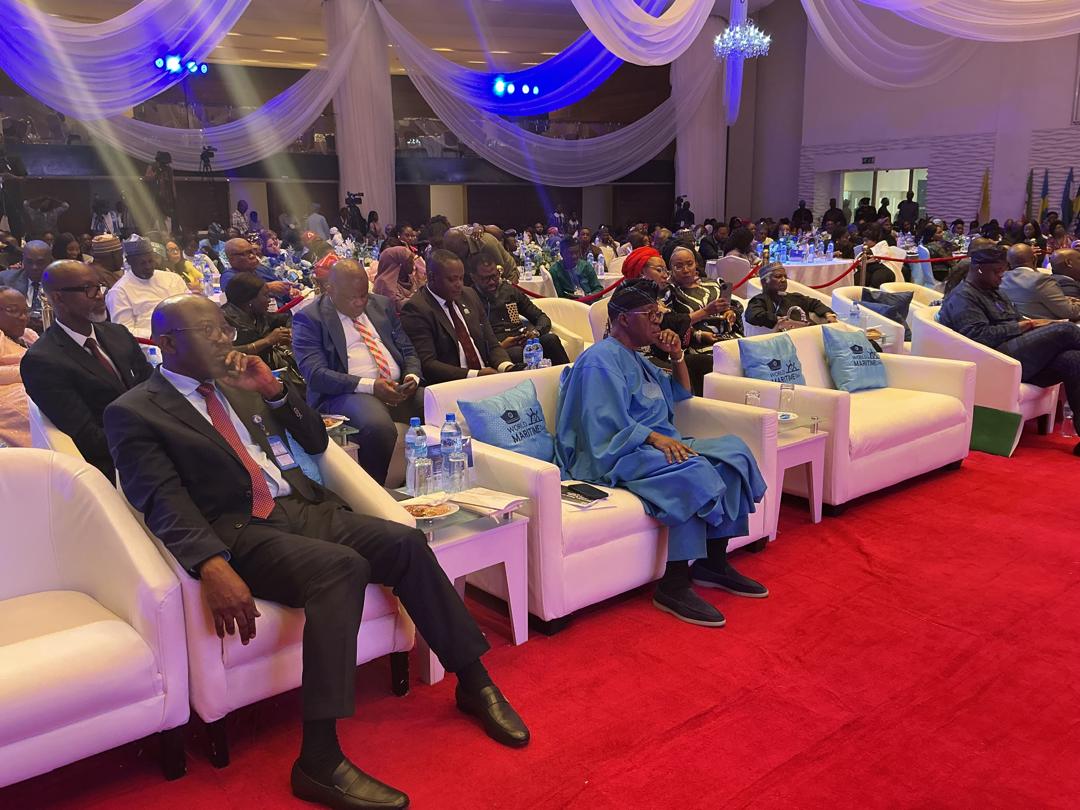
Speaking at the 2025 World Maritime Day celebration in Lagos on Thursday, with the theme “Our Ocean, Our Obligation, Our Opportunity,” Oyetola emphasised Nigeria’s determination to protect its ocean resources while unlocking the vast economic potential of the blue economy.
While describing the ocean as humanity’s lifeline, Oyetola warned that the resource that produces up to 80 per cent of the Earth’s oxygen and carries more than 80 per cent of global trade is under severe threat from pollution, overfishing, climate change and neglect.
“The ocean produces between 50 and 80 per cent of the earth’s oxygen, provides food and livelihoods for billions, and carries more than 80 per cent of global trade. Yet it is under mounting threat from pollution, overfishing, climate change and neglect. The message is clear: we must be stewards, not exploiters,” he said.
He said Nigeria is determined to enforce sustainable fishing practices, tackle marine pollution, safeguard biodiversity and strengthen maritime safety and security.
“At the Federal Ministry of Marine and Blue Economy, we remain committed to advancing marine governance, modernising port infrastructure, and deepening regional and international partnerships for ocean preservation. Considerable progress has been made in these areas, and I commend the various agencies under our Ministry, alongside stakeholders across the sector, for their steadfast contributions to the Renewed Hope Agenda of President Bola Ahmed Tinubu,” he said.
Oyetola described the blue economy as a new frontier of innovation, prosperity and inclusive growth, adding that opportunities abound in renewable ocean energy, marine biotechnology and sustainable aquaculture.
“Our vision is to harness these possibilities to make the sector a leading contributor to Nigeria’s economy, reducing our dependence on oil and gas, and driving diversification in line with national priorities. We are determined to realise this vision through consistent effort, bold reforms, and sustained collaboration,” he said.
The minister seized the occasion to reaffirm Nigeria’s intention to return to the IMO Council, insisting that the country is overdue to reclaim its rightful place in shaping decisions that govern the global maritime industry.
“It is in this spirit that Nigeria seeks a return to Category C of the IMO Council. Our country has long been a key player in the global maritime industry, and it is time to assume our rightful place in shaping the decisions that guide it.
“With the strong and broad support already expressed by IMO Member States across continents, we are optimistic of success in the forthcoming elections in London. Our return to the IMO Council will affirm not only Nigeria’s commitment to the maritime sector but also our recognised leadership within the international maritime community,” he added.
Meanwhile, the Director-General of the Nigerian Maritime Administration and Safety Agency (NIMASA), Dr Dayo Mobereola, delivered a goodwill message that called for stronger partnerships and increased financing for ocean health.
He lamented that Sustainable Development Goal 14, which focuses on life below water, remains one of the most poorly funded globally with an annual financing gap of about $150 billion.
“The blue economy remains one of the most underfunded sectors globally. Public funding will never be enough to close the gaps. To scale up financing for ocean health and the sustainable blue economy, the private sector must get involved. We need the right regulatory frameworks, incentive structures and de-risking mechanisms to mobilise the private sector and bring investment to the scale that is desperately needed,” he said.
Mobereola also highlighted Nigeria’s Deep Blue Project as a game changer in combating maritime insecurity in the Gulf of Guinea, saying it has become a game changer in addressing maritime security in Nigeria and the Gulf of Guinea Area.
He reaffirmed NIMASA’s commitment to IMO environmental frameworks, including a Marine Litter and Plastic Action Plan and advocacy for a just and equitable transition to net-zero greenhouse gas emissions for Sub-Saharan Africa and other vulnerable regions.
“We are strongly advocating for a just and equitable transition to net-zero greenhouse gas emissions for Sub-Saharan Africa, Small Island Developing States and Least Developed Countries to ensure fairness and social justice,” he added.
The Managing Director of the Nigerian Ports Authority (NPA), Dr Abubakar Dantsoho, who was represented by the Executive Director, Marine and Operations, Engr. Olalekan Badmus, also reinforced the call for collective action to protect the ocean.
Dantsoho described the ocean as the backbone of global trade and a critical driver of economic development, noting that over 90 per cent of global trade, accounting for nearly half of the world’s economic output, depends on maritime transport.
“This theme aptly captures the increased responsibility placed on each and every one of us as stakeholders in the maritime industry to take frontline ownership of the ocean, on whose sustainability the very sustenance of humanity rests,” he said.
While acknowledging studies showing that sea transport is the most environmentally friendly of all transport modes, Dantsoho stressed the need for deliberate efforts to make ports eco-friendlier.