Follow Us on Google
From Idu Jude, Abuja
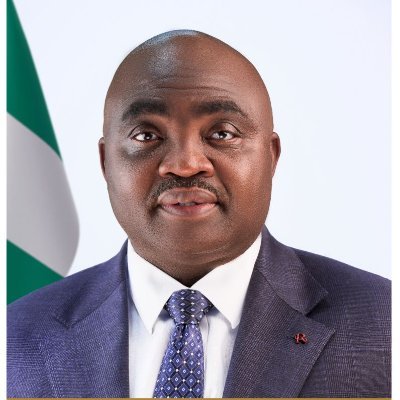
The Director General, Infrastructure Concession and Regulatory Commission (ICRC), Dr. Jobson Ewalefo, has disclosed that Nigeria’s transport sector faces a $575 billion shortfall over the next two decades, a gap that threatens to stall the country’s economic growth unless urgent reforms and private investment are mobilised.
Speaking on Tuesday at the ongoing Nigeria International Railway Conference in Abuja, Dr. Ewalefo noted that this requirement makes transport the second-largest investment need after the energy sector, which is projected at $759 billion, and forms a substantial part of the country’s overall $2.3 trillion infrastructure demand.
“These sums cannot be raised through public funding alone,” he said. “Our annual budgets have consistently fallen short of the $100 billion required to close the infrastructure gap. Without private sector involvement, rail development will remain underfunded and inadequate.”
Other News
Dr. Ewalefo stressed that strategic mobilization of private capital through Public-Private Partnerships (PPPs) is the only viable pathway to deliver a modern, efficient railway system capable of meeting 21st-century needs. He emphasised that railways are critical for reducing logistics costs, unlocking regional trade under the African Continental Free Trade Area (AfCFTA), and advancing Nigeria’s climate commitments.
Drawing lessons from countries such as India, Hong Kong, Brazil, and Europe, he highlighted that private-sector-led reforms, underpinned by clear regulations, consistently reposition rail as a competitive and sustainable transport mode. He cited Nigeria’s ongoing standard-gauge projects—including Abuja–Kaduna, Lagos–Ibadan, and Warri–Itakpe—and the concessioned e-ticketing system as evidence of PPP success. However, he warned that challenges such as financing gaps, underutilized freight capacity, and security issues could undermine progress if not addressed.
To reposition Nigeria’s railways, Dr. Ewalefo proposed a five-pillar policy agenda: legal and institutional reforms, including unbundling the Nigerian Railway Corporation; financing innovations like viability gap funding, infrastructure bonds, and pension fund investments; prioritizing freight corridors such as Lagos–Kano and Port Harcourt–Maiduguri; enhancing operational efficiency through digital technology and rolling stock leasing; and integrating rail development with climate goals and urban transit systems.
“The reality is simple,” he concluded. “Transport alone will demand $575 billion in the next two decades, second only to energy. Only private capital, mobilized through well-structured PPPs, can deliver this. The decisions we make today will determine whether rail becomes the backbone of our national transformation or remains another missed opportunity.”