Follow Us on Google
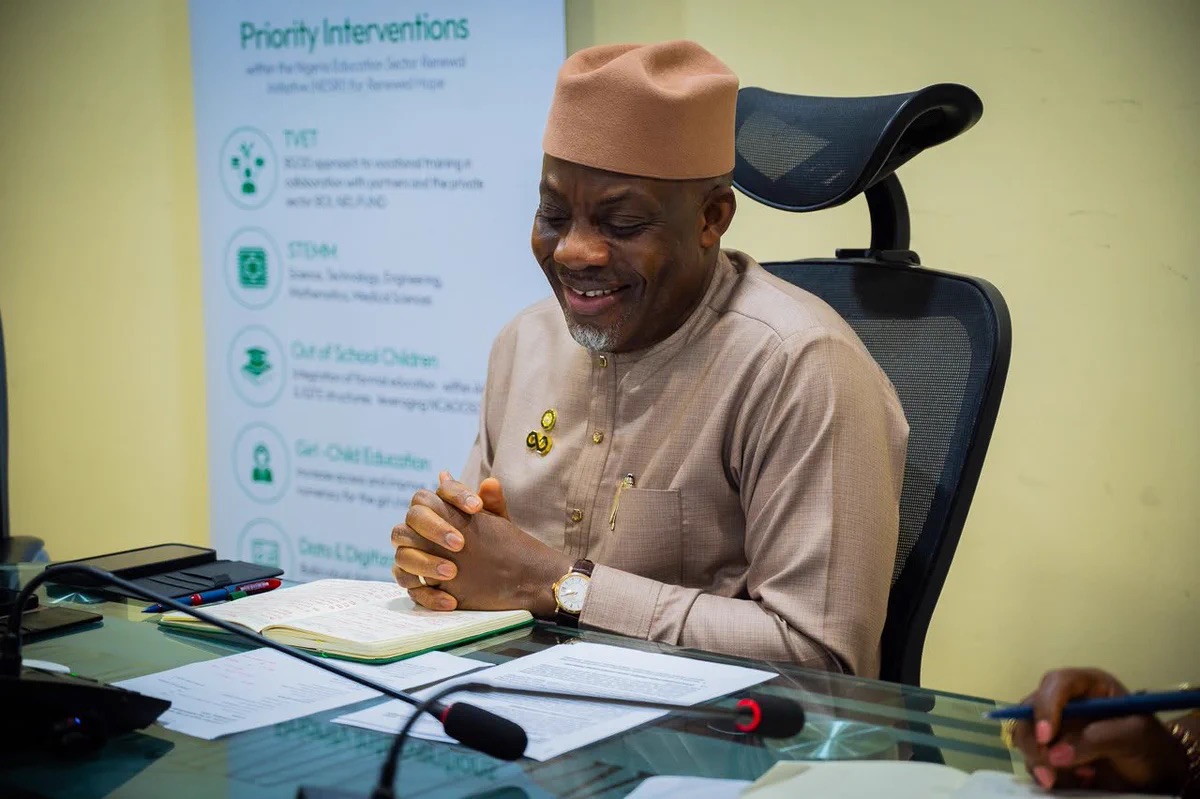
From Fred Ezeh, Abuja
Minister of Education, Dr. Tunji Alausa, has disclosed that only four of Nigeria’s 68 federal universities are making meaningful efforts to raise funds outside government allocations, describing the situation as unacceptable.
Consequently, he has directed Vice-Chancellors to urgently diversify their institutions’ funding sources by tapping alumni, industry, philanthropists, research grants and endowments rather than relying predominantly on government allocations.
Alausa, who spoke at the National Advancement Forum 2026 in Abuja yesterday, said government funding alone could not adequately meet the growing financial requirements of universities and challenged their administrators to take greater responsibility for mobilising resources.
“Government funding is obviously not enough. Universities live, function and excel on blended funding,” he said.
The minister urged Vice-Chancellors to move beyond merely administering government allocations and become actively involved in building relationships with alumni, businesses, philanthropists, research funders and other potential partners.
“University leaders in advanced education systems are actively involved in networking and resource mobilisation. They don’t sit in their offices waiting for government funding,” he said.
Alausa said Nigerian universities possessed enormous intellectual and human capital that could be leveraged to attract funding for laboratories, scholarships, research chairs, innovation programmes and other strategic projects. He, however, stressed that the Federal Government was not withdrawing financial support from public universities.
According to him, President Bola Tinubu’s administration had demonstrated its commitment to education through improved budgetary allocations, infrastructure investment and other interventions.
He said the Federal Government currently bears the full personnel costs of federal universities, while the institutions retain 75 per cent of their internally generated revenue and continue to benefit from direct and special interventions by the Tertiary Education Trust Fund (TETFund).
Alausa maintained that such government support must increasingly be complemented by diversified and sustainable sources of income if the universities were to compete effectively and meet their development needs. As part of the new funding strategy, the minister directed that university Advancement Offices should henceforth report directly to the Vice-Chancellors rather than Registrars.
Other News
He also directed that Directors of Advancement should have a minimum internal tenure of five years, renewable where appropriate, to provide the stability required to cultivate long-term relationships with donors, alumni, industries and other funding partners.
“Advancement Office operation is a professional job. Advancement officers are professional fundraisers who require institutional support and stability to deliver results,” he said.
Alausa also directed universities to strengthen engagement with their alumni by establishing functional databases and deploying technology to maintain lifelong relationships with graduates within and outside Nigeria.
He said alumni should be regarded as strategic partners in the growth and development of their former institutions rather than people contacted only during ceremonies and special occasions.
The minister also addressed concerns over the management of research and endowment funds, recalling that some of the accounts had previously been moved into the Treasury Single Account (TSA), creating difficulties in accessing funds and affecting donor confidence.
He said President Tinubu had since directed the development of a framework that would allow research and endowment accounts to be moved out of the TSA and maintained in commercial banks chosen by the institutions.
“President Bola Ahmed Tinubu has met you beyond halfway. He has given you the leverage and the opportunity to do your jobs well. You must now take advantage of it,” Alausa said.
He disclosed that the Federal Ministry of Education, in collaboration with the Nigerian Higher Education Foundation (NHF), would develop a comprehensive national framework for sustainable financing of tertiary institutions.
According to him, the framework would cover endowment governance, research grants, advancement structures, alumni giving, industry partnerships, philanthropy incentives, revenue management, accountability and transparency.
Alausa said public universities would be progressively brought under the framework, with each institution expected to establish an endowment, maintain a functional alumni database, strengthen its capacity to attract research funding and develop productive relationships with industry, philanthropists and other strategic partners.
He said the objective was to move Nigerian universities towards a sustainable blended-funding model in which government support was complemented by resources generated through institutional partnerships, research, endowments, alumni and philanthropy.