Follow Us on Google
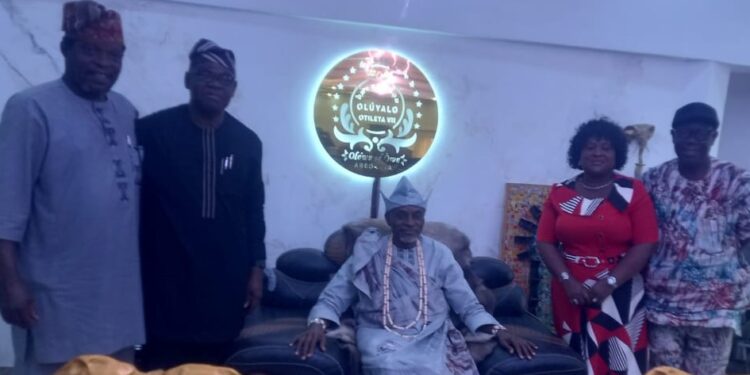
THE League of Veteran Journalists, Ogun State Chapter, has begun moves to establish a journalism museum in Abeokuta to preserve the history, artefacts and institutional memory of journalism in Nigeria.
The proposed museum, planned for the Iwe Irohin Press Centre site along Moshood Abiola Way, Abeokuta, is expected to house old newspapers, historical documents and equipment associated with the evolution of journalism, including an old printing machine linked with the history of Iwe Irohin.
The initiative has received the backing of the Olowu of Owu Kingdom, Oba (Prof.) Saka Matemilola, who endorsed the project during a recent courtesy visit by members of the League.
The project is particularly significant to the Nigerian Institute of Journalism Alumni Association (NIJAA), given the strong presence of NIJ alumni among members of the League and those driving the initiative.
Chairman of the Ogun State Chapter of the League, Mr. Ayodele Akinsola, is an NIJ alumnus.
Other NIJ alumni associated with the League include Mr. Eddy Aina; Barrister Demola Badejo, former Executive Director of the National Broadcasting Commission; Prince Dimeji Kayode-Adedeji; and Mr. Kayode Bello, among others.
Their involvement provides another link between the proposed museum and the wider history of journalism education and professional practice in Nigeria.
The history of Nigerian journalism is closely tied to Abeokuta, where Iwe Irohin, widely regarded as Nigeria’s first newspaper, was established in the 19th century.
Against that background, the League believes that preserving newspapers, printing equipment, documents and other materials from different eras would help safeguard the profession’s institutional memory for future generations.
Properly developed, the museum could serve not only as a repository of historical materials but also as a centre for research and education where students, journalists, scholars and members of the public can encounter the publications, personalities, technologies and ideas that helped shape Nigerian journalism.
Other News
The initiative also goes beyond the preservation of physical artefacts.
During the visit to the Olowu, Akinsola expressed concern over the spread of misinformation and unprofessional practices in journalism and stressed the need for greater responsibility among practitioners.
Oba Matemilola, while supporting the museum initiative, also called for responsible journalism and greater mentorship by experienced journalists to help guide younger practitioners.
The emphasis on preservation, professionalism and mentorship resonates strongly with NIJAA’s renewed effort to reconnect generations of graduates of the Nigerian Institute of Journalism and harness their experience in strengthening the profession.
NIJ alumni occupy prominent positions across journalism, broadcasting, public relations, publishing, government and other areas of public service, while many continue to contribute to initiatives aimed at strengthening professional standards.
For NIJAA, the proposed museum is therefore more than a collection of old newspapers and obsolete equipment.
It represents an opportunity to preserve a living history of Nigerian journalism and to ensure that younger generations understand the struggles, innovations and contributions of practitioners who helped build the profession.
It also demonstrates the value of alumni networks beyond reunions and social interaction by showing what can be achieved when professional experience, institutional memory and commitment to future generations come together.
NIJAA commends the League of Veteran Journalists, Ogun State Chapter, and particularly its NIJ alumni members for their efforts to preserve journalism history and promote professionalism and mentorship.