Follow Us on Google
By Daniel Kanu
The off-season elections conducted by the Independent National Electoral Commission (INEC) a fortnight ago as ordered by the courts have come and gone, but the matters arising from the exercise have continued to resonate.
Off-season elections refer to electoral processes that are held outside the usual general election cycle.
Given the challenges Nigerians face in general elections, there have been expectations that re-run elections should be an opportunity for the electoral body to redeem itself from mistakes of the normal season elections.
The reason is simple: Due to their limited number, off-cycle elections are ordinarily expected to produce better outcomes than the general elections. But that has not been the case as the problems associated with the general elections are often serially repeated, some in the worst forms.
Almost all the election observers who monitored the off-season elections decried cases of violence, intimidation, and vote-buying, among other vices that characterised the elections in Imo, Kogi and Bayelsa states.
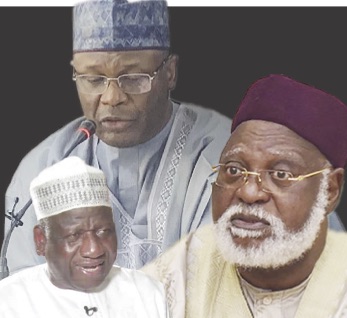
The National Peace Committee headed by former Head of State, Abdulsalami Abubakar, noted in a statement that “the persistence of the culture of vote-buying, intimidation, and voter apathy, among others, are disturbing.
“A democratic culture will only grow if we participate in cleaning up the process of our elections because, in the end, we are the victims.”
This is an assessment deeply shared by several stakeholders. Electoral irregularities, and security concerns often associated with the main elections were prevalent in the three states that held off-cycle polls while the INEC officials appeared helpless.
Evidently worried by these increasing irregularities, former President Goodluck Jonathan, after casting his vote at his country home in Bayelsa State in one of the recent bye- elections, canvassed the need to do away with the off-cycle elections.
He urged the National Assembly to enact a law that would end it, arguing that a time may come when even the presidential election would be off-season.
Unfortunately, it may not be that easy. Off-cycle election, an entirely Nigerian phenomenon which came into being in 2006, is increasingly being ingrained in our system. But the 1999 Constitution as amended sanctioned it.
It’s worthy to note that off-season elections are primarily due to court rulings, which overturned original election results. Political commentators have argued that as the courts continue to play a major role in the nation’s elections, the number of states conducting off-season elections would likely be lengthened, except cases are speedily dispensed.
Section 180 (2) of the Nigerian Constitution specifies that a governor vacates the office four years from the date they first took the oath of office.
Going by electoral records, for now, eight states conduct off-cycle elections. They include Anambra, Edo, Osun, Ondo, and others. It started when Peter Obi, then of the All Progressives Grand Alliance (APGA) in Anambra State, successfully challenged the election of Chris Ngige, then of the Peoples Democratic Party (PDP) through a court process that lasted for three years. Since the constitution says a governor is entitled to four years, Obi was sworn in for a fresh period of four years from the day of his victory in court. Most of the other off-cycle elections followed the same trajectory.
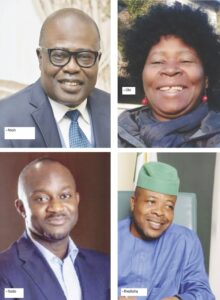
In Imo State, for instance, the 2019 polls elected former Deputy Speaker of the House of Representatives, Rt. Hon. Emeka Ihedioha as governor. But a Supreme Court ruling in January 2020 declared victory in favour of Hope Uzodimma, who by INEC results, came fourth at the election. Meanwhile, Uzodimma’s tenure started counting from 2020.
Also, Kogi State’s governorship election became off-season following a court ruling that nullified Governor Ibrahim Idris’ victory in 2007 and ordered that a by-election be held in 2008.
Commentators have submitted that because of the desperation of politicians, off-season elections are now marred by controversies. Instead of enhancing public trust and building confidence in the electoral system, the exercise, in many aspects, has deepened the crisis of legitimacy in our elections.
The reality is that from late arrival of polling materials and officers to polling stations to ballot snatching, and thumb printing to thuggery and killings, vices are widespread.
Speaking at the Electoral Reform Roundtable with the theme: “Unpacking Nigeria’s 2023 General Elections and Prospects for Electoral Reforms” organised by the Kofi Annan Foundation and Yiaga Africa, the Chairman of IPAC, an umbrella body of all political parties in Nigeria, Yabagi Sani, said that Nigeria is too large for INEC to cover every aspect of elections.
While calling for the unbundling of INEC and the amendment of the Electoral Act, Sani said: “Elections are lost and won at the polling units, but to our surprise, elections were not counted at the polling units. The counting has always been the problem.
“Collation is as critical as the BVAS. I am glad that the Senate after their retreat resolved that election results transmission should be made mandatory.
“So, the legal framework they used was not what Nigerians were told. So, we were deceived by the law which needs to be amended and we should have other institutions that will work with INEC because the country is too big for INEC to cover in every aspect of elections.”
For the Executive Director, Yiaga Africa, Samson Itodo, the legal framework for elections in Nigeria needs to be revoked because the election had shown that there are inconsistencies in the law.
“There are big reasons the law should be amended. There are also inadequacies with the legal framework. But again, elections are not just about laws because you can have the best of laws, if politicians do not change their attitude towards politics, towards elections and towards democracy, we will engage in this cycle of reforms to our electoral process,” Itodo told Sunday Sun.
Former Provost, Abia State College of Education Technical, Arochukwu (ASCETA), Dr Phillips Nto, told Sunday Sun that the off-cycle election has continued to be a nightmare like the general election, submitting that “all the atrocities that characterised the general elections are always witnessed in the off-season ones are most times even in a deadlier style.
“We are all witnesses to the irregularities, the manipulations, violence, snatching of ballot boxes, vote-buying, sometimes, even killings that also characterize the off-season elections. It has never in any way been better in conduct, in terms of having a free, fair, credible and transparent poll when compared to the general election”.
Reports from the last governorship re-run, for instance, revealed that in many polling units in Imo State, voters reportedly stayed away from exercising their civic rights due to fear of violence.
In Bayelsa State, there were reports of violence with the PDP candidate and incumbent Governor Douye Diri and the main opposition, All Progressives Congress (APC) candidate, Timipre Sylva, a former governor of the state, trading damaging allegations.
Also in Kogi State, there was less of violence, but more of another nightmare. There were reports in the state of pre-filled election results forms before the election started in five local government areas of Ogori-Magongo, Adavi, Ajaokuta, Okehi and Okene, prompting INEC to cancel the results.
Besides, votes were freely sold. Operatives of the Economic and Financial Crimes Commission (EFCC) reportedly seized millions of naira from suspected vote buyers and sellers.
The country director of ActionAid Nigeria and former head of Nigeria Civil Society Situation Room, Ene Obi, expressed worry at the various performances of INEC, including its off-season election conduct.
Obi who described the last election as worrisome, even called for a probe of how INEC expended the money released to it for civic education and electronic voting and transmission of results.
Said Obi “So, we have to put more pressure on the lawmakers to amend the laws and INEC should also follow the law and their guidelines.”
Dr Lawrence Uwakwe, a university teacher, told Sunday Sun, that a robust democracy is built on the principle of free, fair and credible elections, and that off-season elections are a crucial component of Nigeria’s democratic process, insisting that “INEC must ensure that these elections are conducted with the same level of integrity and transparency as general elections to strengthen the country’s democracy”.
Uwakwe said that addressing the challenges associated with off-season elections will boost voter confidence.
According to him, “when voters see that their votes count, and that their voices are heard they are more likely to participate in all elections, either season or off-season”.
But in all, beyond the logistical nightmares that are now associated with off-season elections, political observers contend that the country must find a constitutional response to the challenge of making INEC to conduct elections every other day that must count by being free, fair and credible.