Follow Us on Google

From Aidoghie Paulinus, Abuja
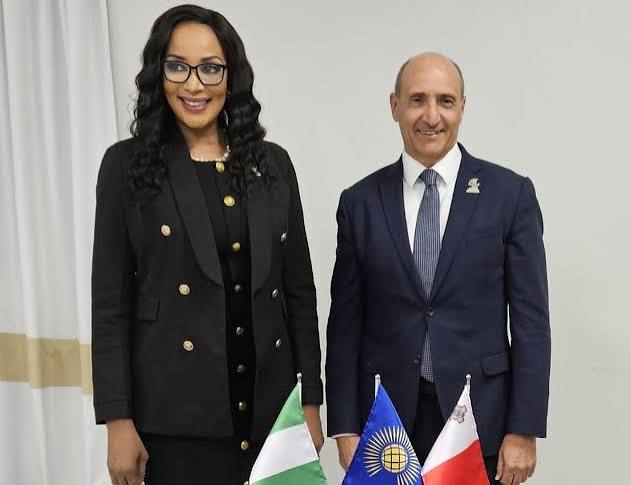
Nigeria has secured a leadership position in the Commonwealth’s mechanism for protecting democracy, human rights and the rule of law, following the appointment of the Minister of Foreign Affairs, Bianca Odumegwu-Ojukwu, as Vice-Chair of the Commonwealth Ministerial Action Group (CMAG).
The appointment, announced on the sidelines of the 28th Commonwealth Heads of Government Meeting (CHOGM 2026) in St. John’s, Antigua and Barbuda, places Nigeria in a position to contribute to the Commonwealth’s collective response to unconstitutional changes of government, electoral irregularities, human rights violations and other threats to democratic governance across its 56 member states.
The media aide to the Minister of Foreign Affairs, Magnus Eze, who disclosed the development in a statement issued in Abuja, described the appointment as a significant diplomatic milestone for Nigeria and an affirmation of the country’s continued engagement in Commonwealth affairs.
Eze said the appointment was made during a meeting of the ministerial group on the sidelines of the week-long summit, which brought together leaders and representatives of Commonwealth member states, with King Charles III, Head of the Commonwealth, also in attendance.
According to him, CMAG, chaired by Malta’s Chris Fearne, is a rotating body of foreign ministers mandated to uphold the Commonwealth’s fundamental political values, particularly democracy, human rights, good governance and the rule of law.
“With this development, the country has secured a key leadership position in the Commonwealth body responsible for safeguarding democracy, human rights and the rule of law,” he said.
Other News
Eze explained that CMAG was established in 1995 under the Millbrook Commonwealth Action Plan as a mechanism for responding to serious or persistent violations of the organisation’s shared political values.
He said the group was empowered to assess political and constitutional developments in member countries and recommend appropriate collective action where necessary.
Initially established to respond largely to unconstitutional changes of government, particularly military coups, CMAG had its mandate expanded by Commonwealth leaders in 2011 to allow more proactive engagement with member states confronting threats to democratic institutions and constitutional governance.
“Today, CMAG addresses a wide range of concerns, including unconstitutional alterations of political arrangements, suspension of parliaments, alleged electoral irregularities, restrictions on political participation, interference with judicial independence, human rights violations, and constraints on the media and civil society,” Eze stated.
He said Odumegwu-Ojukwu’s emergence as Vice-Chair would strengthen Nigeria’s participation in discussions and collective decisions on democratic governance, institutional accountability and the protection of fundamental freedoms across the Commonwealth.
“Ambassador Odumegwu-Ojukwu’s emergence as Vice-Chair places Nigeria in a strategic leadership position within one of the Commonwealth’s most consequential ministerial mechanisms, reinforcing the country’s engagement in shaping conversations and collective responses on democratic governance, institutional accountability and the protection of fundamental freedoms across the Commonwealth,” he said.
Eze added that the appointment underscored Nigeria’s commitment to dialogue, international cooperation and the principles of democratic governance shared by Commonwealth member states.