Follow Us on Google
By Artem Kovalenko
From the outset of Russia’s full-scale invasion of Ukraine in 2022, disregard for the principles of nuclear safety and security has been a persistent feature of Russia’s misconduct.
In particular, Russia has threatened the safe operation of Ukrainian nuclear power plants, raising the risk of a nuclear emergency whose effects would be felt far from the borders of Ukraine.
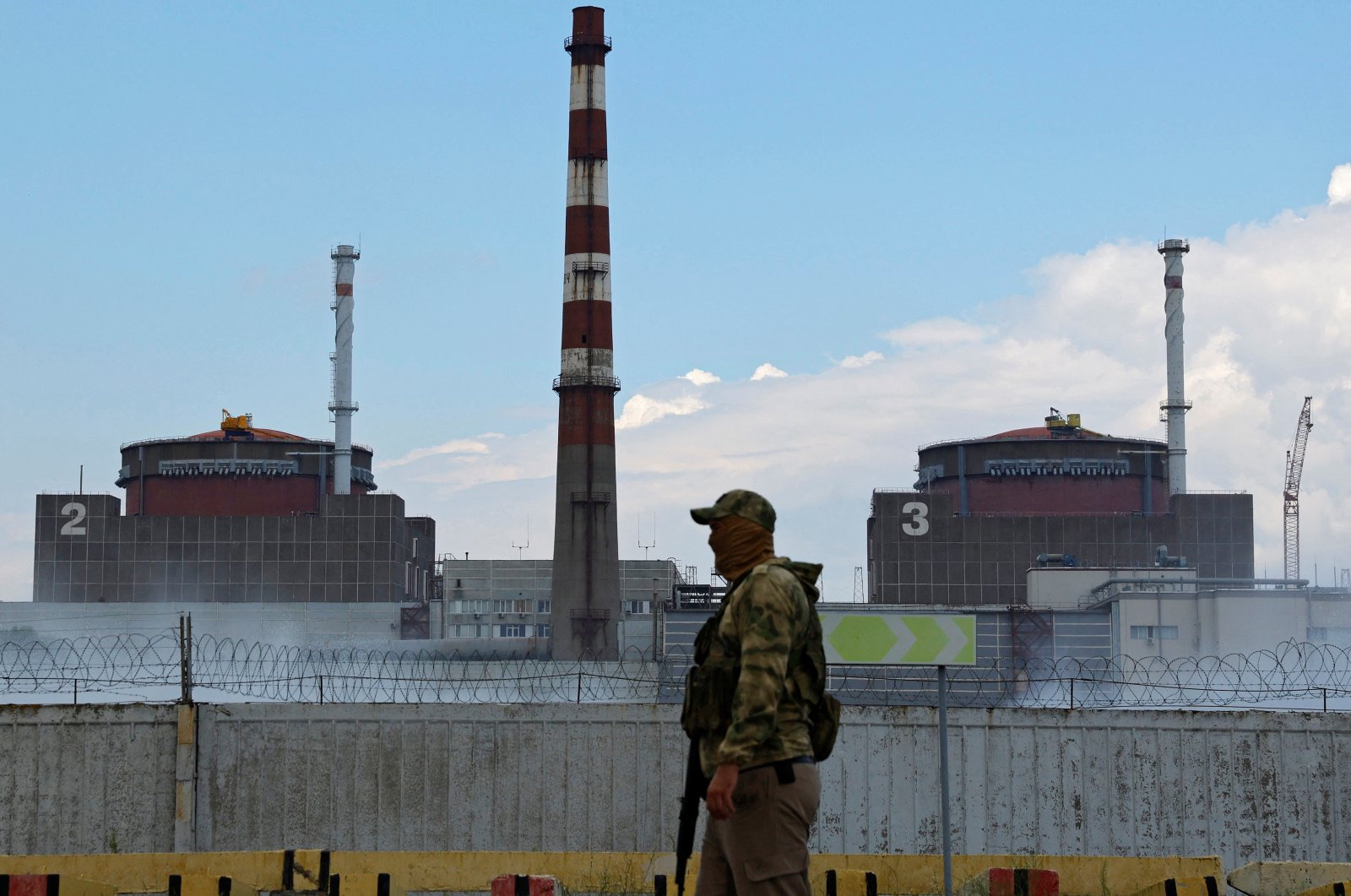
Four years ago, on March 4, 2022, Russian military forces attacked and seized the Zaporizhzhia Nuclear Power Plant (ZNPP) – the largest nuclear plant in Europe (six reactors, 5,700 MW installed capacity).
Russia turned ZNPP into a military base, disrupted its normal operations, damaged infrastructure, detained plant employees and restricted access for experts from the International Atomic Energy Agency to critical areas of the plant, making a full and objective safety assessment impossible.
Four years of illegal control pose a direct threat to global nuclear security. For the first time in history, a civilian nuclear facility of this scale is being operated not by its lawful operator, but by an aggressor state.
The Russian Federal Service for Environmental, Technological and Nuclear Supervision (“Rostechnadzor”) directly controls the operation of the NPP and has already launched an unlawful modernization of the station’s radiation monitoring systems without the authorization of the legitimate operator (Ukraine) and without compliance with IAEA standards.
On July 1, 2023, the President of Ukraine, Volodymyr Zelenskyy, stated in an interview with Spanish media: “The Zaporizhzhia Nuclear Power Plant is mined — that is a fact. The IAEA confirms that the Zaporizhzhia plant is mined”.
Russia’s activities at ZNPP constitute a systematic violation of international nuclear law and treaty obligations under the Statute of the International Atomic Energy Agency, the Convention on Nuclear Safety (1994), and UN General Assembly Resolutions ES-11/1 and ES-11/4.
As of June 2026, the ZNPP continues to be a critical unresolved issue within the framework of the peace settlement for the Russia-Ukrainian war.
However, Ukraine and Russia maintain fundamentally different visions regarding the settlement of the Zaporizhzhia NPP issue.
Ukraine is pushing for the total restoration of its sovereign control over the Zaporizhzhia NPP and the demilitarization of Enerhodar, emphasizing that Russia must be entirely barred from the plant’s management.
Only this approach complies with international law and stands as the sole option to eliminate the threat of an illegal restart of the Zaporizhzhia NPP.
Russia demands the preservation of its operational control over the Zaporizhzhia NPP, alongside the scheduled restarting of the station’s nuclear reactors under its domestic Russian regulatory framework.
However, any attempt to restart the nuclear reactors without full compliance with international safety standards and independent regulatory oversight constitutes a direct threat to nuclear safety.
Meanwhile, the US is proposing its own compromise option: tripartite management (Ukraine-US-Russia, 33/33/33%) with the subsequent distribution of the generated electricity.
However, this scenario remains unacceptable because granting Russia any stake in the ZNPP’s management would de facto legitimize the occupation, representing a direct violation of Ukraine’s national sovereignty.
In response to the US initiative, Ukraine proposes a joint US-Ukrainian management structure for the Zaporizhzhia NPP (50/50%). Under this model, the American side would distribute 50% of the generated electricity, while Russia would be completely barred from the plant’s management. This option complies with international law and eliminates the risk of legitimizing the occupation of the ZNPP.
At the same time, Ukraine’s core position remains clear: the Zaporizhzhia NPP must be fully demilitarized and returned under Ukrainian sovereign control, as this is the only guarantee of nuclear safety for Europe and the entire world.
To prevent a potential nuclear catastrophe, the international community must publicly support the full return of the Zaporizhzhia NPP under Ukrainian sovereign control, while condemning the illegal modernization of the plant and plans to restart its reactors under Russian licenses.
Concurrently, it is of paramount importance to endorse the expansion of the IAEA mission’s mandate to enable full-scale independent monitoring of the Zaporizhzhia NPP.
In turn, China, as a permanent member of the UN Security Council and a nuclear-weapon state bearing special responsibility for maintaining the nuclear non-proliferation regime, must use its diplomatic influence on Russia to halt the illegal actions of “Rostekhnadzor” and prevent the restart of the ZNPP reactors.
Thus, the only path to restoring security in Europe is the complete and immediate withdrawal of Russian troops and personnel from the Zaporizhzhia NPP, its return under Ukrainian control, the release of all unlawfully detained individuals, and increased international pressure, including sanctions against “Rosatom” and “Rostekhnadzor”. The ZNPP was and remains a Ukrainian facility, and its return is not only a matter of Ukraine’s sovereignty, but also a matter of global security.”
• Artem, a public relations expert, writes from Kyiv, Ukraine