Follow Us on Google

A revolution is sweeping every nook and cranny of Nigeria in a manner that is so unprecedented and bizarre. It is true that President Muhammadu Buhari is fulfilling his campaign promises of revolutionising agriculture. However, because it is not politics and political gerrymandering that dominate our national discourse, this agricultural revolution is getting less attention.
Many Nigerians under the age of 40 only associate pyramids with the Great Pyramids of Giza in Egypt. Those who are opportune got to read about Nigerian pyramids only in academic circles when studying the colonial and post-Independence agro-economic development of Nigeria.
This silent revolution is reincarnating the Nigerian pyramids all over the country. Some days ago, the biggest pyramid in Nigeria was unveiled in Kebbi State. The pyramid was a rice pyramid. It was unveiled by President Buhari. Before that of Kebbi, other rice pyramids were built and unveiled in Taraba and Kano states, among others.
Unlike the missing pyramids of the defunct marketing boards days, made of groundnuts, cotton and cocoa, which were restricted to certain regions of the country, the emerging pyramids are made up of rice, the staple food of the country that defies ethnic, sectional, cultural or religious dichotomies. Rice is the staple food of the rich and the poor Nigerian. It is the staple food of rural and the urban dwellers. It is the staple food of southerners and northerners.
It is worth mentioning that several attempts have been made by past governments to recreate agriculture through various schemes such as “Operation Feed the Nation” and the “Green Revolution” initiative of the Shehu Shagari administration during the Second Republic, among others. But none of the previous efforts created the desired impact, largely due to inadequate financing.
President Buhari understood the situation properly by identifying adequate financing and access to financing as a cog in the wheel of progress of the country’s agricultural development.
This is where the Central Bank of Nigeria (CBN) came in, under the efficient and dynamic leadership of Mr. Godwin Emefiele. In keeping with his promise to run a central bank that would serve the growth and development needs of the country, Emefiele has ensured the CBN becomes a strategic driver of economic growth of the country. The CBN under him has introduced various initiatives for concessionary funding of agriculture, which is widely recognised as the sector that has the potential to drive economic growth.
Emefiele’s CBN initiatives and intervention schemes were broadly classified under sectors of agriculture, manufacturing, micro, small and medium-scale enterprises, power and energy and banking. But nowhere have these interventions yielded more so quickly as in the agriculture sector, where rice production has received the most focus.
There is no gainsaying that the CBN development finance initiatives like the Agricultural Credit Guaranty Scheme, Commercial Agricultural Credit Scheme and Anchor Burrowers programme (ABP), among others, have tremendously helped to reposition the agriculture sector in the country.
The chief among these initiatives that led to the reincarnation of the Nigerian pyramids is the ABP, which was launched by President Buhari on November 17, 2015, to create a linkage between anchor companies involved in the processing and small holder farmers of the required key agricultural commodities. The programme has focused primarily on rice production.
The primary role of the ABP is the provision of farm inputs in kind and cash (for farm labour) to smallholder farmers to boost production of these commodities, stabilise inputs supply to agro processors and address the country’s negative balance of payments on food. The objective is to boost agricultural production and non-oil exports in the face of unpredictable crude oil prices and its resultant effect on the revenue profile of Nigeria.
Anchor Borrowers empowered rice farmers and processors in the country and resulted in a significant boost in rice production in the country. Statistics from the CBN indicate that the ABP has added six million metric tonnes to rice supply in the country and created nearly six million direct jobs in a year. Data from Rice Farmers Association of Nigeria (RIFAN) states that about two million direct jobs are created in a cropping season. And Nigeria has three cropping seasons in a year, all of them fully funded by the CBN. These jobs are restricted to only the production value chain of rice, and do not include millions other jobs created in the processing, packaging, transport and marketing sectors of the rice ecosystem. This is clearly a revolution in rice production in the country, which succinctly confirms that agricultural financing is key to faster growth of the economy.
It is safe to say that there is no other sector of the economy that has employed similar number of people within the same period. But that is not to say we are where we should be, it is just an acknowledgement of the mileage covered. The road to self-sufficiency in food production still stretches further.
Through ABP alone, Nigeria became Africa’s biggest producer of rice. It surpassed Egypt, which hitherto occupied that position.
President Buhari truly understands and appreciates the fact that a nation can hardly sustain its economic growth without a strong agricultural base and the reasons are obvious. Agriculture provides food, raw materials and employment and it is bandied that agriculture is the largest provider of employment, and it is estimated that more than 65 per cent of industries and business activities are supported by agriculture at primary and secondary levels.
Agriculture is also important in international trade. It helps to ensure balance of trade, reduce import, increase export, generate foreign exchange, impacts transportation, and helps to improve standard of living of the people. Many advanced economies developed on the back of agriculture.
The ABP has so far saved Nigeria N369 billion per annum, while the country consumes N1.5 billion worth of rice every day. This breakthrough has saved the country the challenge of sourcing forex or devaluing our currency to finance this monstrous import wage bill.
This singular policy of government has transformed peasant farmers to millionaires, burnished our image internationally, and saved the country the challenges of securing foreign exchange to service multi-billion-dollar rice import bills, among others.
I came face to face with the multiple effects of the rice revolution in Kano during a visit recently. From one of the superstores I visited, I felt proud looking at a small pyramid of bags of rice, inscribed with “Proudly Nigerian.”
When I engaged the manager of the superstore, his revelations were mind-boggling. He told me that, in Kano alone, there are more than 20 large-scale rice milling companies that employ at least 500,000 workers each. This does not include the small-scale millers who are in their hundreds scattered all over the state.
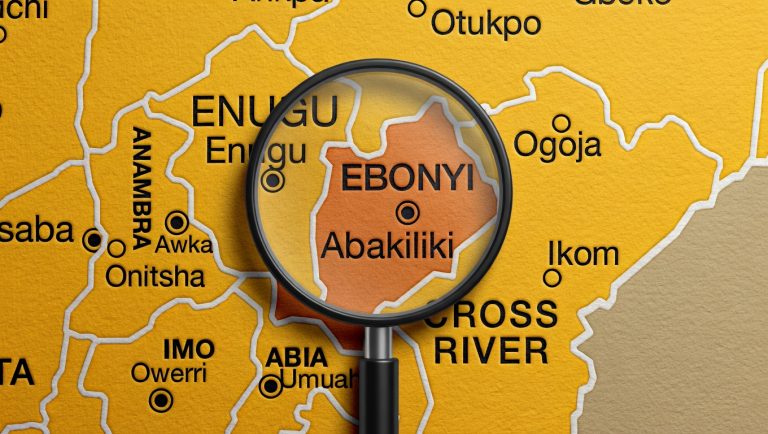
There is indeed a proliferation of rice millers across the country, processing the paddy and selling it to the populace. From Kebbi to Abakaliki, and from Yobe to Benue, there are thousands of rice millers processing the product, thereby eking out a decent living.
The future of the rice revolution is indeed bright, with other big players keying into the sector. For instance, the chairman of Dangote Group, Aliko Dangote, recently laid the foundation stone for the construction of a multi-billion-naira rice mill in Jigawa State.
The rice mill would have the capacity to process 16 metric tonnes of paddy rice per hour when completed. He said, in a year, the mill would process paddy rice worth N14 billion, bought directly from famers in Jigawa at market rate.
It is an understatement to thank Mr. President for reincarnating the Nigerian pyramids. Unlike the pyramids of Giza, which are historical relics, Nigerian pyramids are those of development, growth and prosperity for Nigerians.