Follow Us on Google
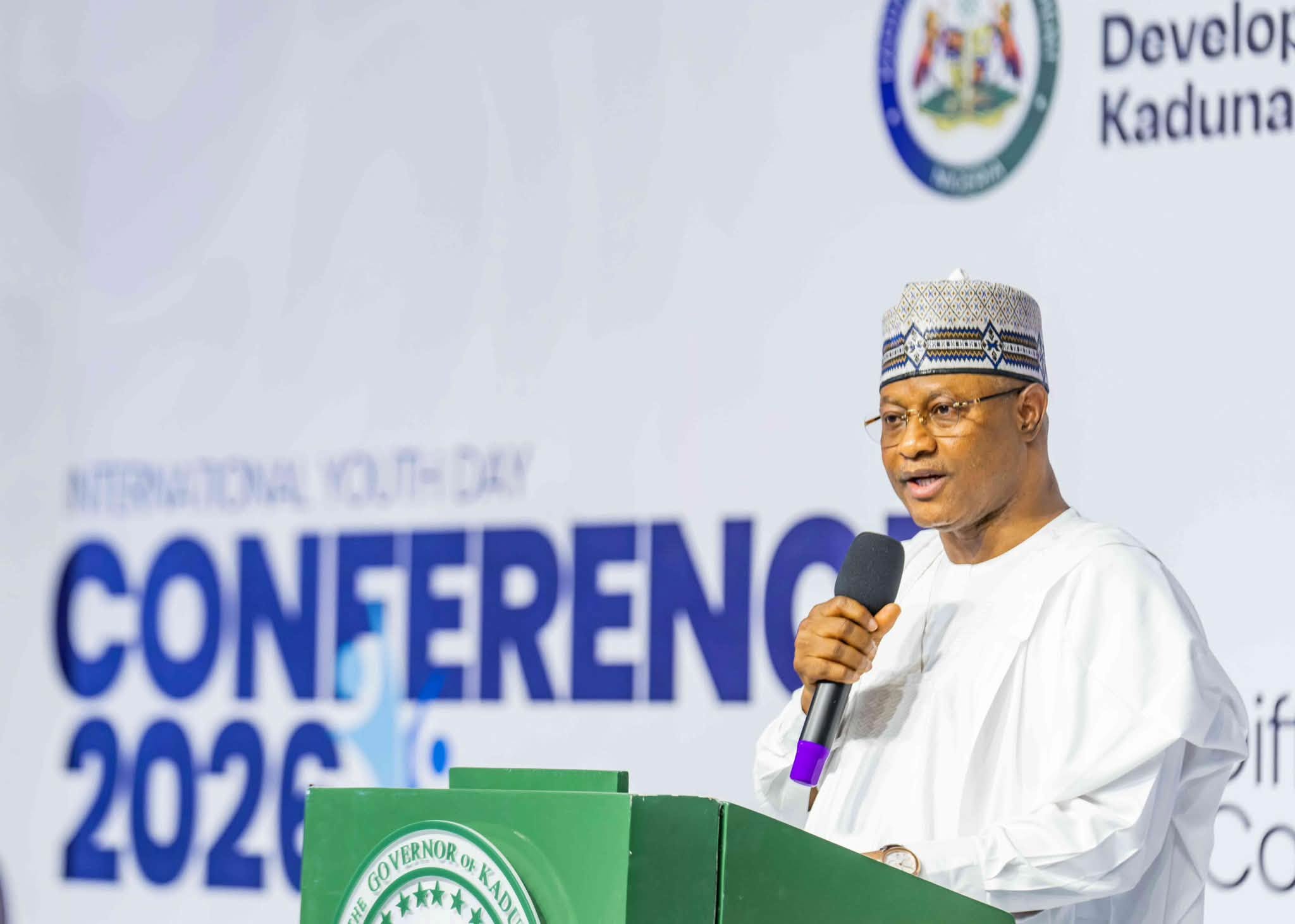
Kaduna State Governor Uba Sani has said the failure of northern leaders to heed the late human rights lawyer and Senior Advocate of Nigeria, Chief Gani Fawehinmi’s warning about the need to invest in education 26 years ago contributed to the poverty, unemployment and educational deprivation currently confronting the region.
Sani spoke on Saturday at the presentation and launch of Myself and Gani: A Tale of Mentor and Mentee, authored by Fawehinmi’s daughter, Mrs Basirat Fawehinmi Biobaku.
The governor used the occasion to reflect on his relationship with Fawehinmi, his involvement in the pro-democracy struggle and the continuing challenges facing northern Nigeria.
Sani recalled his role in the Gani Fawehinmi Scholarship Foundation, saying he once persuaded the late activist to establish a scholarship programme specifically for brilliant but indigent students from northern Nigeria.
According to him, his concern arose after he participated in the selection of beneficiaries and discovered that only seven of the hundreds of students benefiting from the scholarship were from the North.
“I told him, out of hundreds of people that benefited, only seven were from Northern Nigeria,” Sani recalled.
“I told him that, look, if there’s any region that needs this support from you, it must be Northern Nigeria.”
Sani said Fawehinmi accepted his argument and subsequently asked him to initiate a scholarship programme for northern students.
He added that many of the beneficiaries later became professionals, including medical doctors working in different parts of the world.
However, the governor said Fawehinmi’s warning about the consequences of neglecting education in the North had become even more relevant today.
“He warned all of us at that time that if leaders in Northern Nigeria do not invest deliberately in education, we will all regret it in the near future,” he said.
“Today, the genesis, the drivers, the symptoms of all these issues in Northern Nigeria is poverty, unemployment, lack of education, and Chief Gani Fawehinmi is vindicated today.”
Sani said northern political leaders must accept responsibility for the region’s problems instead of blaming people from other parts of the country.
“If at all our leadership 26 years ago listened to Chief Gani Fawehinmi’s advice, we wouldn’t be where we are in Northern Nigeria,” he said.
“We should stop blaming the people from other parts of Nigeria. Why are we blaming others?”
He challenged political office holders who had served in the region over the past three decades to examine their contributions to addressing its challenges.
“If you were a Senator, you were a Vice President, you were a Governor, you were a member of the House of Assembly, a Local Government Chairman, you are part of the problem of Northern Nigeria if you didn’t do anything from 26 years ago till today,” Sani said.
“We should stop shifting the blame. And the problem of Northern Nigeria is not about power. It’s about our people accepting responsibility and coming together.”
The governor also rejected attempts to frame Nigeria’s problems primarily along ethnic and religious lines, saying poverty affects citizens regardless of their background.
“Poverty has no political affiliation. Poverty doesn’t have a tribal mark. Poverty has no respect for any tribe, religion, region, or geography,” he said.
Sani urged Nigerians to move beyond identity-based politics and concentrate on issues capable of improving the lives of citizens.
“People are talking about, ‘I’m a Northerner,’ ‘I’m a Southerner,’ ‘I’m a Muslim,’ ‘I’m a Christian.’ That will not take us anywhere,” he said.
“Religion, ethnicity are enemies of democracy,” the governor added, drawing applause from the audience.
Speaking on Fawehinmi’s contribution to Nigeria’s democratic struggle, Sani described the late lawyer as one of the most formidable Nigerians of his generation, saying he placed principle above personal comfort.
“He possessed the rare courage to make principle more important than comfort, and justice more compelling than personal convenience,” he said.
“He used the law as an instrument of liberation, defended ordinary citizens against arbitrary power, and contributed immensely to the Nigerian struggle for democracy, accountability and human dignity.”
Sani recalled his involvement in the pro-democracy movement and said Fawehinmi played a central role in efforts to expand Nigeria’s political space, particularly through the legal battle over the registration of political parties.
He said pro-democracy and human rights groups had come together under the Joint Action Committee of Nigeria (JACON), with Fawehinmi unanimously accepted as their leader.
Other News
“All of us at that time agreed that our leader should be Chief Gani Fawehinmi,” Sani said.
“So any activist in Nigeria today will agree with me it was a collective decision that our leader was Chief Gani Fawehinmi.”
According to the governor, Fawehinmi refused to allow the denial of registration to political parties to undermine the democratic process.
Sani recalled that parties including the National Conscience Party (NCP), Peoples Redemption Party (PRP) and Movement for Democracy and Justice were initially denied registration following the transition programme under former military Head of State, Gen. Abdulsalami Abubakar.
He said the development left some activists disillusioned and questioning whether the struggle for democracy was worthwhile.
“There was a time when some of us became deeply disillusioned, and at a serious meeting, we told Chief Gani Fawehinmi, our leader, that we were beginning to suspect democracy,” he recalled.
“But he would not permit frustration to become despair. He taught us to have faith in the judiciary, faith in the rule of law, and faith in democracy itself.”
According to Sani, Fawehinmi’s response was straightforward: “Rather than abandon the democratic process, we will use the democratic process to defend democracy.”
The governor said the legal battle eventually moved from the High Court to the Court of Appeal and the Supreme Court, lasting more than three years and culminating in victories that helped widen Nigeria’s political space.
“We went to court. The legal battle lasted for more than three years,” Sani said.
“That victory was bigger than the parties directly involved. It opened the political space in Nigeria and paved the way for the emergence of more political parties.”
He urged Nigerians and politicians benefiting from the country’s political plurality to remember the activists who fought to create that space.
“Whenever we celebrate political plurality in Nigeria, whenever new parties emerge, and whenever citizens exercise their right to organise politically, we should remember those who fought to make that space possible,” he said.
“Somebody, somewhere fought for this to happen,” he added.
Sani also stressed that the struggle for democracy did not end with the return to civil rule, arguing that Nigerians must continue to defend democratic ideals against political actors who place personal interests above the national interest.
“Fighting for democracy is just one thing. Entrenching democratic ideals is even more important,” he said.
He criticised what he described as the personalisation of politics and said some political actors now approach elections as matters of personal survival rather than opportunities to serve the people.
“Today, when you look at the political atmosphere in our country, most of the so-called political actors are about their selfish and personal interests. It’s either they win election or there must be anarchy,” the governor said.
Sani also remembered activists who lost their lives during the pro-democracy struggle, stressing that their sacrifices should not be forgotten.
“We have many of our comrades that lost their lives in the course of this struggle,” he said.
“And that is the reason why it is our responsibility, it doesn’t matter where we are, we must come together and fight anti-democratic elements, because they are still there. They want to suffocate this democracy. It is our responsibility to fight it and defend it.”
He urged Nigerians to view the book launch as more than a literary event, describing it as an opportunity to preserve Fawehinmi’s legacy of justice, democracy and national unity.
“We are here to present this book, but I told my people it’s bigger than a book presentation,” Sani said.
“It’s about ensuring that we keep the legacy of Chief Gani Fawehinmi, because he’s among the most detribalised Nigerians that ever lived in my life.”
The governor congratulated the author for documenting the relationship between Fawehinmi and his mentee, saying the story carried significance beyond their personal relationship.
“I congratulate the author for presenting a relationship that began as a deeply personal bond of mentorship, but acquired over time a much larger national significance,” Sani said.
“This is not simply the story of a mentor and his mentee. It is a story about courage, democratic struggle, social justice, dedication, leadership, and the solemn responsibility of one generation to prepare another for service.”