Follow Us on Google
From Uche Usim, Abuja
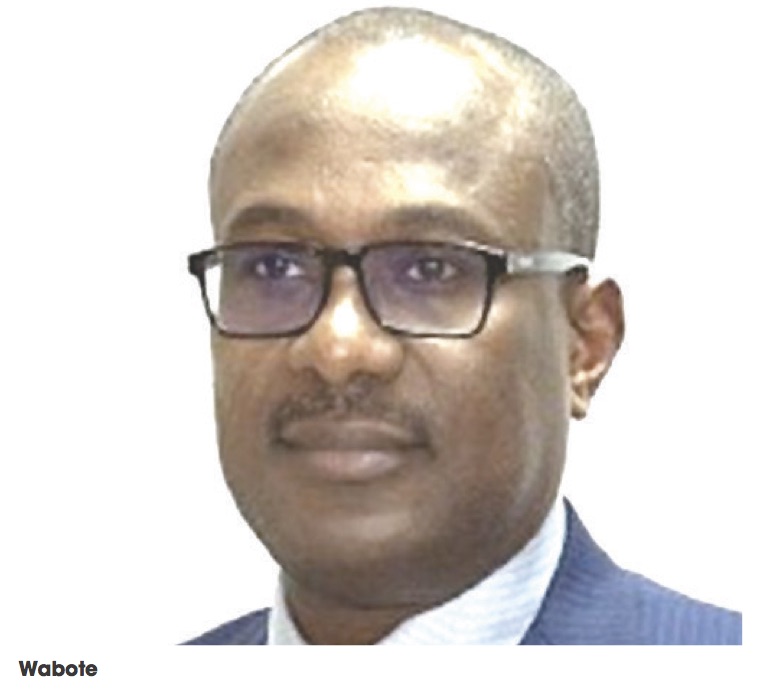
Simbi Kesiye Wabote, an engineer and seasoned technocrat, is best described as a silent achiever. He was appointed the executive secretary, Nigerian Content Development and Monitoring Board (NCDMB), by President Muhammadu Buhari on September 29, 2016.
Having accomplished many feats in his first tenure, his appointment was renewed by President Buhari on September 25, 2020.
On his watch, the NCDMB became popular, having catalysed the successful integration of one of the largest Floating Production Storage and Offloading vessels in-country at the SHI-MCI yard in the LADOL Free Trade Zone and facilitated in-country integration of six modules on the Egina FPSO, the first time in the entire Gulf of Guinea.
Wabote also facilitated speedy approvals for the $12bn NLNG Train 7 project and the signing of the contract in the middle of the COVID-19 pandemic, to create 12,000 jobs and domicile 55 per cent of the project in-country.
Wabote also introduced key signature events into the oil and gas industry calendar such as the bi-annual Nigerian Oil and Gas Opportunity Fair (NOGOF) and the Nigerian Research and Development Fair to showcase the oil industry’s opportunities for investment and galvanise research capabilities, respectively.
In this interview with Daily Sun on the sidelines of the fifth Nigerian International Energy Summit (NIES), the NCDMB boss said the strategic implementation of the Nigerian Oil and Gas Industry Content Development (NOGICD) Act remains a major effort that has ensured the retention of $8 billion annually that would have been spent on imported items, while creating over 50,000 direct jobs in the local economy over the past 11 years.
He spoke more about NCDMB, challenges and plans ahead.
Local content and forex savings
Historically, the industry spends about N21 billion year in year out on importation. Before the advent of local content in 2010, less than 5 per cent of that was retained in the country. Today, we pride ourselves that about N8 billion of that annual N21 billion is now domiciled in the country. Nigerian businesses have taken the centre stage. If you look at the 80 per cent of all the contracts awarded in the oil and gas industry, they are awarded to Nigerian businesses. If you look at the service sector in the oil and gas industry, almost 98 per cent of the service sector is managed by Nigerians. These are ex-Mobil, ex-Halliburton, etc, who have now set up their own businesses because of the enablement provided by the local content act. We talk about fabrication. When we started, virtually nothing was fabricated in-country. Today, about 250,000 metric tonnes of fabrication happens in the country annually. So, we have achieved some substantial progress in the country but are we there yet? No. Like we said in NCDMB, we want to attain 70 per cent local content by the year 2027. Right now we are about 42 per cent in terms of our attainment.
In what way does the NOGICD Act play a role in this?
Of course it is the bible to it, because most of these things have to be backed up legally. That is why I see some of these countries who want to emulate what we have done talking about policies, talking about regulations. It is not going to drive the impetus that is desired but, once it is law, both local and international players know that they have to comply with the provisions of the law. So, the law has been the main element of it.
The implementation of the Nigerian Oil and Gas Industry Content Development Act is a huge success that has ensured the retention of $8 billion that would have been spent on imported items, while creating over 50,000 direct jobs in the local economy over the past 11 years.
The NCDMB launched the Nigerian content 10-year Strategic Road Map in 2017, with a target to achieve 70 per cent Nigerian content by 2027. As part of this goal, the board would catalyze the creation of 300,000 direct jobs in the oil and gas industry and linkage sectors, enable the retention of $13bn out of the estimated annual $20bn spend in the oil and gas industry and establishment of major fabrication yards and manufacturing hubs in-country.
Nigeria has also moved from near zero participation in the operations side of the oil and gas sector to the point that our indigenous operators such as SEPLAT, AITEO, EROTON, and others are now responsible for 15 per cent of our oil production and 60 percent of our domestic gas supply.
Other major accomplishments of Nigerian content implementation include the establishment of two world-class pipe mills and five impressive pipe coating yards, the ability of Nigerian firms to fabricate more than 250,000 tonnes of steel per year and ownership of more than 40 per cent of marine vessels used in the oil and gas industry by Nigerians.
Over 10 million training man hours have been delivered via the board’s human capacity development programmes. It was no surprise that our indigenous workforce was able to sustain oil production at the peak of the COVID-19 pandemic lockdown.
Efforts to meet 10% local LPG demand
We have secured the approval of the governing council to work with select partners to produce liquified petroleum gas (cooking gas) that would meet 10 per cent of current nationwide demand. This entails producing 123,000 metric tonnes per annum LPG, which is about 10 per cent of current demand nationwide, from the Utorogu Gas Plant, in Warri, Delta State. This would reduce import requirements.
The board’s latest efforts are geared towards actualizing the Federal Government’s Decade of Gas Policy as well as the overarching Nigerian content aspirations, which are to deepen in-country capacities in the oil and gas industry, create jobs for the teeming youths and retain spending in the economy. The Federal Government has introduced clear policies to make the nation become a gas-powered economy, one of which is the Decade of Gas that seeks to leverage on the country’s huge gas reserves to become not just a major exporter but to become a major gas consuming nation.
We have further investments and partnerships in the gas sector like the creation of a 10 hectares gas hub in Polaku, Bayelsa State, for hosting gas-based infrastructure and facilities, LPG jetties/terminals, storage facilities, inland transportation, cylinders manufacturing, bottling, and retailing. Our partnerships in the gas sector have unlocked 6,000metric tonnes of LPG storage facilities, annual production of 1.2 million LPG composite cylinders, and infrastructure and facilities for processing of 840MMscfd of gas across 14 states of the federation namely Bayelsa, Delta, Edo, Lagos, Kano, Kaduna, Katsina, Bauchi, Nassarawa, Zamfara, Niger, Plateau, Gombe, Jigawa states and the Federal Capital, Abuja.
Challenges
Like I said during my speech, part of the challenge has to do with funding, because, while you are trying to grow local capacity, you need to have enough funding to support that process. Secondly, it is the pace at which you could develop your technologies because the industry that we are in is highly technologically intensive. And if you don’t develop your technology to meet modern times, then it’s a big challenge. You cannot achieve that goal. That is why we need to invest heavily in research and development in the country in order to develop that technology. In NCDMB, we are trying our best. We have shortage of funds but, the little we have, we are effectively deploying it to encourage research and development in Nigeria, particularly with the universities and with private researchers. Because if we don’t do that, we will not achieve, and I think the other third option has to do with mindset, making Nigerians believe that they can do it. It is a huge challenge. Everybody in this country believes that if it is not coming from the US or the UK or it is not coming from Europe, it is not good. So, there has to be that mindset change for people to believe in what they produce in the country and I think the president has said it several times. We must produce what we eat and eat what we produce. Before this administration came on board, it was all about importation. And we tried to put measures in place for people to produce their own food that they eat and the rest of it. So, those three things, the mindset change, the desired funding and technological innovation.
The PIA
The Petroleum Industry Act (PIA) is a great feat. I can only encourage international and local operators in the industry to approve final investment decisions (FID) for new projects to justify the energies that went into enacting the business-friendly legislation.
At NCDMB, we’re always eager for new projects to be approved for sustainable growth in the industry. I’m optimistic that some new projects would soon be announced on the back of the PIA 2021.
Energy transition
The need for and use of energy by mankind is one that has been around from time immemorial. It is important to note that the various transitions from one form of energy to another have largely been driven by availability and utilization of local resources.
Taking a cursory look at the history of energy use, the 15th century was marked with the generation of energy from biomass. The discovery of coal and its various uses in the 19th century led to the shift away from biomass to save the forests.
The beginning of the 20th century was marked with the discovery and use of crude oil and its derivatives as a source of generating energy.
Towards the late 20th century, gas was accepted as a cleaner fuel and put into a lot of use including for generating electricity and heat in homes during cold weather.
The 21st century marks the push for renewable sources of energy such as solar and wind.
In all these energy transitions, it will be noticed that there is no total jettisoning of the previous form of energy. So far, the form of energy is available in a locality, the locals will adopt it as their form of energy to meet their needs. That is why I have alluded that the so-called transition is a re-adjustment of the energy mix.
As Europe runs out of forests and hydrocarbon reserves, I understand their push for renewables and green energy to power their economies. It is all about local content in their search for their energy needs.
The North Sea is no longer that prolific basin that served the UK for so long. It is estimated that the UK’s proven oil reserves is not sufficient to sustain its domestic consumption for the next five years without increased importation. The Netherlands has zero barrels of proven oil reserves left and relies heavily on oil importation.
Relying on these imports is a threat to the energy security of most European countries and we should understand their predicament as they push for the energy shift such that their locally available form of energy will come into prominence in the energy mix.
The only problem is forcing or nudging others to set timelines to reduce or abandon their locally available form of energy, as I believe it will be counter-productive and cause avoidable disruptions in global energy supply. We are already seeing signs of these as the clamor for energy transition demotivates new investments in oil and gas developments worldwide.
For Nigeria, oil and gas remains at the core of the locally available energy mix to meet the needs of our teeming population. The various programmes and policies of the government over the years have set in motion key developmental activities in the economy that we need to see completed. As a local content practitioner, these activities have set in motion some thoughts on possible scenarios that could play out as we seek to create job opportunities, conserve foreign exchange, and utilize in-country capacities.
The first scenario is what I term ‘Zero Crude Oil Export’ in which we fully refine in-country all the oil produced from our fields in Nigeria and export excess refined products.
This scenario might appear far-fetched to some people, but an examination of the various initiatives in the country show that we are about half-way to realizing this scenario, even if not intended at the outset.
The mechanically complete Dangote Refinery in Lagos and the BUA Refinery in Akwa Ibom State are expected to deliver refining capacity of 650,000bpd and 200,000bpd respectively.
In the aspect of modular refineries, NCDMB is serving as a catalyst to enhance realization of the refining road map. Our partnership with Waltersmith resulted in the delivery of 5,000 barrels per day modular refinery in Imo State. Next in view is the 2,500 barrels per day Duport Modular Refinery located in Edo State due for commissioning by Q2 this year. Others under construction are the 2,000 barrels per day Atlantic Refinery and the 12,000 barrels/day Azikel Hydro-skimming Refinery, both in Bayelsa State.
As we get closer to the realization of this scenario, it enables us to see oil as a resource rather than a commodity for trading. It means value addition to this resource for the production of other items and consumables. A barrel of oil utilized as a resource generates multiple products that are utilized in transportation, construction, aviation, agriculture, and others.
The second scenario is the drive to make Nigeria become a gas-powered economy. With proven gas reserves of more than 206TCF, the largest in Africa, and a potential upside of 600TCF, there is a good basis for this scenario to manifest with good policies and programmes.
One of such is the National Gas Policy launched in 2017 with the Vision to make Nigeria an attractive gas-based industrial nation with a significant presence in National and international markets.
We are already seeing the result of this with Nigeria being one of the major players in the gas export market.
Coal treatment
Coal treatment refers to our hydrocarbon resources. Coal deposits can be found in Enugu, Anambra, Benue, Kogi, and other states in Nigeria. We have abandoned this resource without using it when it mattered most.
We have been told that coal is dirty fuel and we have moved away from it, since we do not have the capacity for sustainable production and utilization.
Other nations that have coal as their local resource for energy and the wherewithal to produce required equipment for extraction and coal power plants for utilization have continued to maintain coal in their energy mix.
China is the largest producer and consumer of coal in the world and is the largest user of coal-generated electricity, with over a thousand coal-fired power stations; while Australia uses it to produce about 80 per cent of the nation’s electricity requirements.
South Africa ranks seventh in the world for Coal consumption. About 77 per cent of South Africa’s primary energy needs are provided by coal.
Statistics also reveal that most of the users of coal today are top spenders in research and development. For example, China, the largest user of coal in the world, spent $574 billion on research and development in 2020.
This is to buttress the point that we need to develop our home-grown technology if we are to avoid treating our hydrocarbon resources the same way we treated coal.
The ongoing clamor for energy shift, energy swap, and energy transition are to serve as pre-notice of the impending stoppage of production of equipment, technology, and consumables required to exploit hydrocarbon resources.
We need to put in place plans to develop or adapt technologies such as rigs, and other equipment that will enable us to produce and utilize our hydrocarbons.
Nigeria has already set sail on developing a path for R&D in the oil and gas industry. Specifically, NCDMB is paying attention to R&D through organising the Research & Development Fair event, Launch of the $50 million R&D Fund for Basic Research, commercialization of inventions, and establishment of R&D Centers of Excellence.
It is important to recognize that every wise nation must ensure that its natural resources are meant for the development of its people and must remain on its energy mix as much as possible. It is important to recognize that local content remains at the core of the prevailing energy mix and transitions will always be triggered once the level of locally available resources are depleted or threatened.
Timely, full exploitation and utilization of natural resources are essential prerequisites for the creation of employment opportunities and societal development.
Home-grown technology and innovation are indispensable to ensure local resources are not discarded prematurely.
Achieving a competitive landscape for Nigeria
Key enablers to achieve a competitive landscape for the scenarios to thrive include funding to drive implementation of policies and programmes. There is also human capacity development, which will prepare the manpower to formulate and deliver the programmes. Another key enabler is infrastructure – hard and soft infrastructure to enhance Ease of Doing Business. There should be private sector involvement to drive the economy in leaps and bounds.
By this time last year, there was so much focus on the need to pass the PIB. With the PIA 2021 in place, I expect the FID’s to start rolling in demonstration of good faith to all the energies that went into the enactment of the business friendly Act.
I am still hopeful that the lull in the harvest of FID’s is temporary, as we at NCDMB always want projects to be sanctioned for sustainable growth in our industry. I hope next year, we will be in a position to celebrate a couple of major FID’s taken on the back of the PIA 2021.
NCI Fund
The NCI Fund is a component of the Nigerian Content Development Fund (NCDF), which is accumulated through one percent deductions from contracts awarded in the upstream sector of the oil and gas industry.
The fund has exceeded half a billion dollars. It is extended as low-cost credit to qualified oil and gas companies covering asset acquisition, project financing, manufacturing, working capital, loan refinancing, women in oil and gas, and research and development.
The board is using the NCDF to catalyse the construction of modular refineries, gas processing plants, LPG terminals and bottling plants, LPG cylinders manufacturing plants, lube oil blending plants, base oil production plant, methanol production plant, and many others.
I am canvassing that we have that replicated at the continental level and be utilized to develop huge mega oil and gas projects, particularly as world financial institutions are getting reluctant to finance hydrocarbon-related projects. The African Local Content Fund could be utilised to set up a bank or finance institution to provide funding for the development of oil and gas projects in Africa. This is especially important against the backdrop of the reluctance and outright declaration by some banks and financial institutions to stop funding of hydrocarbon-related projects. I hope the Afreximbank, AfDB, or the AU through the AFCFTA Secretariat need to institute a form of contribution, no matter how little, as a fund to support the continent’s need for funds. In our own case, the deduction of one percent of every contract awarded to any contractor, subcontractor, alliance partner or any other entity involved in any project, operation, activity, or transaction in the upstream sector of the Nigeria oil and gas industry has resulted in us having a pool of funds to support various intervention programmes.