Follow Us on Google
From Christy Anyanwu, London
Faika Philips is the founder of Woven Market Africa.
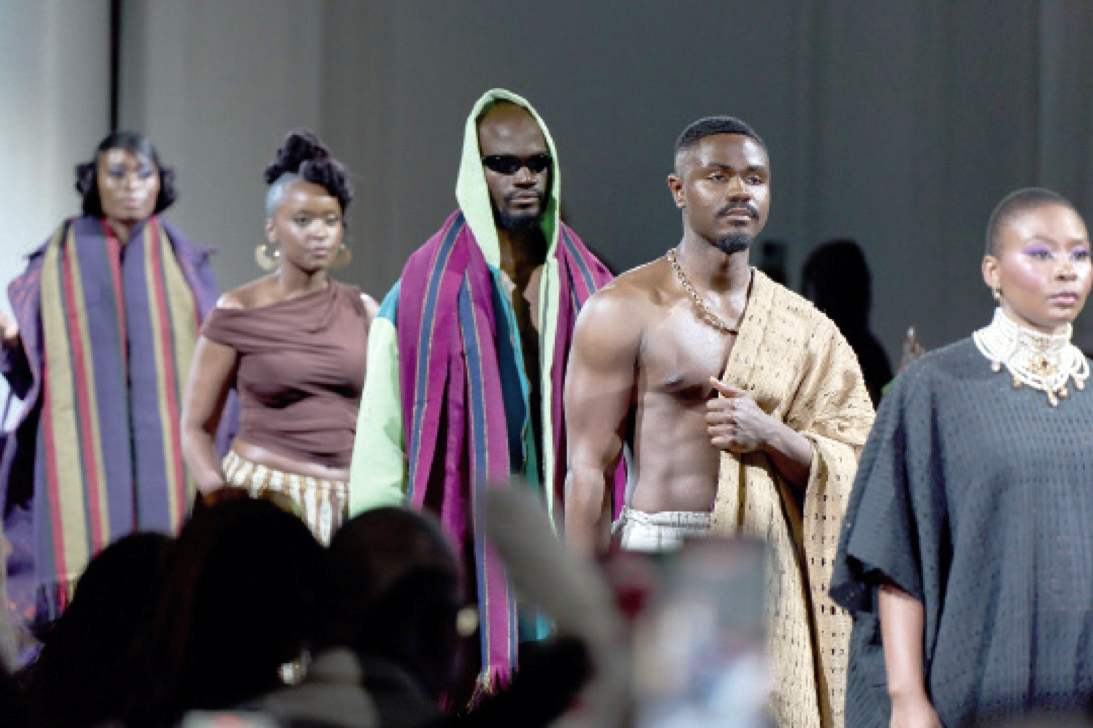
She told Saturday Sun that her core value is championing a vision where handwoven textiles are not only preserved as heritage, but continually reimagined, intentionally designed and created as a powerful material for fashion, art, interiors and global design. She participated in the just concluded Africa Fashion Week London (AFWL)2026
In this interview, she takes readers through her journey into the fashion world
Could you talk more about your ‘moves’ into fashion?
My introduction to handwoven textiles came quite unexpectedly when my younger sister was getting married. As a family, we were looking for something different for our traditional outfits. I wanted an alternative to the lace, Ankara and other fabrics we had traditionally used for occasions like this, and that was when Aso Oke came to mind.
I eventually found a colour I liked among the available options and placed an order. However, when I tried to communicate the kind of textile I was actually looking for, I found that the process was not set up to easily translate that vision into the fabric I wanted. To be safe, I eventually settled for what was available.
Interestingly, the tailor I was working with was experiencing a similar challenge. She was also exploring how to make garments with Aso Oke, but did not know where to begin in finding the right fabric to match her ideas, particularly in terms of quality, texture and form.

That experience made me realise there was a gap between what people could imagine Aso Oke becoming and what was actually available to them. And that was the beginning of my journey into handwoven textiles and ultimately, the beginning of Woven Market Africa: from what was available to what could be.
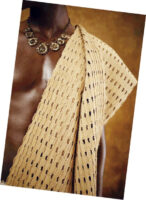
From there, we began studying the textiles closely, examining how they were made, identifying their limitations and defects, and asking how we could do things differently. That process led us to develop our own handwoven textiles, not simply to preserve an existing craft, but to push it forward, create new possibilities for designers, and make sure that the craft continues to have a meaningful place in the future.
How did you feel participating in this year’s Africa Fashion Week London?
Participating in Africa Fashion Week London this year was a very special experience for me. Interestingly, just a few weeks before the invitation came, I had a meeting with one of my team members and we were discussing the milestones we wanted to achieve this year. One of the things we agreed on was that we should participate in a fashion show. We mentioned a few fashion shows we would love to be part of, and then this opportunity came.
So, in a way, we said it and we have it. The prophecy is fulfilled!
I feel genuinely honoured to have participated. Woven Market Africa is seven this year, and when I look at the journey, it has really been grace upon grace. Being able to mark this stage of our journey by participating in a fashion event of this magnitude is something I am very grateful for.
It was also a pleasure to share the stage with such amazing designers and to be part of Africa Fashion Week London, which has been celebrating and providing a platform for African fashion for 16 years. That in itself made the experience meaningful to me.
And yes, it was absolutely worth it. Beyond the show itself, we have met amazing people, made valuable connections and opened conversations that I believe will lead to exciting opportunities for Woven Market Africa going forward.
For me, the real value is not only in being seen on a runway. It is in what that visibility can create afterwards — the relationships, collaborations, conversations and new possibilities for Woven Market Africa going forward.
What’s the biggest design challenge in Aso Oke today?
I think one of the biggest challenges is knowledge — understanding what handwoven fabric really is and what makes it premium.
Handwoven fabric is not meant to be everywhere in the same way that mass-produced fabric is. Its value is in the fact that it is made by hand, with intention, and often created specifically for the person who has identified what they want. That makes it naturally more exclusive.
No two Aso Oke pieces in the world are exactly the same. There will always be nuances because they are made by hand. That uniqueness is not a defect; it is part of the value.
I think we need to change the way we perceive and communicate that value. When people are looking for exclusivity, luxury and a distinctive appearance, handwoven textiles are exactly what they should be looking at.
And I think that narrative is now becoming known. The industry is beginning to understand that it is not limited to simply sourcing whatever fabric is already available in the market. Designers and brands can actually have access to creating their own fabrics.
That gives them a much better opportunity to achieve the result they are looking for — whether that is the structure of the fabric, the colour, the pattern, the texture, the level of exclusivity, or something completely bespoke.
For me, that is one of the most exciting things about where handwoven textiles are going. We are moving from simply asking, “What is available?” to asking, “What can we create?”