Follow Us on Google

From Isaac Job, Uyo
The Akwa Ibom State Government has attributed the continued detention of condemned inmates in correctional facilities to the absence of executioners and the reluctance of successive governors to sign death warrants, despite court judgments sentencing the convicts to death.
Attorney General and Commissioner for Justice, Uko Udom, disclosed this during a ministerial briefing at Government House, Uyo, explaining that the state no longer had an executioner in its employment, while efforts to recruit personnel for the assignment had proved unsuccessful.
He said the situation had left inmates sentenced to death in correctional facilities long after their convictions, even after the courts had handed down capital punishment.
“As we speak now, all convicts with death sentences are still in prison because we don’t have executioners in the state anymore.
“The executioner we had in Rivers State has retired and nobody has applied for the job.
“Right now, we are looking for people to employ as executioners in the state, but nobody has shown up,” he said.
Udom explained that the government could not arbitrarily adopt another method of execution different from the one prescribed by the court, insisting that any death sentence must be carried out strictly in accordance with the judgment.
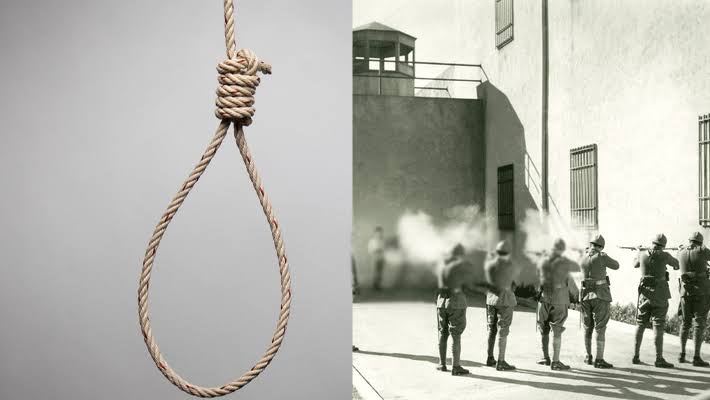
“The judgment is that the convict must be hanged till he dies, and you cannot go beyond the letters of the judgment. You can’t even try firing squad or lethal injection because that was not the judgment. This is why you still have condemned criminals in prison yards after judgment,” he said.
Beyond the shortage of executioners, the Attorney General identified the reluctance of successive governors to authorise executions as another major obstacle to implementing capital punishment in the state.
He recalled an encounter with a former governor who declined to sign a death warrant, questioning his moral authority to take a life he did not give.
“Again, past governors in the state refused to sign death warrants of convicted persons.
“I had an encounter with a former governor of this state when we asked him to sign a death warrant, and he responded by asking me whether he was the one who gave life.
“Therefore, it is difficult to execute judgments on convicted persons sentenced to capital punishment,” he said.
Udom further explained that a death sentence could only be carried out after the convict had exhausted all legal avenues of appeal, noting that the process could extend from the trial court to the Court of Appeal and ultimately the Supreme Court.
“Apart from the refusal of governors to sign the death warrant, the convict must exhaust all legal processes from the lower courts to the Supreme Court before a death sentence is executed,” he said.
The Attorney General also highlighted the activities and achievements of the Ministry of Justice under Governor Umo Eno’s ARISE Agenda, particularly efforts to strengthen justice administration, improve prosecution services and address congestion in correctional facilities.
He said the ministry’s responsibilities included prosecuting and disposing of cases, drafting agreements and legislative instruments, providing legal opinions and building the capacity of law officers.
According to him, the ministry had handled several cases before superior courts and continued to pursue matters involving the state.
“We have 69 pending criminal matters in the Supreme Court and 46 matters in industrial courts, but most of them have been disposed of,” he said.
Udom added that the state government had sustained training and professional development programmes for law officers in the Department of Public Prosecutions to enhance their capacity to handle criminal cases.
He also disclosed that plans had been concluded to relocate the Uyo Correctional Centre as part of efforts to ease congestion and improve conditions in correctional facilities across the state.