Follow Us on Google
– NNPC, NAPIMS charged illegal subsidies on crude from 2017 to 2021
– Insists Ojulari must appear in person to answer queries
From Adesuwa Tsan, Abuja
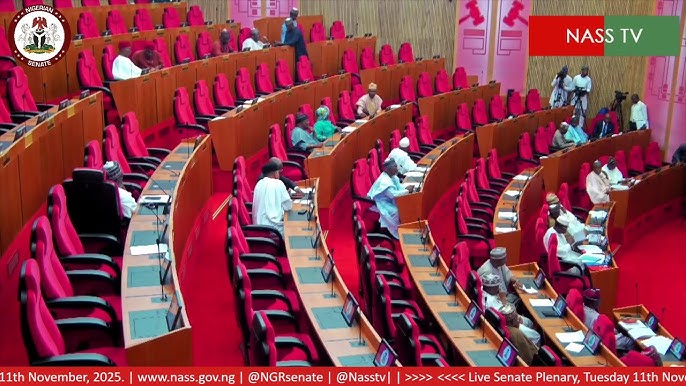
The dispute between the Senate and the Nigerian National Petroleum Company Limited (NNPC Ltd.) escalated on Tuesday after the Senate Committee on Public Accounts rejected the company’s expenditure claims totalling ₦210 trillion and faulted its management for failing to appear before it.
The committee, chaired by Aliyu Wadada, expressed outrage that the NNPC management failed to honour an invitation to clarify discrepancies in its 2017–2023 audited financial statements, despite agreeing to the date.
“At our last meeting with the management of NNPC, we agreed they would appear today to respond to 19 questions arising from their audited accounts,” Senator Aliyu said. “This date was chosen by NNPC itself. It is unfortunate that on a date they selected, not a single management official deemed it fit to show up.”
He described the company’s absence as a deliberate act of disregard for legislative oversight and public accountability. “The public has been waiting for this. Even though we cannot conclude today, Nigerians deserve to know the issues at stake,” he added.
The committee said after careful review of the documents submitted by the national oil company, it came to a conclusion that the responses were unacceptable and resolved to reject them because the figures were inconsistent and lacked evidence.
“NNPC claimed ₦103 trillion as accrued expenses and ₦107 trillion as receivables totalling ₦210 trillion. Their explanation for the ₦107 trillion receivables, equivalent to about $117 billion, contradicts their own documents. These claims are unjustifiable and unacceptable,” the chairman stated.
He also questioned how NNPC could have paid ₦103 trillion in joint venture cash calls in 2023 alone when it generated only ₦24 trillion in crude oil revenue between 2017 and 2022.
“Cash call arrangements were abolished in 2016 under the Buhari administration. How can NNPC claim to have paid ₦103 trillion in one year when it generated ₦24 trillion in five years? That figure must be rejected and returned to the Treasury,” he said.
The committee further described NNPC’s claim that ₦107 trillion in receivables was lodged in defunct banks as baseless and opaque. “No bank or amount was named. This lack of transparency is unacceptable. NNPC must account for ₦210 trillion,” the chairman added.
Other News
Beyond the questionable figures, the committee said it also uncovered what it described as illegal subsidy charges by NNPC and its subsidiary, the National Petroleum Investment Management Services (NAPIMS), between 2017 and 2021.
“Between 2017 and 2021, NAPIMS charged subsidy on crude oil, which is illegal. There is no provision in our laws for subsidy on crude,” the chairman explained. “At the same time, NNPC charged subsidy on refined petroleum products such as kerosene, diesel and petrol. These charges appear in their audited statements — pages 38.9, 39.9 and 41.8 for NAPIMS, and note 8.1 on pages 56 to 59 for NNPC. This practice is both illegal and unacceptable.”
The committee warned that it would summon former NNPC and NAPIMS officials if the current management failed to provide satisfactory answers, while insisting that the Group Chief Executive Officer, Olufemi Ojulari, must personally appear before it.
“If the present management of NNPC is finding it difficult to provide acceptable answers, we will subpoena former officials. NAPIMS is a department under NNPC and cannot maintain an independent account,” the chairman said. “At any point this committee invites NNPC, the Chief Executive must appear in person. Being out of the country will no longer be accepted as an excuse.”
Reaffirming the committee’s position, Aliyu said the investigation would continue despite NNPC’s absence. “We are not EFCC or ICPC. Our duty is to ensure transparency and constitutional oversight. Appearing before EFCC or ICPC does not exempt anyone from legislative scrutiny,” he said.
“This administration needs the cooperation of all institutions. We will do everything within the law to ensure public funds are judiciously used and that NNPC makes the necessary refunds to government,” he said.
Speaking further, Adams Oshiomhole commended the committee’s stance, describing NNPC’s attitude as arrogant and dismissive of public accountability. “Some people think NNPC is above the country, behaving as if Nigeria is their parastatal,” he said. “The sums involved are larger than what our president is struggling to borrow from foreign countries. Charging subsidy on crude and refined products is monumental fraud.”
He called for strict enforcement of legislative powers, saying “the 1999 Constitution gives this committee the power to arrest the GCEO of NNPC if he refuses to appear. We must exercise that power if necessary.”