Follow Us on Google

By Abel Leonard, Lafia
The Nigerian Medical Association (NMA), Nasarawa State Branch, has called on the state government to urgently address salary disparities between state-employed doctors and their federal counterparts, recruit more medical personnel and introduce incentives for doctors serving in rural communities to prevent further manpower shortages.
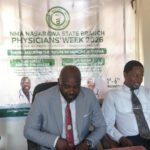
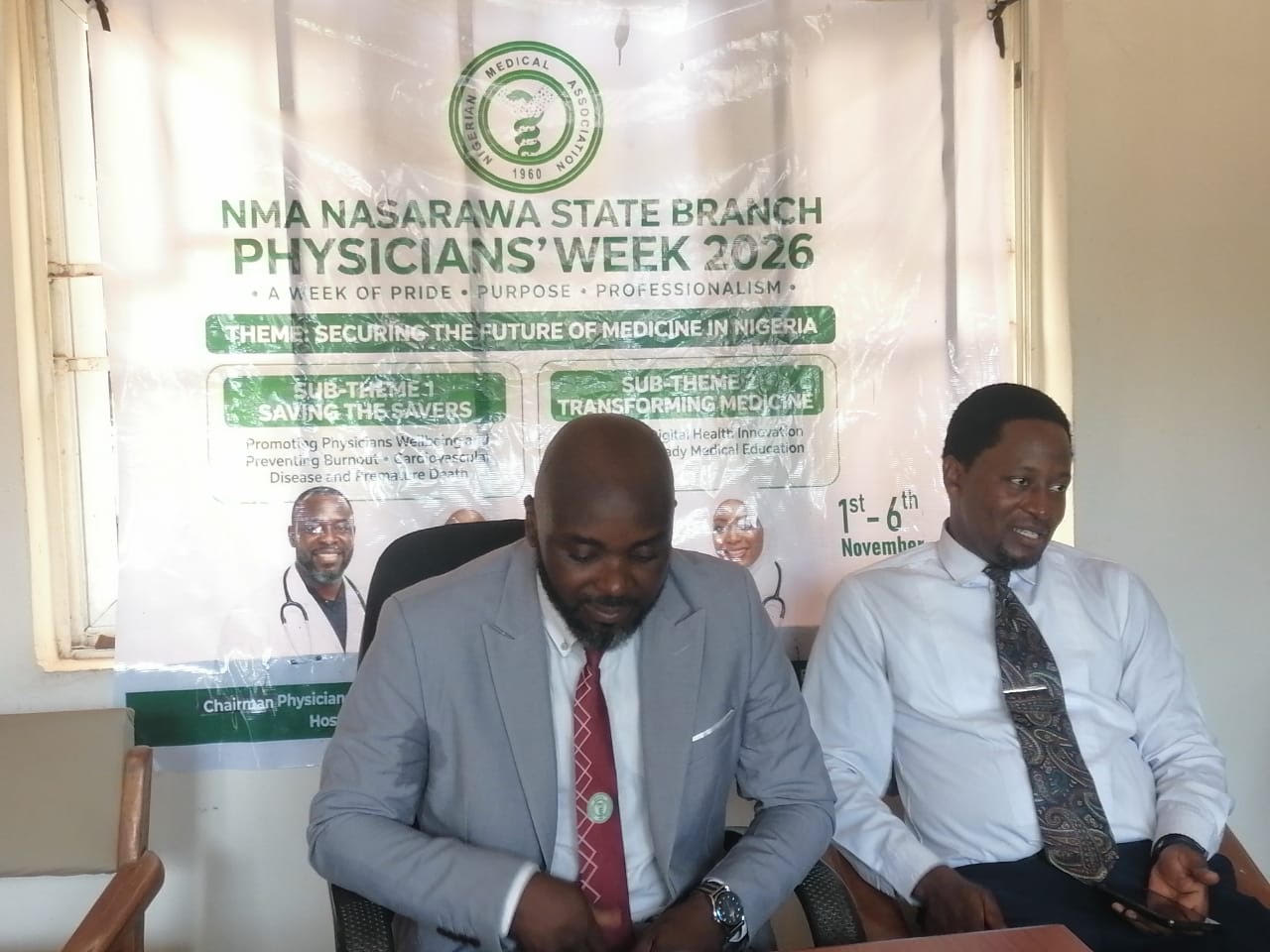
The State Chairman, Dr Meshi Emmanuel, made the call in Lafia on Monday at the association’s secretariat on Makurdi road while presenting the presidential address of the NMA National President, Prof. Afekhide Ernest Omoti, as part of activities marking the 2026 Physicians’ Week, which commenced on November 1 and ends on November 6.
The week has the theme “Securing the Future of Medicine in Nigeria”, with sub-themes focusing on physicians’ welfare, prevention of burnout and premature deaths, as well as transforming medical practice through digital health, innovation and future-ready medical education.
In his address, Omoruyi said Nigerian medicine was at a critical crossroads, citing increasing workloads, inadequate infrastructure, insecurity, declining remuneration, professional burnout, migration of doctors and the urgent need to modernise medical education.
He stressed that securing the future of medicine required deliberate action, strategic investment and collective responsibility, warning that the profession could not continue to depend on the resilience of exhausted doctors.
Applying the national concerns to Nasarawa State, Meshi identified the migration of healthcare professionals from state employment to the Federal University Teaching Hospital, Lafia, following the conversion of Dalhatu Araf Specialist Hospital, as a major challenge to the state’s healthcare workforce.
He called on the government to fill the vacancies created by the movement of doctors to federal employment and urgently address the resulting pay disparity between state and federal doctors.
“Our call is for the state government to look into this critically; one, to replace the gap that has been established by the migration of health workers from the state to the federal, and two, and more importantly, we have noticed that there is a pay disparity that has ensued because of this migration,” he said.
The chairman noted that doctors in the state workforce were largely concentrated in general hospitals across the local government areas, stressing that competitive remuneration and additional rural incentives would encourage them to remain in service and sustain healthcare delivery in underserved communities.
Other News
He warned that losing experienced doctors without adequate replacements could affect knowledge transfer, institutional capacity and continuity of patient care. He disclosed that the association was aware of ongoing discussions with the government but urged that they be concluded and implemented speedily.
Meshi also called for attractive remuneration and incentives to recruit specialists and other healthcare professionals into the Federal University Teaching Hospital, Lafia, arguing that the sophisticated facilities being developed must be supported by qualified personnel to operate them effectively.
He expressed concern that some general hospitals were operating with only one medical officer, a situation he said increased workloads and exposed doctors to burnout.
“We don’t want burnout from our doctors, so we want more hands on ground so that this work can be shared among them,” he said.
The national president, in his address, similarly called for an end to the culture of treating exhaustion as a professional virtue, advocating regular medical check-ups, adequate rest, healthy lifestyles and confidential psychological support for doctors. He also urged governments to improve working conditions and develop practical strategies to retain Nigerian medical professionals.
On doctors’ safety in Nasarawa, Meshi acknowledged the state government’s efforts but urged it to sustain and strengthen security measures to protect healthcare workers and ensure that they could discharge their duties without threats or intimidation. The national president also maintained that hospitals must remain places of healing rather than theatres of violence.
Beyond welfare, Omoruyi called for the integration of artificial intelligence, telemedicine, electronic medical records, digital diagnostics and other emerging technologies into healthcare delivery and medical education. He stressed, however, that technology must complement rather than replace the human compassion central to medical practice.
He further advocated improved medical training, investment in teaching hospitals, support for medical educators and stronger research capacity.