Follow Us on Google
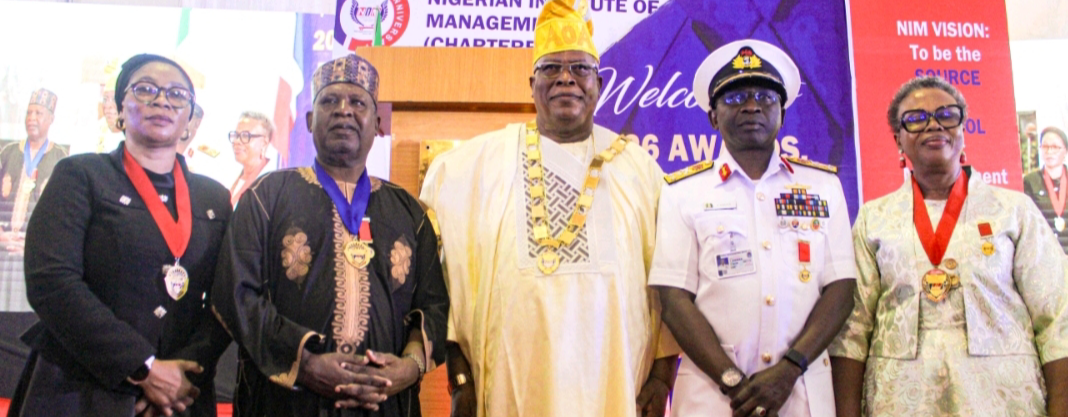
The Nigerian Institute of Management (Chartered) has reiterated its commitment to contributing meaningfully to Nigeria’s economic growth and development through various initiatives and programmes.
In his address at the Institute’s Awards, Fellows and Spouses’ Day Luncheon in Lagos, the President and Chairman of Council, Commodore Abimbola Ayuba (rtd), charged fellows and members of the Institute to leave no stone unturned in contributing to the management of Nigeria’s resources, the promotion of its development and the well-being of its citizens.
Ayuba warned that an upgrade to the Fellow cadre is not a destination or an end in itself, but a call to offer their wealth of knowledge for the advancement of Nigerians’ socio-economic well-being.
“I implore the recipients not to be complacent with just adding fellowship appellation (FNIM) after their names but to see it as a call to higher responsibility and service to the Institute, the management profession and the nation. From this day forward, each of you is required to devote more of your time, talent, treasure and thinking to the service of the Institute and mankind.
“I enjoin you to place your competencies and specializations at the disposal of the Institute as you might be called upon to be of service to her in your area of professional calling.
“You must make policy recommendations to government through our advocacy programme,” he charged the newly conferred life members of the Institute.
Other News
The guest speaker, Mr Dotun Adako, Group Head, Human Resources, BUA Group International, who spoke on “Leading Through Transformation: The Human Element in Modern Leadership”, said that to lead effectively during periods of profound change, leaders must balance strategic vision with empathetic execution.
Adako maintained that such leadership requires setting a clear, inspiring direction while navigating deep ambiguity, managing friction and keeping cross-functional teams aligned. Ultimately, he noted that successful transformation relies not on managing process alone, but on building psychological safety, fostering continuous adaptability and inspiring people to co-create the future of the organisation.
He identified psychological safety, empathy and strategic trust as the core pillars of modern leadership, while strategic vision, emotional intelligence, cultural alignment, continuous upskilling and transparent dialogue were identified as the drivers of transformation.
“We need to embed continuous improvement cycles and celebrate shared milestones. We must also deploy upskilling programs, mentorship, and psychological support tools, and align executive vision with core values and establish clear success metrics.
“We must assess our readiness, evaluate cultural pulse, and identify change champions. Then engage in strategic collaboration, carry out active mentorship and ensure we share achievements, these are the transformation roadmap and human capabilities in action,” he added.