Follow Us on Google
By Damiete Braide
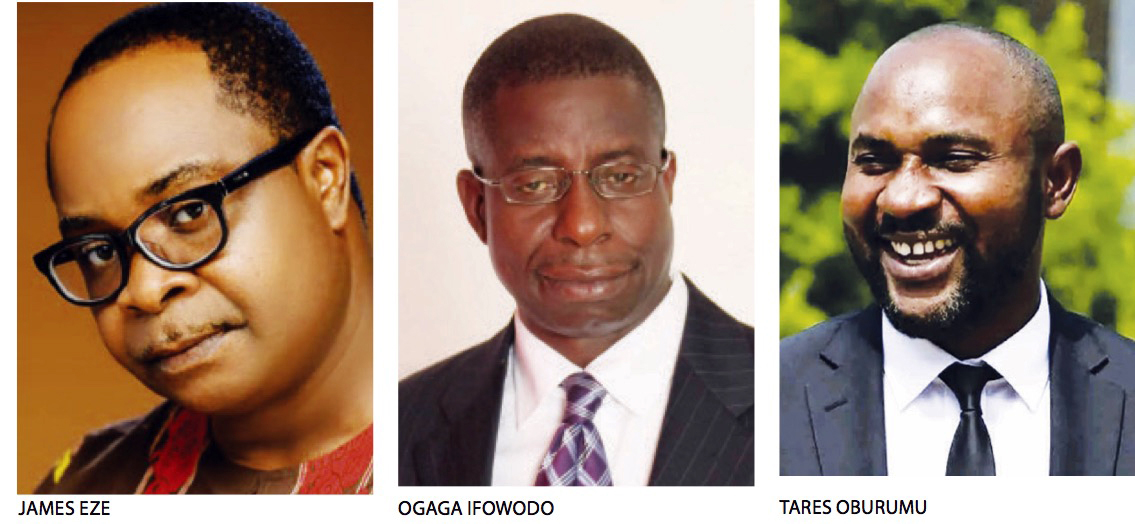
The 2026 Nigeria Prize for Literature has entered its decisive stage, with poets James Ngwu Eze, Ogaga Ifowodo, and Tares Oburumu emerging as the three finalists competing for the prestigious $100,000 prize sponsored by Nigeria LNG Limited (NLNG).
Their emergence follows an intensive judging process that began with 223 submissions from poets in Nigeria and beyond. Eleven poetry collections were initially selected for the longlist before the field was narrowed to three works that the judges considered outstanding in language, form, originality, craftsmanship and enduring literary value.
The announcement marks the culmination of a literary journey that has brought together writers, readers, publishers, students, critics and enthusiasts in celebration of Nigerian poetry. It also places the three finalists at the centre of one of the most significant literary contests on the African continent.
The shortlisted works are Eze’s Unbind Me Now, Ifowodo’s Why Does God Need A Gun? and Oburumu’s Flora’s Love Colony. Each collection approaches Nigeria’s social, political and historical realities from a distinctive perspective, demonstrating the diversity and continuing relevance of contemporary Nigerian poetry. The latest development follows the 2026 Nigeria Prize for Literature Book Party, organised by NLNG, in partnership with the Committee for Relevant Art (CORA), which provided a platform for the longlisted poets to discuss the inspirations, experiences and ideas behind their collections.
The event transformed an afternoon literary gathering into a lively celebration of books, poetry, history and culture. Beyond the formal announcement of the longlist, it allowed the authors to speak directly to readers and explain the circumstances that shaped their works.
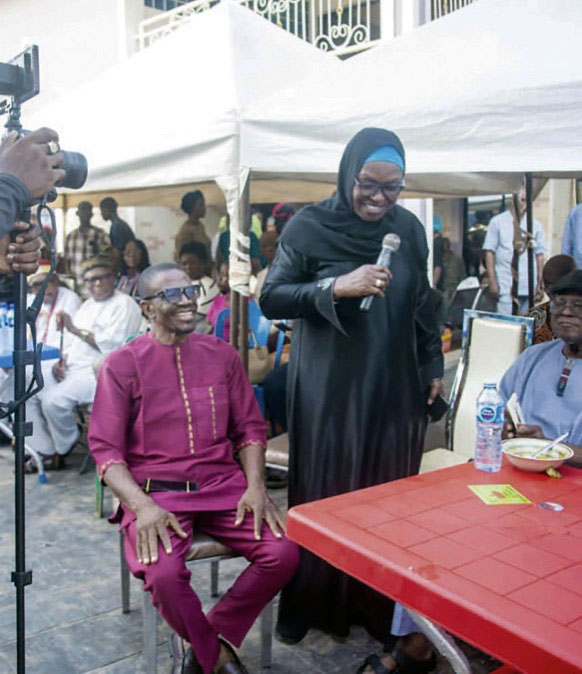
Opening the gathering, NLNG General Manager, External Relations and Sustainable Development, Dr. Sophia Horsfall, described the Book Party as more than an announcement ceremony. She said it represented a celebration of imagination and literature’s enduring ability to shape national conversations.
For Horsfall, poetry has a special place in literary expression because of its capacity to compress complicated truths into memorable language while giving voice to experiences that could otherwise remain unheard.
She also recalled the contributions of previous winners of the poetry category, including Ezenwa Ohaeto, Gabriel Okara, Tade Ipadeola, Ikeogu Oke, and Romeo Oriogun. Their works, she noted, have enriched Nigerian literature while providing inspiration for emerging writers.
The 2026 competition attracted 223 entries, a figure that reflected the continuing confidence writers place in the Nigeria Prize for Literature. From those submissions, 11 collections were selected for the longlist before the judges embarked on the more demanding task of identifying the final three.
Horsfall encouraged readers to explore all the nominated books, stressing that every collection on the longlist was worthy of attention. She also urged aspiring writers not to abandon their ambitions, noting that celebrated authors often began with nothing more than an idea and a blank page.
Her message was reinforced by the experience of the previous edition, whose winner was a first-time author. The development demonstrated, she said, that new voices can emerge and achieve recognition when writers remain committed to their craft.
CORA Secretary-General Toyin Akinosho also welcomed guests and members of the literary community, expressing appreciation to NLNG for sustaining the partnership and supporting Nigeria’s literary culture.
According to Akinosho, while the Nigeria Prize for Literature had reached its 22nd year, the CORA-NLNG Book Party had itself become a significant tradition, dating back 16 years to its debut at the Goethe-Institut in 2010.
He praised NLNG for investing part of its corporate success in promoting reading and Nigerian literature, describing the commitment as an important contribution to the country’s intellectual development.
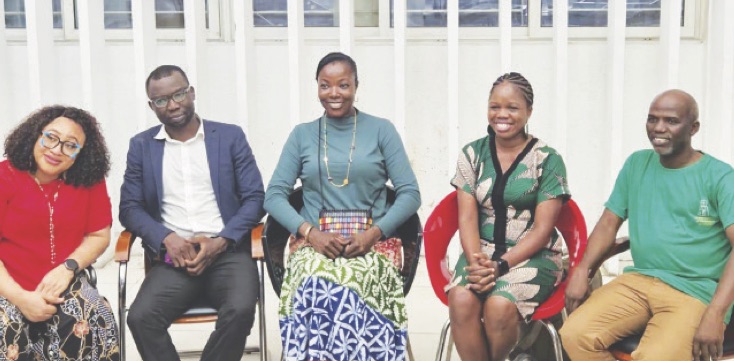
The Book Party also provided an opportunity for the longlisted poets to participate in a panel discussion moderated by Juliet Nnaji. During the conversation, the writers discussed the personal experiences, historical questions and social concerns that informed their collections.
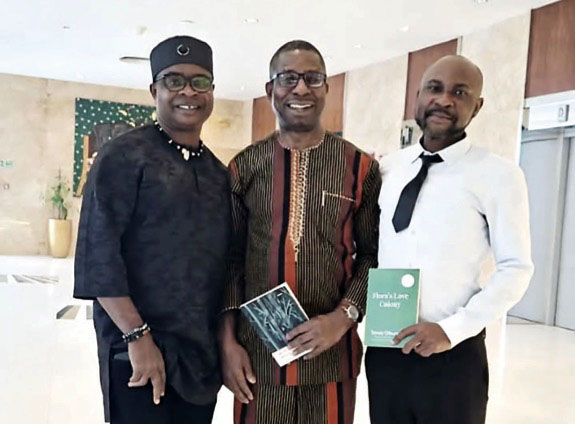
For Oburumu, whose shortlisted collection Flora’s Love Colony explores Nigeria’s complicated history, the starting point was a fascination with Flora Shaw, the woman associated with the naming of Nigeria. His poetry revisits historical narratives while exploring the intersection of affection, identity, colonial history and the personalities connected to Nigeria’s past.
Ifowodo’s Why Does God Need A Gun? takes a different route, confronting religious extremism and violence committed in the name of faith. The poet’s reflections question the contradiction of human beings assuming responsibility for defending an all-powerful God while innocent people, including children, continue to suffer kidnapping, persecution and violence.
The courage of the Chibok girls, who refused to renounce their faith, became one of the emotional foundations of Ifowodo’s work. Through allegory and poetic language, the collection examines the relationship between religion, politics, violence and the human condition.
Eze’s Unbind Me Now, meanwhile, emerges as a call for national awakening. The collection examines sociopolitical dysfunction in Nigeria and the wider world, questioning the forces that keep individuals and societies trapped while considering the possibility of redemption.
The Advisory Board described Eze’s work as distinguished by fluid and aesthetically captivating language. Beyond its political concerns, the collection interrogates the human condition and considers how individuals and societies might confront their failures and seek a different future.
Other News
The three works, therefore, approach the Nigerian experience from different directions. Eze examines sociopolitical dysfunction and the search for redemption; Ifowodo confronts religious and political violence; while Oburumu uses history and poetic imagination to challenge established narratives about the country.
The Advisory Board said these differences were among the qualities that made the final selection compelling. The judges considered not only the themes explored by the poets but also the manner in which those themes were expressed through language, structure, originality and craftsmanship.
Chairperson of the Advisory Board, Professor Akachi Adimora-Ezeigbo, described the selection process as demanding, given the quality and volume of submissions received.
She said narrowing 223 entries to three finalists required careful consideration by the judging panel. According to her, the shortlisted works distinguished themselves through their literary quality, originality and ability to engage readers with issues that affect society and the wider world.
The final three poets now carry distinct interpretations of Nigeria’s realities into the closing stage of the competition. Their works demonstrate how poetry can function simultaneously as art, historical reflection, social criticism and a vehicle for questioning the direction of society.
The 2026 edition is dedicated to poetry as part of the Nigeria Prize for Literature’s annual rotation among four genres: prose fiction, poetry, drama and children’s literature. The rotation has enabled the prize to shine a spotlight on different areas of literary production while encouraging writers across genres to pursue excellence.
Now in its 22nd year, the Nigeria Prize for Literature remains one of the most valuable literary prizes in Africa. Sponsored by NLNG, the award forms part of the company’s efforts to promote literary excellence, encourage creativity and contribute to the development of Nigeria’s literary culture.
For the poets, however, the competition is about more than the financial reward. Their works have already entered a wider national conversation about identity, history, violence, politics, culture and the possibilities of renewal.
At the Book Party, those themes were brought to life through poetry readings by students, who performed selected works from the longlisted collections. Their presentations added another dimension to the event, allowing the written poems to move beyond the printed page and connect with a younger audience.
The students’ participation also underscored the importance of creating new generations of readers. In a literary environment where questions about the future of reading and writing continue to attract attention, opportunities for young people to encounter contemporary poetry remain crucial.
The Book Party further demonstrated that literary competitions can create communities around books rather than simply produce winners. Readers had the opportunity to listen to writers discuss their creative processes, while poets were able to engage with audiences outside the formal structures of judging and award ceremonies.
The longlisted poets were also invited to participate in the Lagos Book and Art Festival, scheduled for November 16 to 22 at Freedom Park, Lagos. The festival, with the theme The Workover Starts Now, will focus on repair, healing and national renewal.
Akinosho said the poets would have opportunities to participate in readings and discussions during and after the festival, giving audiences further avenues to engage with their work.
As the competition now narrows to Eze, Ifowodo and Oburumu, attention shifts from the broad celebration of Nigerian poetry to the difficult question of which collection will ultimately claim the prize.
The judges have already identified the qualities that separated the three works from the rest of the field. Yet the final decision will determine which poet receives the $100,000 award and joins the distinguished list of writers recognised by the Nigeria Prize for Literature.
For Eze, victory would represent recognition for a collection that uses poetry to confront dysfunction and demand national reflection. For Ifowodo, it would affirm the power of allegory and poetic inquiry in confronting violence, extremism and the contradictions surrounding faith. For Oburumu, it would recognise a historical and poetic project that challenges familiar narratives and reimagines Nigeria’s past through the story of Flora Shaw.
Whatever the outcome, the 2026 competition has already illustrated the breadth of contemporary Nigerian poetry. The 223 submissions, the 11-book longlist and the final three collections collectively point to a literary community willing to engage difficult questions about the country and the world. The competition has also reinforced poetry’s continuing role as a mirror of society. The works under consideration preserve memories, challenge authority, examine identity, question violence and explore the possibility of healing.
As the final stage approaches, readers and literary enthusiasts will wait to see which of the three poets emerges as the winner. The announcement will bring the 2026 edition of the Nigeria Prize for Literature to its conclusion, but the conversations generated by the competing works are likely to continue long after the prize has been awarded.
At stake is not only the $100,000 prize but also the recognition that comes with being selected as the outstanding poet in a competition that has become an important institution in Nigerian literary life.
The journey from 223 submissions to three finalists has shown that Nigerian poetry remains vibrant, diverse and deeply connected to the realities of its people. Eze, Ifowodo and Oburumu now stand at the final threshold, each carrying a distinctive poetic vision and a powerful interpretation of the nation’s past and present.
When the winner is finally announced, one poet will take the prize. But the larger victory may belong to Nigerian literature itself, strengthened by a new generation of readers, writers and conversations inspired by poetry that refuses to remain silent.