Follow Us on Google

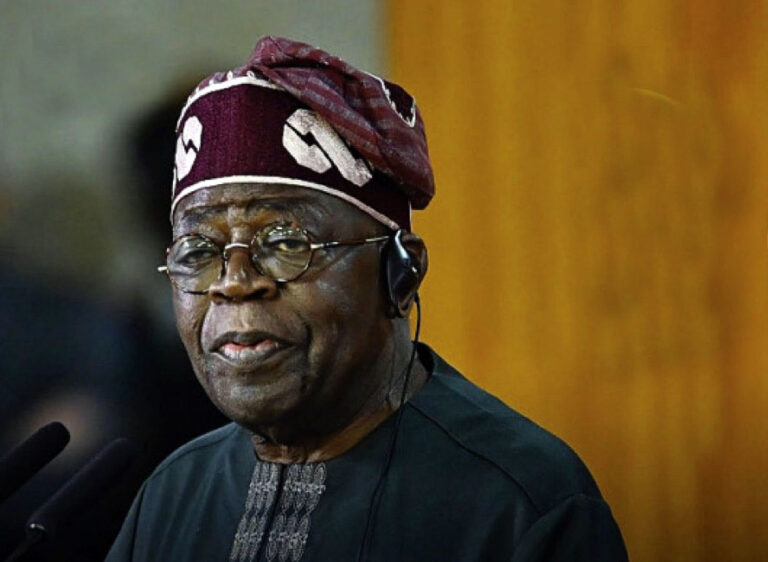
President Bola Tinubu last week unveiled the National Industrial Policy 2025. The initiative is a framework aimed at repositioning the economy from consumption to production. The emphasis is on value addition, job creation and global competitiveness. President Tinubu, who was represented by Vice President Kashim Shettima at the event held recently in Abuja, said the industrial policy is part of the key promises of his administration to translate Nigeria’s economic potential into productivity and measurable outcomes. He explained that the initiative would mark a shift from broad declarations to disciplined execution and from export of raw materials to the development of value-driven industries in the country.
Brimming with optimism that the policy will succeed where past ones failed, the government described the new industrial policy as a “practical and implementable roadmap to rebuild Nigeria’s industrial base, strengthen domestic value chains and enhance competitiveness.” The policy is also anchored on the belief that any meaningful industrialisation requires deliberate coordination across energy, infrastructure, trade, finance, skills and innovation that is driven by strong collaboration between the government and the private sector.
Overall, the policy intends to prioritise sectors where Nigeria has competitive advantages that will deepen value chain development to retain more economic value locally, as well as integrate micro, small and medium enterprises into industrial growth and establish a clear framework for implementation and accountability. There is no doubt that Nigeria has the potential to become Africa’s industrial powerhouse. In fact, it has been a bittersweet story for Nigeria’s industrialisation drive since the 1960s when the country launched its first industrial policy plans – from import substitution policy to the Nigerian Enterprises Promotion Decree and the National Industrial Revolution Plan – still the country has not been able to lay a concrete industrial policy foundation.
Most of these ambitious plans have either not left the drawing board or have been abandoned midway due to implementation fatigue or policy inconsistency. The country has not been short of good policies on paper. Sixty-five years after independence, it is sad that Nigeria’s policymakers still believe that ‘protectionism’ is a solution for the country’s fledging economy. At the same time, over-dependence on import has stalled the nation’s transformation from an agrarian economy to industrial hub. Our march to industrialization has been buffeted with daunting challenges. Political and bureaucratic commitments have always been the missing links in our quest for industrialization.
Other News
The challenges include lack of steady power supply, insecurity, paucity of effective implementation, long-term strategy and policy inconsistency. Unfortunately, these have plagued our past industrial policies. This has made our manufacturers to struggle to deliver positive outcomes. Without addressing structural risks, especially power, insecurity, logistics, and inefficiencies in the country’s industrial base, manufacturing will remain uncompetitive despite ongoing reforms and government’s assurances to broaden Nigeria’s industrial base.
If the new industrial policy will stand a good chance of succeeding, policymakers should look at countries that have made their industrial policies become a reality. For example, former Ghana’s President Nana Akufo-Addo in 2017 launched “One District, One Factory (IDIF) initiative, which decentralised industrial growth to rural areas. Also, in 2006, President Paul Kigama of Rwanda created a “Special Economic Zones”(SEZ). This led to the creation of Kigali Industrial Park and Rwanda Free Trade Zone. The policy offered streamlined approvals, reliable infrastructure and incentives for export-oriented manufacturing. Both models in Ghana and Rwanda, demonstrate the importance of state-enabled, private-sector-led industrialisation.
But in Nigeria, critical industrial policies fail largely due to infrastructure deficit, poor ease of doing business, rising insecurity and regulatory bottlenecks. Beyond that, reliance on outdated, import-dependent models has further hampered local manufacturing capacity. High interest rates, limited credit access for small businesses and chronic power outages have led to reliance on diesel generators, thereby driving up production costs.
These factors have constrained the effectiveness of initiatives meant to boost manufacturing and economic growth. There is need for strong political will, not campaign rhetoric to drive the full implementation of the new industrial policy. In this regard, government should ensure that the policy is streamlined and modified to meet present realities. From hindsight, past industrial policies fell short of expected outcomes as a result of systemic challenges already mentioned in addition to regulatory fragmentation, and over reliance on oil revenues. Going forward, Nigeria’s industrial future depends on consistent policy implementation, infrastructure reliability, and human capital development rather than mere policy statements. We advise that policies should align with Nigeria’s regulatory environment and global best practices.