Follow Us on Google
By Chinenye Anuforo
There is anger in the land. Nigerians are not just lamenting the ravaging insecurity, they are also frustrated over the hike in data costs that has not reflected in improved services.
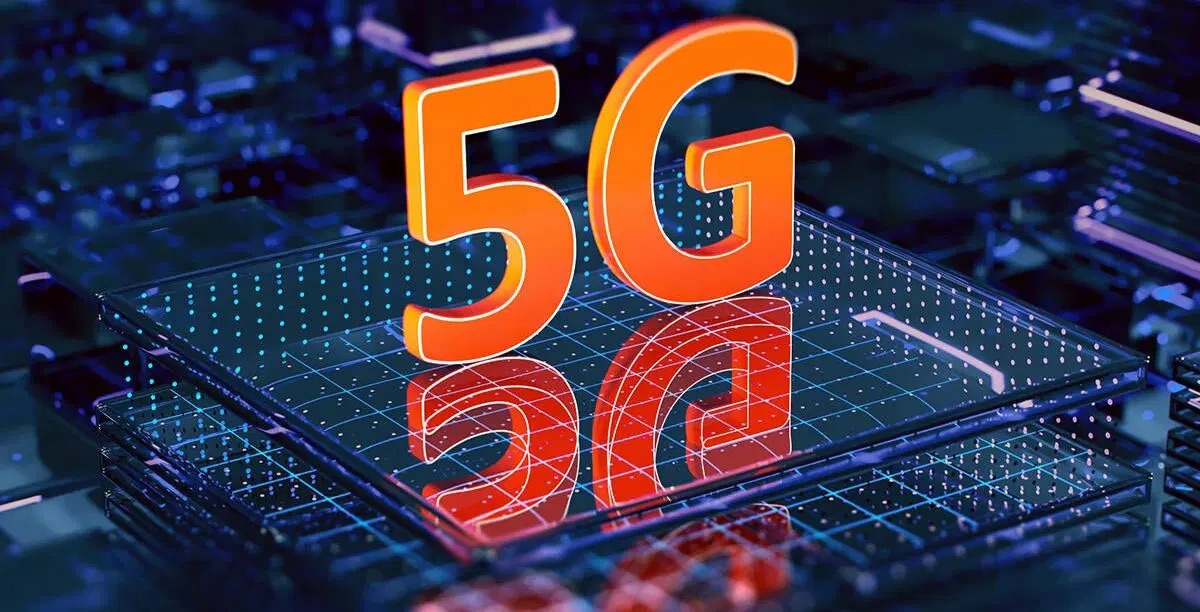
Millions of telecom subscribers insist there is a widening gap between promise and performance, as they are paying premium rates for 5G services but experiencing speeds that barely match 2G.
From dropped video calls to painfully slow downloads and unstable connections, users say the reality of their internet experience falls far short of aggressive marketing campaigns.
Consumer advocates warn that the growing dissatisfaction mirrors deeper infrastructure and quality-of-service challenges within the sector.
It is raising fresh concerns about regulatory oversight, network investment and whether customers are truly getting value for their money.
A business centre owner in Lagos, Tunji Olanrewaju, said it is discomforting to see the 5G icon lights up at the top of phone screen with full bars showing strong signal.
“But my video still buffers. Payment confirmation stalls. The calls drop and when it doesn’t, you can barely have a glitch-free conversation. This was not what we were promised when the telcos insisted on hiking tariff and the government eventually caved and granted them a 50 per cent hike. But what are we getting? All I mentioned above”, he lamented.
Olanrewaju is not alone. Millions of the citizens are facing the same dilemma despite the implementation of a 50 per cent telecom tariff hike earlier last year, a decision that has drawn criticism from consumer groups who argued that higher prices must be matched by measurable service improvement.
Digital marketing consultants who rely on video conferencing for client pitches have said that their 5G connection frequently buffers during presentations.
“I see 5G on my phone, but once I start screen sharing, it freezes. I have had to switch to voice calls mid-meeting,” one of them said, noting that unstable connections have cost her potential contracts.
In Abuja, a fintech merchant operator said transaction confirmations sometimes stall during peak hours, forcing customers to wait several minutes before payments reflect. “When the network hangs, customers assume the payment failed. It affects trust,” he said.
A final-year university student in Port Harcourt preparing for professional exams, Tracy Martins, said virtual tutorials often disconnect despite full signal strength. “You can have four bars and still struggle to stream a 30-minute lecture. That’s the frustrating part”, she said.
Nonetheless, in areas where 5G has been deployed, median download speeds exceeding 200 Mbps have been recorded in controlled tests.
However, analysts said that peak speeds do not always translate into consistent real-world performance. In densely populated urban areas, congestion, limited backhaul capacity and infrastructure constraints can reduce effective speeds to levels closer to older-generation networks.
The Association of Licensed Telecommunications Operators of Nigeria (ALTON) has stated that over 70 per cent of Nigeria is covered by 3G and 4G networks, while about 11 per cent has 5G coverage.
Yet, ALTON has also acknowledged serious structural threats to network stability.
Speaking during a recent stakeholders’ engagement, ALTON Chairman, Gbenga Adebayo, warned that persistent fibre vandalism, regulatory overlaps and sub-national tax pressures could undermine the country’s fragile telecom recovery.
“The 540-kilometre fibre backbone we talk about is not just cable in the ground, it is a communications superhighway. When it is cut, it is like destroying a bridge that connects entire regions. Banking systems are affected. Schools are affected. Hospitals are affected,” Adebayo said. He stressed that weak consequence management has emboldened repeated fibre damage.
“When there are no consequences, the tendency to repeat the offence increases. The principle must be simple: if you destroy it, you must fix it,” he added.
At the same engagement, Idris Olorunnimbe, Chairman of the Board of the Nigerian Communications Commission, described telecom infrastructure as no longer optional but foundational to national stability.
“If networks go down, everything stops. Commerce pauses. Communication halts. Education suffers. Healthcare systems struggle. That is why accountability must be non-negotiable,” Olorunnimbe said.
He stressed that the designation of telecom assets as Critical National Infrastructure must translate into visible enforcement.
“Critical National Infrastructure must not remain a title on paper, it must translate into protection, into enforcement, and into consequences. Where infrastructure is damaged negligently or deliberately, responsibility must be fixed clearly and swiftly,” he stated.
He described the Commission as the central nervous system of the economy, warning that when telecom networks fail, the ripple effects extend far beyond dropped calls or slow browsing.
Technology experts, however, caution that coverage alone does not guarantee service quality. Information technology expert Jide Awe said the sector showed both progress and strain.
“The Nigerian telecommunications industry has demonstrated a combination of resilience, growth and strain over the past year,” Awe said, noting that while broadband penetration has improved, quality of service challenges remain.
He added that infrastructure must match ambition, stating: “We need to assess what we have in place and improve on it”.
He pointed to network congestion, limited fibre backhaul capacity, recurring fibre cuts and unstable electricity supply as major constraints affecting performance consistency.
Between May and June 2025 alone, Nigeria recorded 281 major network outages, an average of one disruption roughly every 2.5 hours according to data from the NCC’s Uptime monitoring platform.
During that period, Airtel recorded 61 outages, 9mobile 113, Globacom 67 and MTN Nigeria 40, with disruptions affecting voice, SMS, mobile data and USSD banking services, sometimes for several hours at a stretch.
In December 2025 alone, operators logged 118 outage incidents nationwide on the Commission’s monitoring portal, with fibre cuts and power failures accounting for a significant share of the disruptions. In some documented cases, service interruptions lasted up to four hours or more in major commercial hubs including Lagos and Port Harcourt.
The sector regulator has acknowledged both improvements and consumer concerns. Its Executive Vice Chairman, Dr Aminu Maida, emphasised the importance of digital infrastructure to economic development, stating that pipelines of oil are giving way to pipelines of fibre. At the same time, he insisted that consumers must enjoy full value for their money, urging operators to improve service quality and fault resolution.
The Commission has escalated enforcement. In what industry stakeholders described as its toughest Quality of Service (QoS) crackdown yet, the regulator has issued pre-enforcement notices to major operators, exposing them to cumulative penalties estimated at about N12.4 billion for failing to meet mandatory service benchmarks.
Under revised QoS regulations introduced in 2024, operators face fines of up to N5 million per violation and additional daily penalties of N500,000 until infractions are remedied.
The Commission has also directed operators to publicly disclose major service outages including causes, affected areas and estimated restoration timelines and to compensate subscribers where disruptions exceed regulatory thresholds.
However, consumer groups question whether penalties have translated into noticeable improvement.
The President of the National Association of Telecommunications Subscribers (NATCOMS), Adeolu Ogunbanjo, had earlier opposed the 50 per cent tariff increase, describing it as excessive. With the hike now implemented, NATCOMS has maintained that service quality must improve in tandem with higher consumer costs, warning that subscribers would not hesitate to pursue further regulatory and legal options if value for money is not evident.
Consumer advocates have called for greater transparency, including the publication of average speeds by city, clearer reporting on downtime and more visible enforcement outcomes.
Tech commentator Rukayya Yusuf Umar recently observed that, “We pay premium data tariffs, yet the value delivered is painfully inconsistent. Connectivity is no longer a luxury feature, it’s a core dependency.”
Her remarks resonated with the growing frustration among remote workers, fintech users, students and small business operators whose daily productivity depends on reliable broadband.