Follow Us on Google
• Insecurity threatens Nigeria’s democratic gains, CAPPA warns
From Sola Ojo and Idu Jude, Abuja
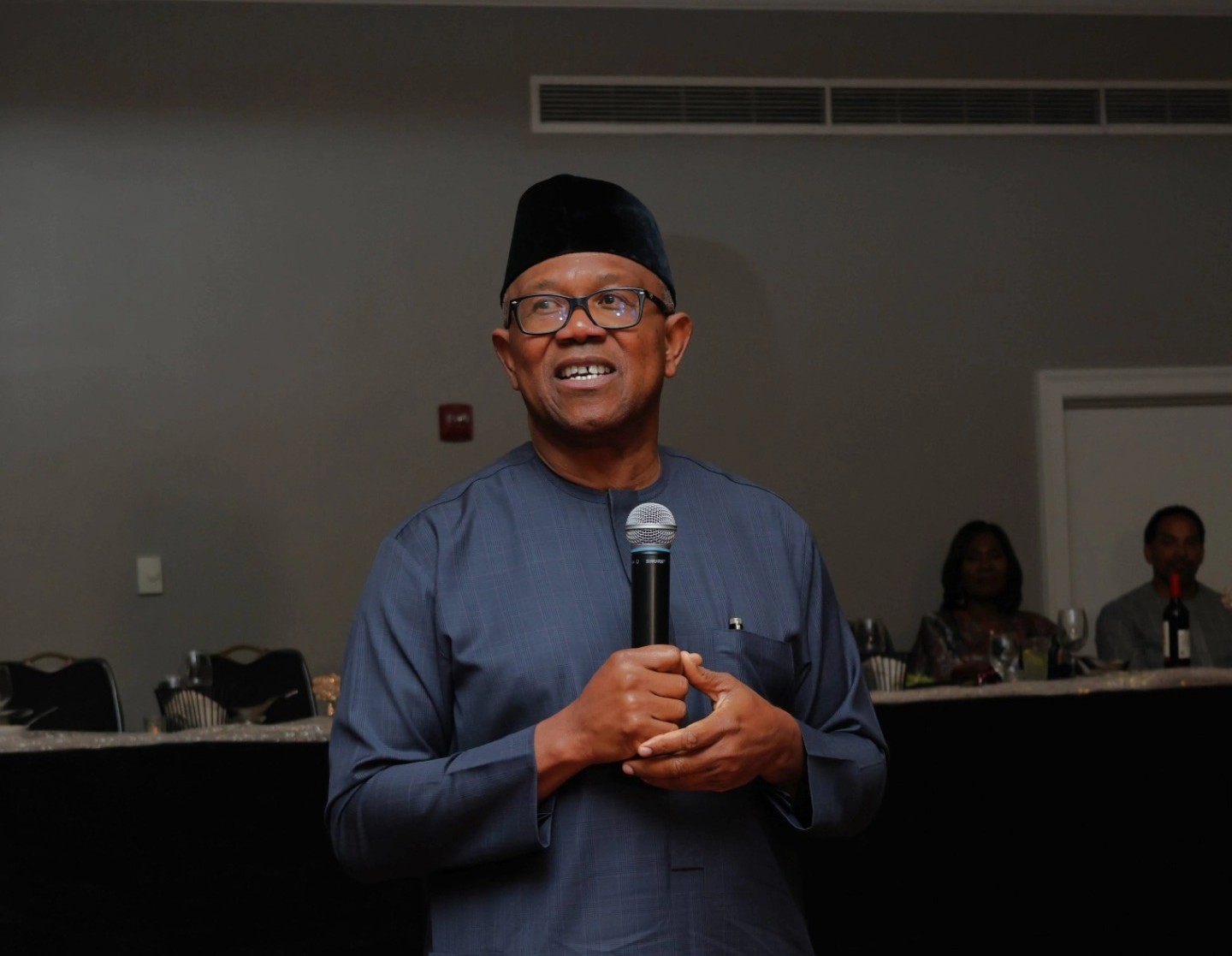
Former governor of Anambra State, Mr. Peter Obi, has expressed concern over Nigeria’s worsening hunger situation despite Federal Government’s declaration of a state of emergency on food security and other agricultural interventions.
Obi, on his verified ‘X’ handle, argued that the country’s hunger index ranking has deteriorated over the past three years, placing Nigeria among the world’s most food-insecure nations.
According to him, President Bola Tinubu, while marking his third year in office, highlighted achievements in the agricultural sector, including the declaration of an emergency on food security in July 2023 and the procurement of 2,000 tractors and 9,000 farming implements as part of what he described as Nigeria’s largest agricultural mechanisation programme.
However, Obi contended that the interventions had not translated into improved food security outcomes.
He claimed that Nigeria’s ranking on the global hunger index has worsened from 103rd position out of 123 countries surveyed in 2022/2023 to 115th position out of 123 countries surveyed in 2025/2026.
He further stated that Nigeria is now classified among the world’s most hungry nations, adding that projections indicate millions of Nigerians could face severe hunger if urgent measures are not taken.
Obi maintained that Nigeria should not be counted among the world’s hungriest countries given its vast arable land, particularly in the northern region, which he described as one of the nation’s greatest assets.
He then called for greater transparency and increased investment in agricultural production, arguing that such measures would not only guarantee food security but also create large-scale employment opportunities for citizens.
“We must transparently invest in agricultural production, which will guarantee food security and create huge employment,” Obi said.
Meanwhile, as Nigeria marks the 33rd anniversary of the June 12, 1993, and 27 years of uninterrupted civilian rule, the Corporate Accountability and Public Participation Africa (CAPPA) has called on the Federal Government to treat the country’s worsening insecurity as a direct threat to democracy, the rule of law and the credibility of the 2027 general elections.
In a statement yesterday, the organisation warned that no democracy can flourish when citizens live under the constant threat of kidnapping, terrorism, banditry, communal violence, and other forms of criminality.
“Democracy cannot thrive where people are afraid to travel on highways, send their children to school, cultivate their farms, operate businesses, or participate in elections,” Zikora Ibeh, CAPPA’s assistant executive director, said.
The organisation lamented the continued spread of kidnapping-for-ransom across the country, noting that persistent mass abductions, including attacks on schools and educational institutions, pose a grave danger to national growth and development.
Other News
According to available data, no fewer than 4,722 people were abducted in 997 kidnapping incidents between July 2024 and June 2025, while at least 762 people lost their lives in kidnapping-related incidents during the same period. Nigerians also paid an estimated N2.57 billion in ransom to kidnappers over the course of the year.
Particularly troubling, CAPPA said, is the continued targeting of children, women and young girls, many of whom remain separated from their families for extended periods under traumatic conditions. The group said videos circulating on social media, showing Nigerians in captivity being beaten, tortured, humiliated, and forced to make desperate appeals for ransom payments, have shocked the nation and exposed the human cost of the country’s security crisis.
“No Nigerian should have to plead for their life before a camera while criminal groups operate with impunity. No parent should have to endure the agony of not knowing whether a kidnapped child will return home alive. These tragedies represent a profound failure of the state’s most fundamental responsibility, which is the protection of life and property.”
CAPPA called on the Federal Government and security agencies to intensify efforts to secure the immediate release of all Nigerians currently held in captivity and ensure that those responsible are apprehended and prosecuted.
“All criminal elements must be made to understand that Nigeria and its people are out of bounds. No group should be allowed to terrorise communities and undermine national life without facing the full consequences of the law.”
The organisation also urged government to communicate more regularly and compassionately with the public on efforts being made to rescue abducted persons and prevent future attacks.
“While security operations often require discretion, the current shortage of official information is fuelling rumours, anxiety and a growing sense of abandonment among affected families and communities. Nigerians deserve reassurance that every available resource is being deployed to bring their loved ones home safely.”
CAPPA noted that the persistence of insecurity could significantly undermine voter participation ahead of the 2027 general elections.
“Citizens who fear violence are less likely to engage in civic activities or turn out to vote. Communities displaced by insecurity face additional barriers to electoral participation. A democracy cannot be considered fully representative when large numbers of citizens are effectively excluded by fear and insecurity.”
The group called for greater investment in intelligence gathering, community policing, inter-community surveillance and early warning systems, stronger collaboration between security agencies and local communities, improved welfare for security personnel, and more effective prosecution of criminal networks.
It also urged governments at all levels to address the structural conditions that fuel violence, including poverty, youth unemployment, corruption, weak institutions, environmental degradation, resource conflicts, and social exclusion.
As Nigerians commemorate June 12, CAPPA stressed that the promise of democracy cannot be separated from the security and welfare of citizens.
“The significance of June 12 lies in its affirmation that sovereignty belongs to the people. That promise loses meaning when citizens cannot move freely, sleep peacefully, send their children to school, or participate in public life without fear.
“Defending democracy, therefore, requires defending the lives and dignity of Nigerians. The government must act with urgency to rescue those in captivity, dismantle criminal networks, and restore public confidence. That is the minimum obligation of any democratic state and the standard by which Nigerians will continue to judge their democracy.”