Follow Us on Google
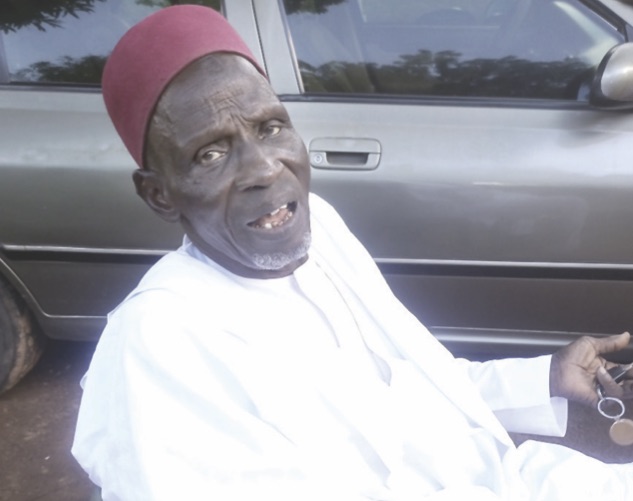
From Sola Ojo, Abuja
In this interview, 79-year-old veteran journalist, Alhaji Tajudeen A. Tijjani, has described Nigeria’s 65 years of independence as a journey weighed down by failed leadership, corruption, and public sabotage of development efforts, warning that the nation’s future rests on citizens and leaders alike playing their part with honesty and responsibility.
Excerpts:
As someone who was privileged to witness a part of colonial rule, how was Nigeria before independence?
There is no real comparison. You cannot be under colonial rule and compare it to self-rule. Under colonial rule, we were practically slaves. Before they came, we had our own systems, our own resources, and our own way of life. They came and disrupted all of it.
They took many of our treasures: the Benin artifacts, oil from the East, cocoa from the West, cotton from the North. They met all these resources here, but they destroyed our systems and exploited them for themselves.
When independence came, it was not a gift on a platter. It was demanded. People agitated and insisted on freedom. Ghana got independence in 1957, and that encouraged us. By 1960, Nigeria too became independent.
In 1960, what was the atmosphere like? How old were you when Nigeria got independence?
In 1960, I was in Standard Six, about to leave primary school. I finished in 1961. The atmosphere was fantastic in the sense that people were dedicated to their work. Life was slower, calmer, more meaningful.
But independence itself was tricky. The colonial masters gave us independence with the right hand, and took it back with the left. Why do I say so? Because we didn’t own our ships, we didn’t own our planes, we didn’t control much of the economy. They remained in charge of many things.
From my point of view, independence was just an extension of imperialism. They said, “Okay, we’ve given them independence,” but they continued controlling us indirectly. Even the leaders they installed were not always the people’s choice. And those who wanted to be true people’s leaders suffered greatly under the hands of the colonial masters.
This 2025, Nigeria is 65 years old as an independent nation. How far have we come?
I will repeat what I said: yesterday can never be tomorrow. The problem is leadership. Remember, just six years after independence, in 1966, Nigeria became like an orphan. That was when the crisis began. Our first leaders were killed in the coup, and from then until today, we have not truly recovered.
In those days, after Standard Six, even before secondary school, one could find meaningful work. You could work at the Ikeja Industrial Estate in Lagos, which was one of the biggest in Africa. You could work at the Sharada Industrial Estate in Kano, also one of the biggest at the time. There were industries everywhere. Opportunities were many and that kept everyone busy.
But today, things are not the same. Leadership has failed us, and that is why yesterday can never be tomorrow.
Look, Nigeria is blessed. We have iron in the ground, we have bitumen, we have everything needed to manufacture what we need. But nobody showed us how to use it. They just gave us “independence” and walked away.
Is that how they themselves got independence? No. They took from what we had. They brought their own people here, called them technicians or engineers, and carted away our resources. They stole what belonged to us and left. And yet, people still celebrate them. I don’t. They didn’t do anything to deserve celebration.
Honestly, it might even have been better if they had left us alone entirely rather than giving us a false sense of independence without preparing us. There was no real freedom anywhere. Freedom is not given; it must be taken. No one can “give” me freedom unless I claim it myself.
So, what they did was package something and call it “freedom,” but in reality, they still kept us under a form of slavery.
Malaysia didn’t have palm oil. They came to Nigeria, saw our palm oil, took seedlings to their country, developed it, and today they are the largest supplier of palm oil in the world. That’s their major source of income.
People often ask why Nigeria looked up to Ghana even before Ghana’s independence. It was because of cocoa. Where did they get cocoa? Much of it came from the southern part of Nigeria to Ghana. Many of those who made money in Ghana in those days were actually Yoruba and others who migrated there because of cocoa.
In Kano, we had what was call the “cotton pyramid.” It was so big, taller than a 10-storey building. They would come, take our cotton, use it abroad, and then bring back finished products labelled “Made in China” or “Made in Sierra Leone.” Meanwhile, the raw material came from us.
This didn’t benefit ordinary Nigerians. Instead, they used what I call “indigenous colonialists”-local agents who were handpicked to help extract resources. These people didn’t protest; they just took and shipped everything abroad, where it was processed and sent back to us at a higher price.
I even worked at sea as a young man. We were maintenance officers on ships. From there, you could get to Liverpool or England easily. In those days, you didn’t even need a visa because we were still under the British. Nobody asked questions.
Before we realised what was happening, all the ships we used to see, owned by the white men, disappeared one after the other. Companies like Dempster Lines dominated the scene. Tema Port in Ghana became one of the largest seaports in the world. From there, you could reach anywhere.
We were close to them, but while Ghana was developing its port and industries, Nigeria was still importing everything. We had industries, yes, but they relied on imported inputs. The colonialists took all our ideas and raw materials away, remodeled them abroad, sent them back to us, and then some people here became “agents” selling these products, clothes made from our own cotton, jewelry made from our own resources.
If you’re feeding me every day without teaching me to feed myself, I’ll keep coming back. One day, you’ll tell your gatekeeper to say, “I’m not around.” That’s exactly what they did to us.
We’ve managed the military era and, of course, since 1999 when we returned to self-rule, otherwise called democracy. Some people say lack of visionary leadership is the real problem of this country. Do you agree?
The way we bring people into office is part of the problem. Look at 1999. How did Obasanjo come in? He was brought in to pacify the Yoruba after the annulment of Abiola’s election.
Obasanjo was not the best candidate at that time. In fact, many Yoruba people preferred Olu Falae. But the northern oligarchy-those who determine power, chose Obasanjo.
Why?
Because in the past, he had satisfied the North. Remember, he was the one who handed power to Shagari peacefully after the crisis of 1979.
So, they looked around and said, “Why not Obasanjo? He’s loyal to us.” That’s how he became president. He wasn’t prepared. He was even in prison before then. He didn’t campaign. It was people like Atiku Abubakar and others who organised things, mostly for their own interests.
Eventually, Atiku became his vice. I remember clearly, I was in Jos when all these were happening. Atiku had already been elected governor of Adamawa before being picked as vice president. But because they were brought together without proper coordination or unity of purpose, they fell apart later.
If they had truly belonged to the same political family, chosen by their party, they would have worked better together. But because some people wanted to satisfy certain interests, they just imposed leaders on us. That is why things turned out the way they did.
So, 1999 was not a fresh start. It was simply a continuation of military rule in agbada (flowing gown). Obasanjo did nothing fundamentally different from the military.
But since 1999, we’ve had Obasanjo, Yar’Adua, Jonathan, Buhari and now Tinubu. Why is it still so difficult to focus on development?
Because we don’t allow the best to rule the rest. That’s the truth.
Yes, Obasanjo introduced GSM, which we all enjoy today. But even that story goes back to earlier years. Mobile phones were first tied to ITT (International Telephone & Telegraph). During Murtala Muhammed’s government, the ITT case came up. David Mark, then Minister of Communication, even said “GSM is not for the poor.”
It was also through ITT that Chief Moshood Abiola made his fortune before entering politics. Fela Kuti sang about ITT too, calling them “International Thief Thief.”
So, GSM did not start under Obasanjo. It only became reality then. But the larger point is this: our leaders are not chosen based on merit. It’s about luck, connections, or serving the interests of a few. That’s why we keep repeating the same cycle.
Those still struggling for power today are mostly the same people who have been there before. Tell me what new thing do they want to do? What haven’t they already tried?
Honestly, when I look at our political system and its so-called evolution, I just laugh. It’s not politicians we have, it’s “moneticians.” People using money to play politics.
In the past, we knew real politicians. My own father was part of the NCNC group, and I know what politics looked like in those days. It was different. At that time, like Chinua Achebe said, “There was a country.” You didn’t have to come from a particular part of Nigeria to be accepted elsewhere. It was truly politics of service, not politics of money.
Sir, can what happened in the past happen again in Nigeria, where there was no unemployment or underemployment?
It is possible, but only if we allow real politicians to lead, not these merchants of politics we see today. They are not politicians, they are traders in politics.
The hope of Nigeria is in the hands of your generation, the younger ones. If genuine politicians are allowed to emerge, Nigeria can still be rescued.
Let me tell you something. If leaders like Aminu Kano were alive today, they would look President Tinubu in the face and tell him he has failed. But nobody is ready to do that now. Why? Because of ethnicity “he’s my brother,” “he’s from my region,” so people kept quiet.
Even those making noise today are not sincere. When Buhari was there for eight years, who among us openly raised issues? He spent more money than Tinubu has spent so far, and yet many kept silent. Today, people are crying, especially in the North.
The Insecurity you see today; banditry and kidnapping didn’t just come from nowhere. During Buhari’s government, money was given through certain agencies to support farming. Billions were released. But many of those who took the loans didn’t actually farm. When it was time to pay back, they couldn’t. So, what did they do? They pushed idle young men into crime – kidnapping, banditry, and violence just to cover up.
Don’t be deceived: those herds of cows you see on the roads today don’t belong to the ordinary Fulani man anymore. Most Fulani are now just herders working for the rich. Wealthy elites are the real owners of those cows.
So, when people talk about insecurity, remember what the late Sardauna of Sokoto and Waziri Junaidu once said: “If the children of the poor do not sleep, the children of the rich will not sleep either.” You can send your child to Oxford University abroad, but the boy carrying loads in the market who never got education will one day confront that same Oxford graduate when frustration turns to violence.
Would Nigeria ever be peaceful as it was before 1960, when people could travel across the country freely?
No, Nigeria can never go back to 1960. Those days are gone. In 1960, freedom was real. Even as a child of 10, during school holidays I would travel alone from the South-West to Kano. Nobody stopped me. Nobody harmed me. At night we could sleep soundly. That was the Nigeria of 1960. Today, even my own children can’t travel from Abuja to see me here in Kaduna without fear. And at my age, I cannot risk travelling long distances like before because if crisis breaks out, I cannot run. In those days, we would trek long distances without fear.
But things have changed. Again, let me say yesterday can never be tomorrow.
Back then, development was planned carefully. There was no obsession for money politics. Salaries were modest but meaningful. As a young clerk, I once earned N2,500 and felt like I had everything. That money could buy whatever I needed. There was dignity, value, and hope.
Today, money rules everything. Politics is monetised. Values have changed. That is why yesterday can never return.
What can we do now to salvage this situation?
Those who are there now are already trying to salvage it. If they cannot do so in the next four or six years, another person will take over. We will continue to do it the way we can. I won’t deceive you there is no magic.
You cannot serve as a poor person in Nigeria. Even if you are vying for position of a councillor, they want you to bring money. If a man spends N10 million to become a councillor, the first thing he wants is N20 million when he gets to office. How will he not be corrupt? That is the reality.
After giving people rice, biscuits, and money during campaigns, he must recover his investment. That is why you see governments abandoning projects. Why should you abandon a project when funds were allocated? Use the funds given to complete one project properly so we can see what has been achieved.
Take Kaduna as an example. Let us be honest with ourselves: El-Rufai’s record will remain in Kaduna for a very long time, unless the current governor surpasses him, which I doubt. Before El-Rufai, apart from Makarfi’s government, others came and left little behind. El-Rufai took the bull by the horns.
Look at places like Rigasa. Before, it was unsafe, you couldn’t go there. Today, there is a train station and development. But what happened? Some people vandalised the trains, even killing innocent passengers. Then we turn around to say the government is not doing anything. How can government succeed if we ourselves are destroying what has been built?
I recall a case here in Kaduna where a village head conspired with others to remove railway tracks. They were caught and taken to Millennium City Police Station. Imagine that a train carrying 200 or 300 people could have derailed and killed everyone. How then can the country move forward?
Everybody has a role to play. If people continue to sabotage, no government can succeed. This is why politics must not be left to a few. Everyone has to take responsibility. Even the politics these young people are playing among themselves reflects what is happening in society. So, truly, everybody has a role to play in salvaging Nigeria.