Follow Us on Google
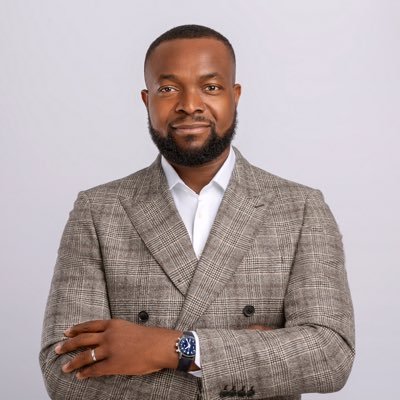
By Fred Chukwuelobe
Global System for Mobile Communications (GSM) is a standard for mobile networks used worldwide to make calls, send texts and get data on your phones, especially on cell phones. It can also be used on Subscriber Identity Module (SIM) card enabled desktop phones and other tablets like iPads.
When it was launched in Nigeria in August 2001, under the President Olusegun Obasanjo administration, it came with a lot of excitement. MTN Nigeria got the first licence and rolled out. It was a big deal, marking the start of mobile telephony in Nigeria.
They were followed by Econet, owned by Zimbabwe enterprenuer, Strive Masiyiwa, and Nigeria’s Mike Adenuga’s Globacom (Glo). The epileptic Nitel, burdened by corruption, also got a licence but couldn’t keep pace with the other three.
Before you knew what was happening Nigeria’s systemic corruption ate Econet. From there it changed names multiple times:
1. Econet Wireless Nigeria.
2. V-Mobile. This became a new name after Econet’s management contract was terminated.
3. Celtel acquired V-Mobile in 2006 and adopted that name.
4. Zain rebranded from Celtel in 2008 after Zain Group acquired Celtel International.
5. Airtel came and it changed to Airtel Nigeria in 2010 after Bharti Airtel acquired Zain’s African operations. It has since then managed to maintain that name.
It’s worth noting that there’s an ongoing court case regarding the ownership and management of the company, with Econet Wireless Limited claiming a 5% stake in the company, now known as Bharti Airtel Nigeria Limited. (Meta AI).
Nitel died a natural death, typical of public-owned companies in Nigeria. Efforts to sell it under the name Mtel yeilded no positive results. Today, the 0804 mobile prefix is gone.
Later, some investors in 2008 brought in Etisalat Nigeria from the Middle East and, like Airtel, it underwent name change and became 9mobile in 2017 after Etisalat’s exit.
MTN began with 0803; Econet had 0802; Glo got 0805; Etisalat came later with 0909. They have all since been allocated with other mobile phone prefixes and have expanded their subscribers’ base, taking advantage of Nigeria’s huge population.
However, despite the huge markets available today to the service providers, their services have become increasingly unreliable the Nigerian way. To make and receive calls these days is akin to trying to squeeze water out of rocks. Call drop rate is high, connectivity is slow, and yet airtime and data costs keep skyrocketing.
Some of the network providers claim a decline in the subscriber base. Others claim they are having network infrastructure issues and are struggling financially despite the huge profits they declare annually.
The first ripoff of subscribers started with the per-minute billing. Thanks to Otunba Mike Adenuga, who introduced the per second billing hitherto stoutly opposed by the other providers, subscribers now pay per second.
The biggest downside with the service providers was the launch of 5G. It came with a lot of expectations and the performance as at today is abysmal.
The providers started from 2G to 3G, and 4G. The launch of 5G was touted as revolutionary, where download speed of 5G of MTN Nigeria, the pioneer of 5G in the country, boasts an average download speed of 226.59 Mbps, with some areas reaching up to 1 Gbps. Airtel, another major player, offers average speeds of 174.66 Mbps, while Glo and 9mobile provide speeds ranging from 300-600 Mbps and 500-900 Mbps, respectively, in areas with strong coverage. (Meta AI).
Today, the 5G has become a huge joke, perhaps, one of the biggest jokes of the GSM generation. Yours sincerely was one of the first set of people who pre-ordered it and received it. Its data consumption is very high and expensive. Yet, the touted speed is like a tortoise running with a springbok in a race: very slow and annoyingly so.
To make calls these days, one has to try and try and try again. Often the number you’re dialling is unreachable or switched off. Meanwhile, you’re holding the phone and it is on.
The providers joggle their airtime rates and data as they deem fit. The regulatory agency typically is sleeping and subscribers are at the mercy of the service providers.
Time has come when the Nigerian Communications Commission (NCC) should look into the poor services being rendered by these providers.
It is deteriorating fast and something needs to be done before they become like NEPA which unbundling into Discos created more darkness than light.
Right now we are saddled with a power regime called “Band.” We have Band A, Band B, Band C and those who are lucky to see 18 to 20 hours power supply daily break their bank accounts to pay.
We may be heading to the band classification in the telecomm industry with the way the GSM service providers are going.