Follow Us on Google
From Adesuwa Tsan, Abuja
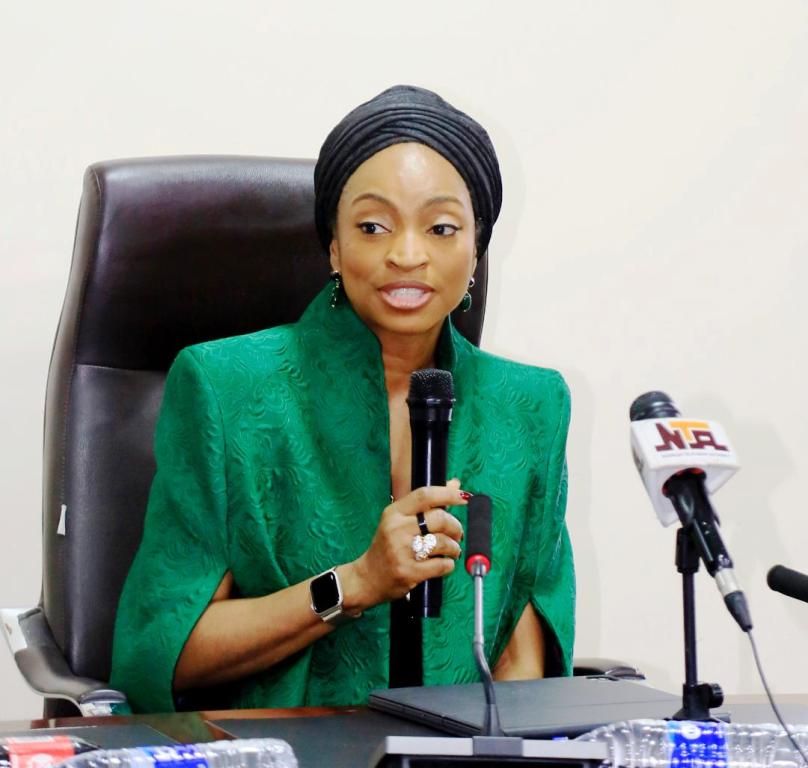
Nigeria’s economic growth is moving at a slow pace due to weak industrialisation, inadequate investment inflows, and a persistent job deficit, the Senate Committee on Trade, Investment, and Industry and the Minister of State for Industry, Trade, and Investment, Jumoke Oduwole, have said.
These concerns dominated discussions on Monday during a defence session on the 2026 budget at the National Assembly.
At the session, lawmakers reviewed the 2026 budget, which is largely a rollover of the 2025 estimates due to delays in the release of last year’s capital component. While recurrent expenditure continues to cater for salaries and overheads, senators expressed concern that limited allocations to capital projects were undermining industrial expansion, job creation, and overall economic growth.
Acknowledging the funding constraints, Oduwole noted that the shortfall in capital releases has significantly affected the pace of industrial development and infrastructure delivery. She, however, said the Ministry has continued to innovate, relying on strategic partnerships and policy coordination to achieve results despite limited resources.
“The Ministry’s work is at the heart of creating opportunities for young Nigerians,” she said. “Industrial growth, renewable energy, infrastructure development, and the auto sector are all key drivers of employment and economic expansion.”
She disclosed that one of the Ministry’s flagship interventions is a partnership with a Korean company to establish local manufacturing of electric vehicles (EVs), a project projected to generate about 2,000 jobs and boost domestic content in the auto sector. According to her, the initiative is part of a broader strategy to prioritise high-employment sectors such as manufacturing, construction, and technology.
The Minister also outlined the Ministry’s efforts to attract domestic and foreign investments, describing it as an enabling institution focused on removing regulatory bottlenecks and expanding market access.
“We are an enabling Ministry. We support domestic investors to retain their capital in Nigeria, resolve regulatory bottlenecks, and negotiate trade agreements to expand market access,” she said.
She cited the commercial economic partnership with the United Arab Emirates as a major milestone, explaining that the agreement allows over 7,000 Nigerian products to enter the UAE market duty-free, providing Nigerian businesses with wider access to global markets.
Under the African Continental Free Trade Area (AfCFTA), Oduwole said Nigeria recorded a 14 per cent increase in non-oil exports to African countries, while total non-oil exports have exceeded ₦6 billion, the highest level ever achieved. She said the figures demonstrate gradual progress in diversifying the economy away from oil.
Senators, however, questioned the Ministry’s projected Internally Generated Revenue (IGR) of ₦2.55 billion for 2026, describing it as conservative, especially in light of the fact that revenue targets for 2024 and 2025 were surpassed.
Responding, the Minister said the Ministry operates mainly as a service and facilitation agency, rather than a revenue-generating institution.
Other News
“We support MSMEs and facilitate investments. We do not charge significant fees,” she said. “We rely on government support to implement capital projects that create jobs and add real value to the economy.”
Lawmakers also examined Public-Private Partnership (PPP) arrangements and stressed the need for strategic capital deployment to address Nigeria’s infrastructure deficit, boost industrial capacity, and expand employment opportunities.
Oduwole said the Ministry’s first domestic investor summit provided a critical platform for private-sector engagement, offering guidance on market access and encouraging investment in priority sectors.
“We are using our intellectual property and strategic coordination to facilitate industrial growth, even under resource constraints,” she said.
Another major intervention highlighted was the National Single Window Project, a digital trade facilitation platform scheduled for launch this quarter. The system is expected to streamline customs and trade processes, improve efficiency, and better integrate Nigeria into global trade networks.
According to Oduwole, the project will significantly benefit micro, small, and medium enterprises (MSMEs) by easing access to international markets and enhancing their competitiveness.
Senators commended the Ministry’s proactive and strategic interventions but stressed that stronger funding commitments and closer legislative-executive collaboration were needed to overcome Nigeria’s industrial and employment challenges.
“Collaboration between our committees and the Ministry is crucial to moving beyond oil dependence,” one lawmaker said. “Job creation and industrial growth must be central to our economic agenda.”
Other lawmakers added that capital allocations must be aligned with strategic priorities to ensure projects translate into tangible employment, higher industrial output, and sustainable development.
The Minister also outlined ongoing efforts in technology, creative industries, and infrastructure, noting that resolving regulatory challenges, facilitating investments, and supporting MSMEs remain critical to strengthening Nigeria’s industrial base.
In his closing remarks, the Committee Chairman, Sadiq Suleiman Umar, reaffirmed the Senate’s support for the Ministry’s initiatives, expressing optimism that sustained collaboration and strategic government backing would accelerate Nigeria’s economic transformation.
He noted that although economic growth currently stands at 4.2 per cent of GDP—the fastest in over a decade—this momentum could only be sustained and deepened through deliberate investments in industrialisation, job creation, and export-led strategies.
Oduwole’s presentation, he said, underscored the urgent need to address Nigeria’s industrial and employment gaps through public-private partnerships, trade facilitation, and innovative policy implementation to reposition the economy for long-term growth.