Follow Us on Google

From Charity Nwakaudu, Abuja
Former Kano State governor, Abdullahi Ganduje and former Delta State governor, Ifeanyi Okowa, have raised concerns over Nigeria’s deepening divisions and widening trust deficit between political leaders and citizens, warning that poor management of the country’s diversity, political rivalries and declining public confidence in governance are undermining national unity and sustainable development.
While Ganduje warned that Nigeria’s ethnic and cultural diversity was increasingly becoming a liability rather than an asset, Okowa lamented that many citizens were losing faith in governance because of exclusion from decision-making, unfulfilled expectations and inadequate delivery of essential public services.
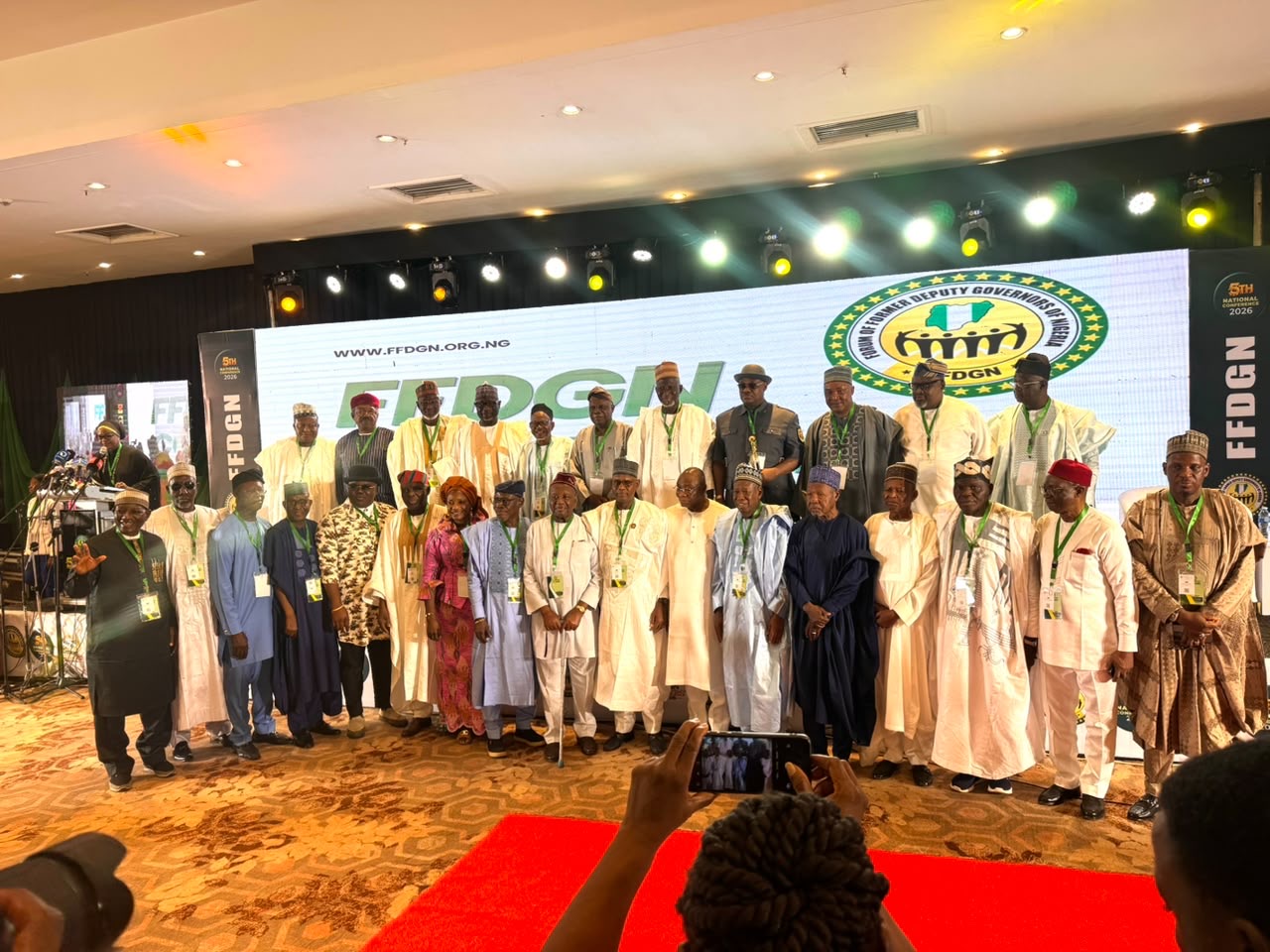
The two former governors spoke on Tuesday at the fifth national conference of the Forum of Former Deputy Governors of Nigeria (FFDGN) in Abuja, where political leaders and other stakeholders examined the challenges of nation-building, democratic governance and sustainable development.
Ganduje questioned whether Nigerians genuinely believed in the country and were prepared to subordinate ethnic and sectional interests to the pursuit of national development.
“Do we all believe in Nigeria? Do we truly believe that our diversity is an asset rather than a liability? The way we manage our diversity today is making it appear more like a liability,” he said.
Reflecting on Nigeria’s political history, Ganduje observed that the colonial authorities brought different ethnic nationalities together primarily to advance their economic interests rather than establish a united country founded on shared aspirations.
He commended political leaders of the First Republic for developing a sense of nationalism and mounting the pressure that eventually secured independence, but regretted that some of the same leaders subsequently embraced tribalism, with political parties increasingly organised along ethnic and regional lines.
The former governor urged Nigerians to rise above sectional differences and demonstrate greater faith in the country, stressing that diversity could become an instrument of national progress only when deliberately managed in the collective interest.
Ganduje also identified the absence of continuity between successive administrations as a major obstacle to sustainable development, expressing concern that political disagreements between outgoing and incoming governors frequently resulted in the abandonment or reversal of projects initiated by their predecessors.
He said the problem persisted even when both leaders belonged to the same political party, thereby undermining public investments and denying citizens the benefits of long-term development programmes.
According to him, continuity in governance promotes consolidation, which ultimately guarantees sustainable development.
He called for stronger democratic institutions, stressing the need to examine the capacity of the executive, legislature, judiciary, media, non-governmental organisations and political parties to sustain Nigeria’s democracy.
Earlier, Okowa, who co-chaired the conference, warned that nation-building would remain difficult unless political leaders rebuilt public confidence through accountability, inclusion, responsiveness and respect for the social contract.
He said many Nigerians had become increasingly disconnected from governance because their expectations, needs and aspirations were not being adequately addressed.
The former governor identified declining trust in public institutions, limited citizen participation in policymaking and inadequate delivery of essential services as major factors responsible for the growing disconnect.
Other News
He expressed particular concern that young people, women, persons with disabilities and disadvantaged communities often felt excluded from governance or insufficiently represented in decisions affecting their lives.
Okowa maintained that sustainable development required a relationship in which government demonstrated accountability and citizens accepted responsibility for advancing the collective interest.
In his keynote address, titled, “Rethinking Nation-Building for Sustainable Development: Bridging the Leadership/Citizenship Disconnect,” former minister Jerry Gana called for value-based leadership as a foundation for overcoming Nigeria’s development challenges.
Gana argued that effective governance required leaders who promoted peace and security, upheld the rule of law and possessed the courage to take difficult decisions in the public interest.
He also emphasised the importance of surrounding political leaders with competent and principled individuals, noting that meaningful achievements depended not only on the person occupying public office but also on the quality of the leadership team.
In his welcome remarks, National Chairman of FFDGN, Chris Alozie Akomas, urged Nigerians to take collective responsibility for rebuilding trust, strengthening national unity and addressing the moral challenges confronting society.
“A nation is never rescued by its government alone; it is saved by the conscience of its people.”
Akomas argued that national renewal must begin in homes, schools, religious institutions and local communities, where the values that ultimately shape public conduct are cultivated.
He said the forum intended to serve as a bridge between leaders and citizens by promoting moral reorientation, responsible leadership and stronger national cohesion.
He stressed that the conference should move beyond speeches and declarations to encourage practical commitments capable of addressing the country’s social and governance challenges.
Director-General of FFDGN, Kenneth Ibe-Kalu, expressed concern over the widening disconnect between political leadership and the people.
He called for greater investment in civic education, integrity and measures to address indiscipline and other forms of social misconduct.
Ibe-Kalu disclosed that the forum planned to collaborate with internationally recognised institutions to develop practical responses to Nigeria’s pressing challenges.
Although he acknowledged funding constraints, he said the organisation remained committed to its objectives and would welcome partnerships with public and private sector stakeholders.
The conference focused on strengthening democratic institutions, rebuilding trust between leaders and citizens and identifying practical approaches to sustainable national development.