Follow Us on Google
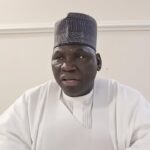
Former Katsina State governor, Aminu Masari, has sounded the alarm over fading public confidence in democracy.
He also highlighted the need for urgent action to address the roots of public disillusionment.
The former speaker of the House of Representatives cited a 2022 survey by Afrobarometer that showed that while 70 percent of Nigerians prefer democracy over other forms of government, a staggering 77 per cent are not satisfied with how democracy works in Nigeria. This, he said, represents a significant increase from 57 per cent in 2017, a trend that should be a major concern for political leaders.
“According to a 2022 survey by Afrobarometer, 70 percent of Nigerians polled prefer democracy to other forms of government… But 77 per cent of those surveyed are not satisfied with the way democracy works in Nigeria, up from 57 per cent in 2017. This should get us worried.”
The former governor said democracy must deliver tangible benefits to the people, and that citizens are not satisfied with the current state of governance.
He urged political leaders to prioritise efforts to reduce poverty, inequality, and lack of opportunities, particularly among the youths population.
Masari proposed redefining local governance by devolving more powers to states to structure local administrations as suited to their needs. He also appealed to the public to retain patience, noting that other nations have gone through challenging phases in their democratic journeys.
He called on political leaders to take note of the unsettling views and move quickly to improve economic conditions and governance to address the underlying causes of public disenchantment.
“We need to understand why our people are gradually losing faith in democracy, and we need to consciously strengthen their faith in democracy.
“People do not want democracy for its sake. They want democracy to translate to material benefits for them,” Masari said.
He called for prioritising efforts to reduce poverty, inequality and lack of opportunities, especially among Nigeria’s burgeoning youths population. Masari proposed redefining local governance by devolving more powers to states to structure local administrations as suited to their needs.
“The fourth point I want to make is the need to redefine our concept of local governance. We need to ensure that there is adequate and effective governance where it matters the most: at the local level, which is where most of our people live.
“One of the reasons local government areas are not functioning effectively is because of the constitutional confusion about their status. On one hand, the local government areas are supposed to be autonomous of the states and are all listed in the constitution. But the same constitution creates joint accounts for states and local government areas, puts the LGAs under the supervision of the states, and mandates the state parliaments to make laws for the LGAs.
“My considered opinion is that we should redefine the functions and structure of local Governments and remove the confusion enshrined in the constitution on their status. This doesn’t mean that we are going to abolish the local government areas. But we should allow each state to decide how many administrative units it wants to have based on its resources and needs. We should also allow local governance to be adapted to local realities, rather than aim for uniformity across the country,” he said.
The former speaker also appealed to politicians and the Nigerian populace to continue to deepen and strengthen Nigeria’s democracy, urging the politicians to be more sensitive to the needs and the feelings of the people.
“In representative democracy, elected politicians merely hold power in trust for the people. We, therefore, need to prioritise the needs of the populace ahead of our own needs. We also need to become better democrats. We need to fully imbibe the culture of democracy. We need good winners and good losers,” he said.
Masari called on Nigerians to be more patient with the administration of President Tinubu, saying 25 years of unbroken democracy is a speck in the life of a nation.
“Most of the countries that we are eager to compare Nigeria to today went through their challenging moments too. They were totally different from the countries that we know 200 years ago. Nation-building takes time. We also need to be more patient with democracy, which by its nature is slow and complex.
“Democracy is about process, which may make it difficult for issues to be addressed or resolved with immediate effect. It is not without challenges, but democracy is still the best form of government. We need to stay faithful to it,” he said.
The former governor of Katsina tasked leaders to pay special attention to the needs and mindsets of Nigerian youths, adding that the nation can become a global economic powerhouse if it harnesses the full potential of Nigerian youths.
“I call them critical voters. It is important to pay close attention to this group of citizens. On one hand, they can be called the children of democracy. They should be natural, defenders of democracy. But on the other hand, they have no memory of how bad the alternative to democracy could be, and they may not be keen about defending democracy. Our task as leaders and elders is to sustain the faith of our youths in our country and our democracy.
“To realise this benefit, the so-called demographic dividends, we need to create the enabling environment for our youths, and by extension our country, to thrive. Most of our youths are not satisfied with the system today, and they are checking out of the country in large numbers, mostly because of lack of opportunities for them to actualise their dreams. Let’s create the opportunities for them to stay back at home and contribute their quota to the development of our country,” he said.