Follow Us on Google
Two important events brought me to Abuja last week: International Anti-Corruption Day (IAD) and International Human Rights Day (IHRD). The anti-corruption event, celebrated on December 9, was organized by the Inter Agency Task Team (IATT) of anti-corruption agencies. The IHRD was celebrated on December 10 to commemorate the United Nations’ General Assembly’s adoption of the Universal Declaration of Human Rights in 1948.
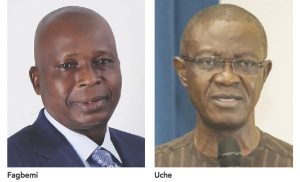
Both events elicited some smiles and deep sighs. The smiles were engendered by the reported gains made in the area of the fight against corruption. The Anti-Corruption Project Manager, Rule of Law and Anti-Corruption (RoLAC) Programme, Dr. Emmanuel Uche, drew applause from the audience at the Shehu Musa Yar’Adua Centre when he said we should celebrate because “things are looking up.” He praised the Attorney-General of the Federation and Minister of Justice, Lateef Fagbemi (SAN) for the successes reportedly recorded on the fight against corruption.
He also commended Nigeria’s removal from the grey list of Financial Action Task Force (FATF), the main global watchdog for financial crime, and some of the recoveries already made. He said Nigeria jumped into the pit of corruption; jumping out would not be easy.
Fagbemi amplified Uche’s statement. He boasted that “the current exit of Nigeria from the FATF grey list is clear evidence of how this administration is committed to fighting corruption and how regulatory and financial institutions can sustain vigilance for Financial Integrity and Global Confidence.”
According to him, the Bola Tinubu administration remains focused on implementing the National Anti-Corruption Strategy (NACS) 2022-2026 and its Action Plan. He said this administration also recognized that empowering the youth was one of the strongest antidotes to corruption. “A hopeful youth is harder to corrupt, an engaged youth is harder to mislead, and an empowered youth is a powerful force for national transformation,” he said.
He highlighted some of the key initiatives championed by this administration to support young people and strengthen their capacity to reject, resist, and rise above corruption. They include, among others, expanding opportunities in the digital economy such as the 3 Million Technical Talents Programme (3MTT), strengthening access to education and opportunity through such programmes as the Nigeria Education Loan Fund (NELFUND), and supporting youth entrepreneurship and creativity such as the Nigeria Youth Investment Fund (NYIF) and the Digital and Creative Enterprises Programme. These are commendable initiatives.
But, are these enough to clink our glasses and say we are winning the war against corruption? Though some gains have been made, we have been crawling instead of running in the anti-corruption fight. I am a member of the Monitoring and Evaluation Committee (M&E) of the NACS. The second phase of the programme is due to end next year. Unfortunately, I cannot confidently say that we have done enough to monitor and evaluate the Ministries, Departments and Agencies (MDAs) of government as programmed. Many gaps still exist. Fagbemi and Uche know exactly what I am saying here.
The Head of Technical Unit on Governance and Anti-Corruption Reforms (TUGAR), Mrs Jane Onwumere, also understands my point. In her welcome address at the IAD, she decried the negative ways corruption has affected lives and the economy such as the ‘japa wave’ whereby young Nigerians leave the country in droves in search of greener pastures. According to her, empowering the younger generation with knowledge, skills and opportunities is one of the most sustainable investments the country can make in the fight against corruption.
Espousing the theme of the programme – “Uniting with Youth Against Corruption: Shaping Tomorrow’s Integrity” – Mrs Onwumere noted that “tomorrow’s integrity rests significantly in the hands of the youth.”
I cannot but agree with the United Nations Office on Drugs and Crime (UNODC) which noted that many of the complex challenges, rising insecurities and deep injustices in the world today were tied to corruption and economic crime. According to the Country Representative of the UNODC, Mr. Cheikh Toure, corruption thrives in silence.
The questions are: Are young Nigerian people reaping from well-funded public schools? Do they have access to quality education, health care, and job opportunities? Can we, in all sincerity, say that the Nigerian youth are better off today?
Not yet. Corruption still stares you in the face everywhere you go in Nigeria. Young people are the worst victims. On the roads, the police and some other security agents harass and extort money from motorists. Earlier in the year, some police operatives at a checkpoint on Benin Bypass in Edo State demanded N5,000 or five litres of fuel from some motorists for failing to provide proof of Electronic Central Motor Registry registration.
In another disgraceful incident, some police officers attached to the Igbeba police station in the Ijebu Ode area of Ogun State allegedly extorted the sum of N99,000 from a student, Olawale Ayomide, for driving a car without a number plate. They initially demanded N1 million, but ended up settling for N100,000. The car belongs to his mother, who was still processing the registration documents as of then. There are numerous extortion incidents which made the police the most corrupt public institution in Nigeria.
Like corruption, Nigeria still crawls on human right issues. This became evident on December 10, when attention moved to Transcorp Hilton Hotel, Abuja, for the International Human Rights Day. Discussions centred mainly on the freedom of expression and information. The Head of the European Union Delegation to Nigeria and ECOWAS, Ambassador Gautier Mignot, said human rights were not privileges granted by the state, but inherent entitlements that must be protected and nurtured. To him, journalists in Nigeria and globally still face threats, intimidation, and violence.
This is true. In 2024, the Centre for Journalism Innovation and Development (CJID) Press Attack Tracker identified 110 verified attacks against journalists. Since August, at least three journalists have been detained for allegedly violating Nigeria’s Cybercrime Act.
The Socio-Economic Rights and Accountability Project (SERAP) and the Nigerian Guild of Editors (NGE) put it more succinctly. In a joint statement to mark the 2025 IHRD, the two bodies noted that in 2024, about 56 journalists were assaulted or arrested while covering demonstrations across the country. Quoting Reporters Without Borders (RSF), they said Nigeria dropped 10 spots to 122nd in the 2025 World Press Freedom Index.
They urged the government of President Bola Tinubu, the state governors, lawmakers and other actors to immediately stop the intimidation and harassment of journalists, activists, bloggers and civil society organizations (CSOs) in the country for the peaceful exercise of their human rights.
They also called on the Nigerian authorities to stop using repressive laws like the Cybercrimes Act, criminal and penal codes to target journalists, CSOs, and critics peacefully expressing their views online, and immediately release those arbitrarily detained across Nigeria. They urged the National Assembly “to promptly and comprehensively review the Cybercrimes Act and other restrictive legislation, and revise them as appropriate to bring them into line with Nigeria’s international human rights obligations and commitments regarding human rights and media freedom.”
Despite allegations of human rights abuses by the government, Fagbemi, ironically, sees freedom of expression as the lifeblood of democracy. According to him, in a democracy, silence is not golden; it is dangerous. He warned, nevertheless, that misuse of digital platforms, especially through hate speech and disinformation, threatens national cohesion. He expressed the commitment of the government to strike a balance between protecting citizens’ rights and maintaining public order.
My happiness is that Nigerian journalists and CSOs still have the support of some international bodies despite all odds. Mignot, for instance, noted that the EU would continue “to stand firmly behind those who speak truth to power, often at personal risk.” He urged Nigeria to strengthen legal systems against threats to journalists and expressed EU’s support for strengthening institutions, interfaith dialogue, and human rights initiatives.
Nigeria will progress more if it hearkens to the EU’s advice. The Head of Programme of International Institute for Democracy and Electoral Assistance (International IDEA), Danladi Plang, is in agreement with this fact. He made reference to UNESCO’s 2023 analysis of the status of human rights data from 180 countries. The analysis shows that 10 countries that enjoy the highest levels of free expression also enjoy higher civil, political, economic, and social rights, including a near absence of political killings. In contrast, the 10 countries that had the lowest level of free expression “are associated with higher levels of exclusion by socio-economic group, and high levels of exclusion by gender and political groups.”
Noting that millions of Nigerians remained excluded from legal information, Plang said over 90 per cent of police officers who participated in a training on the Administration of Criminal Justice Law of a state said they had never seen the Law. This, he said, increased the propensity for non-compliance and due process abuses. He urged Nigeria to strengthen access-to-information culture.
Dr. Uche of RoLAC said the right to freedom of information (FOI) is the right that safeguards other rights. Unfortunately, he said we had seen little progress made in the adoption of the FOI Act since its passage in 2011. Despite the Supreme Court’s landmark ruling in April 2025 which affirmed that the Act applies to all levels of government, the gap between law and practice remains wide. He called for stronger institutional accountability, digitalization of public records, and community-level awareness so that marginalized groups could access the rights guaranteed by law.
It’s obvious that we still have a long way to go when it comes to fighting corruption and human rights abuses. The onus lies on the government of President Tinubu to stop all pretence and face these twin problems head on. The country will be better for it.