Follow Us on Google
By Chinelo Obogo
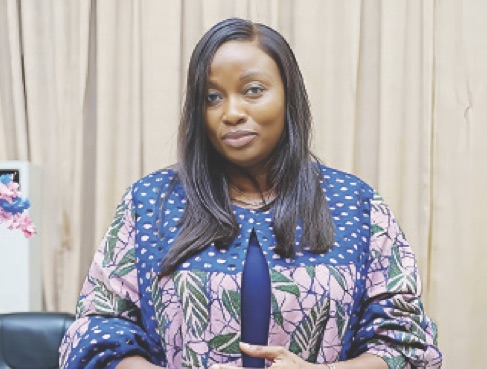
The Managing Director, Federal Airport Authority of Nigeria (FAAN), Olubunmi Kuku, has said that for Nigeria to compete with its peers on the African continent, its airports must stop functioning merely as destinations and start operating as world-class transit hubs.
In an interview with CNBC Africa, she also spoke on the controversy generated as a result of the roll out of the cashless policy on March 1, explaining that President Bola Tinubu’s decision to suspend it was a major win as it would give the authority more time to build the infrastructure needed for a seamless transition.
She spoke on other issues.
The most recent news is the decision from the President to suspend the cashless policy. Where do things stand now, and what does the final payment architecture look like for Nigeria’s airports?
Yes, it has been quite a hectic week for us, as well as for some of our passengers and commuters in the area. I am sure you are aware that we actually introduced a cashless policy last year; it was around July, and we intensified its implementation in October. This year, we have seen quite a number of policy directives from the federal government asking us to stop cash transactions entirely.
There are actually two circulars that have been released by the federal government in support of this initiative. Now, if you look closely at our airport environments, I think Lagos and Abuja are the two biggest markets, followed by Kano, and then Port Harcourt. Lagos and Abuja are quite interesting cases.
In Abuja, most of the passengers heading towards the airport are using it as their end destination. There is a small community to the right, but I would not say that all of them are mobile. This is in very big contrast to Lagos.
In Lagos, if you look at the positioning of the Lagos toll gate, it is actually to the right of the international airport and you have commuters who are either transitioning from the international to the domestic terminal, or people who are travelling to other parts of Ikeja, Oshodi and Isolo. Unlike most airports around the world, which are situated within a 13-kilometre radius of communities, the Lagos airport is actually positioned within communities themselves.
In the implementation of the cashless policy, this made things quite hectic, because a lot of the commuters and even some of the passengers, despite extensive public awareness efforts, did not believe that we would actually begin enforcement on March 1. It did create a huge bottleneck over the first few days, but we saw it start to ease up. I gave some interviews yesterday in which I shared data from October, when we actually began implementation, through to March 3. We have registered about 100,000 customers, of whom 62,000 were registered in just the last three days. In Abuja, for example, we saw traffic begin to ease up considerably.
But despite all of that, we are an airport, and our ultimate goal, outside of safety and security, is also to ensure that our passengers and the neighbouring communities have a seamless experience. We are grateful to the President for stepping in.
For him, it was not just about implementing a federal government directive. He understood the uniqueness of the airport environment and realised that if we implemented the policy without looking at the broader picture, including some of the infrastructure challenges the airport faces, such as potentially widening the lanes and increasing the number of payment channels available, we would continue to face difficulties. In his wisdom, within the Federal Executive Council, we did receive a waiver that allows us to operate a hybrid system, meaning that we will continue to use the contactless cards we have already deployed for non-cash payments, but cash will also be accepted until we have a clearer picture of how many people can effectively use contactless payment options.
Other News
I consider this a significant win for the industry, because it gives us more time to pilot, transition, and put in the necessary infrastructure.
What exactly are we trying to achieve? Because I look at this as a very large undertaking, and the question is: where do we start, particularly when it comes to the foundational rehabilitation of our airports and our ambition to be competitive?
I will start by saying that if you look at Cairo International Airport, O.R. Tambo in Johannesburg and Bole International Airport in Addis Ababa, have all done something that works extremely well. What they have in common is that they have not merely made their airports destinations for passengers arriving in their respective countries; they have made them hubs.
What does that mean exactly? Because a lot of people use the word “hub” quite loosely. A hub is essentially an airport environment where transit passengers are able to move from one location to another without necessarily making that country their final destination. In Nigeria, when you look at the key factors that drive passenger traffic, the most significant is GDP. When you compare the GDP of the Nigerian population to our passenger traffic figures, the ratio is actually very low, less than two percent. What that means is that a large proportion of Nigerians are not travelling, in contrast to populations in comparable economies.
To drive passenger traffic effectively, a couple of things need to happen. First, you need to improve the business environment so that there are greater trade activities bringing people into the country, whether through tourism or business. But when we look at the hub model, we see the future in two things: driving the hub strategy for both passenger and cargo traffic.
To make the hub strategy effective, it is not simply a matter of developing an airport or building infrastructure. It requires that we look at the enablers. For example, consider the airlines. To increase aircraft movements and open additional points of entry, we need to examine the bilateral air service agreements we have with other countries. I believe that over the last three years of this administration, the Minister has improved the number of routes in terms of airlines operating out of and into the Nigerian market. But as we pursue the hub strategy, we also need to ensure there is a proper transit facility. Today, within the Nigerian airport system, it is quite difficult to transit, because no dedicated transit facility currently exists. This is actually one of the things we are addressing as part of the ongoing rehabilitation work.
You mentioned a 22 to 24-month timeline, and there was also a fire incident recently. Has that set the project back?
Yes, we did have a fire incident and it did have some impact, but I would say it was minimal. The impact was mainly on some of the technology equipment we were in the process of moving from Terminal 1 into the temporary terminal and Terminal 2. The good news is that we were already planning to vacate that terminal, so it amounted to roughly a two-day setback. We had manual operations and manual check-in processes for about four or five days, but we have now restored normal operations.
In terms of the rehabilitation itself, the 22 to 24-month timeline still stands. As of November, we activated a temporary terminal at the international airport. Four airlines have already moved into that facility, and they are Middle East Airlines, Air France, KLM, and Ethiopian Airlines. This temporary facility was built within a three-month period. It has alternate access routes incorporated into its design, including a bridge that has been built as part of the wider entry and egress improvements at the airport.
How are you thinking about passenger experience in all of this?
It is not just about designing an airport. You essentially design an airport from the inside out. The first consideration was passenger experience. What we did was map the entire passenger journey from the moment a traveller approaches the airport environment, whether that involves toll points, the passenger drop-off area, or curbside facilities, and then what happens once they come inside. Over the last few months, we have redesigned some of our airport operations, and those changes have been incorporated into the new design, which allows for improved passenger flow, including the ability to check in using various touchpoints.
It is not just about physical infrastructure. We are also exploring how technology can improve the passenger experience through e-gates and biometrics, for example. Right now, biometrics and e-gates are in use on entry. We have also incorporated biometrics on exit into the new design. These are all elements we are considering very carefully. But I think the biggest win will be the transit facility that is being built and incorporated into this new design.