Follow Us on Google
By Chinwendu Obienyi
Nigeria’s economy maintained positive growth momentum in the first quarter of 2026, but the pace remains too weak to significantly improve living standards, create sufficient jobs, or reverse the economic hardship caused by recent currency and fiscal shocks, according to investment research firm, MoneyAfrica.
Africa’s largest economy expanded by 3.89 per cent year-on-year (y/y) in the first quarter, according to data released by the National Bureau of Statistics (NBS). While the figure underscores the economy’s resilience, it marked a slowdown from the 4.07 per cent growth recorded in the fourth quarter of 2025. MoneyAfrica attributed the weaker performance primarily to slower growth in the agriculture and industrial sectors, two critical pillars of the economy. Agricultural growth slowed to 3.2 per cent from 4.0 per cwnt in the previous quarter, while industrial growth moderated to 3.5 per cent from 3.88 per cent. The non-oil sector, which accounts for the bulk of economic activity and employment, also lost some momentum. Growth in the sector eased to 3.94 per cent from 3.99 per cent in the preceding quarter, reflecting broad-based weakness across several sub-sectors. However, information and communications technology (ICT), financial services, trade, and arts and entertainment remained bright spots.
Notably, the ICT sector returned to double-digit growth, expanding by 10.98 per cent in the first quarter compared with 7.55 per cent in the final quarter of 2025, highlighting the continued strength of Nigeria’s digital economy. The oil sector also remained in positive territory, but growth slowed sharply to 2.57 per cent from 6.79 per cent in the previous quarter. MoneyAfrica linked the moderation to lower crude oil production, which declined by 4 per cent year-on-year to 1.55 million barrels per day from 1.62 million barrels per day a year earlier.
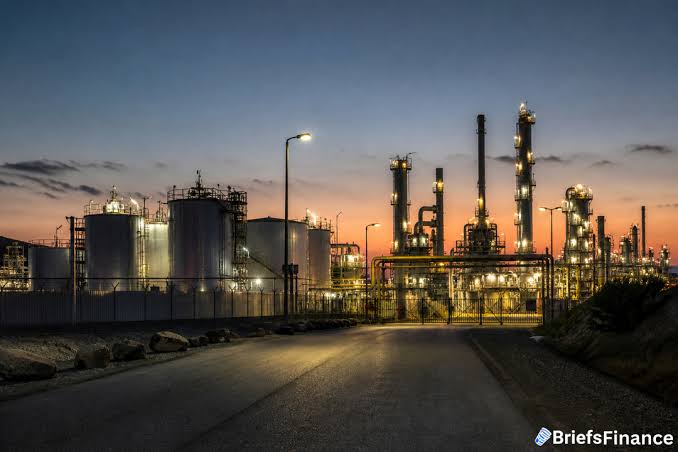
One of the most striking features of the GDP report was the performance of the oil refining sub-sector, which recorded growth of 37.47 per cent, making it the fastest-growing segment of the economy. Despite this surge, refining’s contribution to overall GDP remained negligible, with reported nominal and real output figures of just N2.5 billion and N1.8 billion respectively.
MoneyAfrica argued that the figures raise questions about whether the NBS has fully captured the output of the Dangote Refinery, which has become a major feature of Nigeria’s industrial landscape.
The firm noted that while trade statistics already reflect the refinery’s impact, manufacturing output may still be significantly understated in the national accounts.
Beyond the statistical concerns, MoneyAfrica stressed that Nigeria’s growth rate remains inadequate for the country’s development needs. The firm argued that growth of around 4 per cent is insufficient to generate the scale of employment and income gains needed to improve household welfare after years of inflation, naira depreciation, and economic adjustment. According to the firm, Nigeria would need sustained double-digit economic growth to meaningfully restore consumer purchasing power and deliver broad-based improvements in living standards.