Follow Us on Google
By Chinwendu Obienyi
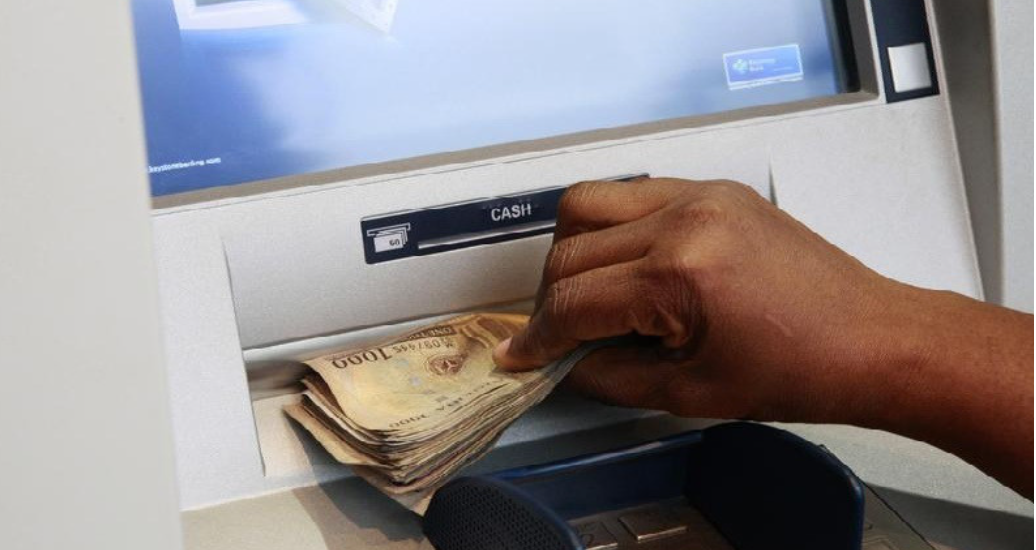
Despite steeper withdrawal fees introduced by the Central Bank of Nigeria (CBN) in March, Nigerians pulled a record N15.97 trillion from ATMs in the first quarter of 2025, as families and businesses grappled with rising living costs and cash-dependent transactions.
Data from the CBN’s first-quarter (Q1) of 2025 statistical bulletin seen by Daily Sun revealed that ATM withdrawals jumped 192.7 per cent year-on-year (y/y) from N5.46 trillion in the same period of 2024.
Also, the number of transactions also rose 95.3 per cent, to 411.42 million, underscoring the economy’s continued dependence on cash amid persistent inflation and limited digital payment adoption.
The increase came despite a new CBN policy that raised interbank withdrawal fees and ended a previous allowance for three free monthly transactions at other banks’ ATMs. The rules, announced in February and implemented in March, introduced a N100 charge per N20,000 withdrawn at another bank’s on-site ATM, and an additional surcharge of up to N500 at off-site machines.
Instead of discouraging ATM use, the new fees appear to have prompted customers to withdraw larger amounts less frequently, consolidating their cash needs to minimize costs. The data show that the average withdrawal per transaction rose from N32,660 in January to N44,500 in March, marking an 89 per cent increase from March 2024, when the average stood at about N23,500.
In January 2025, ATMs dispensed N4.81 trillion across 147.24 million transactions. The month of February saw transaction counts slipped to 134.59 million, but withdrawal values climbed to N5.40 trillion.
By March, the first full month under the new fee regime, withdrawals reached a record N5.76 trillion, even as transaction volumes fell further to 129.59 million.
Commenting on the development, economic analysts say the surge reflects how inflation continues to reshape consumer and business behavior. With inflation hovering near multi-year highs and many transactions still dependent on cash, Nigerians are opting to hold more physical currency to manage rising costs of goods and services.
Other News
Vice Chairman, Board at High Cap Securities Limited, David Adonri, explained that the new CBN fee regime has not dampened cash usage.
What has happened is that people are responding rationally, reducing the number of withdrawals but increasing the value per transaction to save on fees.
The CBN has maintained that the revised structure was designed to help banks recover operational costs and encourage efficient use of ATM infrastructure. But the latest figures suggest that Nigeria’s cashless policy goals continue to face resistance, as cash remains the preferred medium for everyday transactions in much of the country”, Adonri said.
For banks, the shift represents both an opportunity and a challenge. Higher interbank withdrawal volumes mean increased fee income, but also greater logistical demands, from replenishing cash machines to maintaining uptime across networks.
The strong rise in high-value withdrawals could also heighten security and liquidity management pressures within the banking system. Adonri added that the pattern underscores Nigeria’s ongoing struggle to transition toward a fully digital economy.
According to him, despite the rapid growth of mobile and online payments, cash remains dominant, particularly among small businesses and informal-sector operators who rely heavily on ATMs for liquidity.
“Until inflation stabilises and digital transaction costs fall, cash will continue to play a central role in household and business finance. People trust cash and when prices rise, they hold more of it”, he said.
The N16 trillion withdrawn through ATMs in the first quarter of 2025 marks a new record for Nigeria’s cash economy, and a sign that monetary disincentives alone may not curb cash dependence.
As inflation erodes purchasing power and digital alternatives remain unevenly adopted, Nigerians continue to turn to ATMs as a lifeline in a challenging economic environment.