Follow Us on Google
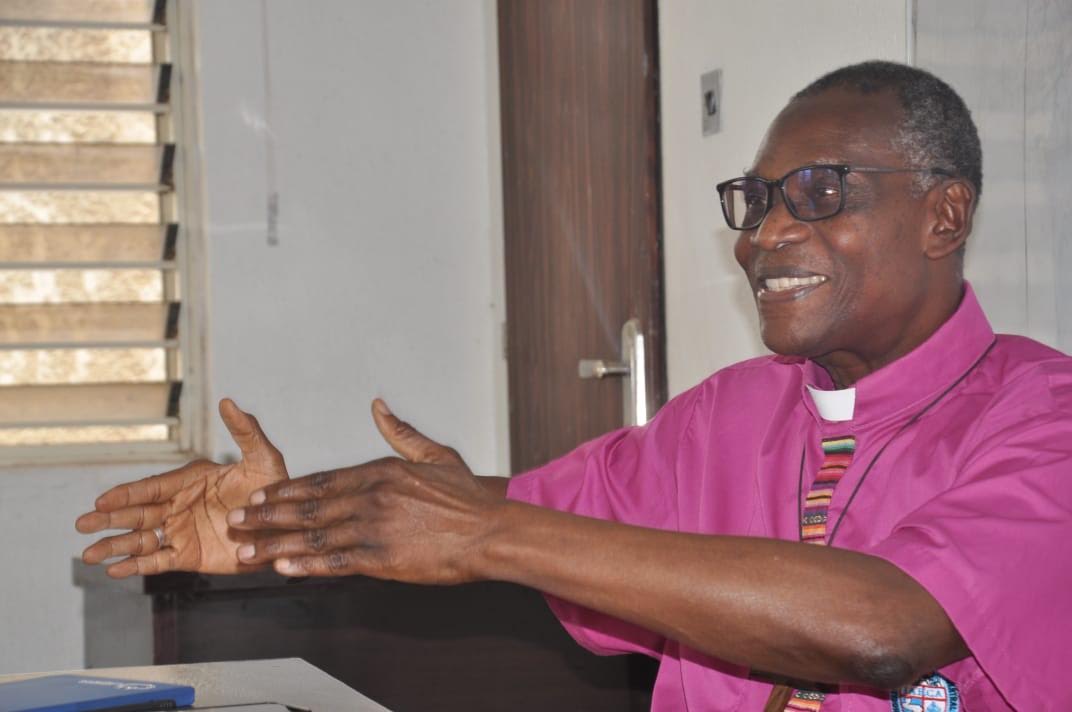
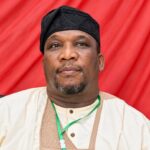
The former Secretary-General of the Anglican Communion worldwide and current Founder and Director of the Kaduna Centre for the Study of Christian-Muslim Relations, Bishop Josiah Idowu-Fearon, has challenged the Federal Government’s position on the state of the Nigerian economy, insisting that millions of citizens are struggling with poverty and the rising cost of living.
Idowu-Fearon, an Anglican Bishop and former Chairman of the Kaduna State Peace Commission, said the government should acknowledge the hardship confronting Nigerians rather than denying it, urging President Bola Tinubu’s administration to explain clearly what it is doing to address the crisis.
Speaking to journalists on Monday in Kaduna on the economy and the recent meeting between President Tinubu and Catholic Archbishops, the bishop said his experience interacting directly with ordinary Nigerians had convinced him that economic hardship was real.
“To say people are not suffering as a result of what is going on in our country, I think we are being economical with the truth,” he said.
Idowu-Fearon said his regular visits to churches and communities in Kaduna had exposed him to the effects of poverty, including difficulties in accessing transportation, food and other basic necessities.
According to him, some worshippers can no longer afford the cost of transporting themselves to church, while some families survive on only one meal a day.
“You can see suffering. There is no doubt about that,” he said. “A good number of people just have one meal a day. They can hardly even have a balanced meal.”
The bishop added that the economic crisis was also affecting religious participation, as some church members could no longer afford motorcycles, taxis or buses to attend services.
He contrasted this with churches that had enough resources to provide buses for worshippers, saying such arrangements demonstrated that many Nigerians were attending church only because religious institutions were helping to shoulder their transportation costs.
“It’s not that the people themselves can afford to take either taxis or buses to the church. So, there is poverty,” he said.
Idowu-Fearon also questioned the impact of increased government revenues and the distribution of funds to state and local governments.
“I also heard the Minister of Finance talking about trillions coming in, trillions going to the state governors, going to the local government chairmen. And I ask, where is the money? Where is this money?” he asked.
He said the rising prices of ordinary household items showed the extent of inflation confronting Nigerians.
Recalling his attempt to repair his house following a fire disaster, the bishop said he was shocked when he was quoted N5,000 for a simple bathroom soap holder that previously cost about N500.
“Something that we were paying about 500 Naira for, 5,000! Tomatoes, anything you ask, they tell you thousand, thousand. What do we do?” he said.
He also complained about electricity supply, saying his residence had been without public power supply for several days.
“Since Friday, we have not had electricity. Since Friday,” he said, adding that without solar power, food stored in his freezer could have been lost.
Rather than deny the existence of hardship, Idowu-Fearon urged the government to acknowledge the situation and communicate its plans to Nigerians.
“Instead of denying, government should say, ‘We are aware. This is what we are doing, this is what we are doing,’” he said.
The bishop also warned religious leaders against becoming too close to politicians, arguing that excessive political association could compromise their ability to speak truth to power.
“As religious leaders—whether an Imam or a priest, a Sheikh or a Bishop, whatever—when you begin to frequent politicians, you get corrupted,” he said.
He warned that religious leaders who regularly depend on politicians for financial or other benefits could lose their moral independence.
“If I give you money, if I make sure that you are very comfortable, you cannot challenge me,” he said. “You’d rather become economical with the truth, and that is the problem we are facing.”
However, he stressed that the problem was not restricted to Muslim clerics, noting that Christian religious leaders had also been compromised by political influence.
According to him, religious leaders are expected to represent their communities before God and to represent the principles of their faith before society.
On the controversy over religious identity and political leadership ahead of the 2027 elections, Idowu-Fearon urged Nigerians to move beyond the question of whether a candidate is Muslim or Christian.
He said Nigerians should instead seek leaders who genuinely practise the values taught by their respective faiths.
“Nigeria, honestly, this country does not need a Muslim or a Christian president.
“What we need is a president who is Christian or Muslim. There is a difference,” he said.
The bishop said the same principle should apply to governors, senators, ministers and other public officials.
“We don’t need card-carrying religious leaders, no. We want religious leaders that will take their faith with them,” he said.
He argued that neither Christianity nor Islam promotes corruption, tribalism, dishonesty or exploitation.
“Neither Islam nor Christianity encourages tribalism, stealing, telling lies, exploiting people,” he said.
He also cautioned Christians and Muslims against turning religious population figures into a political competition.
“As a student of Christian-Muslim relations, I object to that,” he said of claims about which religious group has a larger population.
Other News
Commenting on Kaduna State Governor Uba Sani’s decision to return to a Muslim-Christian political arrangement, Idowu-Fearon said the decision reflected the state’s complex political and religious landscape.
He noted that Kaduna had previously operated political arrangements in which Muslims and Christians shared the top executive positions before the administration of former Governor Nasir El-Rufai adopted a Muslim-Muslim ticket.
“However, the political terrain in Kaduna supports what Governor Uba Sani has done. The terrain supports it,” he said.
The bishop, who said his PhD research focused extensively on Kaduna State’s religious and social composition, urged residents to view the arrangement as an opportunity to improve cooperation among the state’s three senatorial zones.
“We should pray that this decision will bring better understanding and cooperation between the three senatorial zones in Kaduna State,” he said.
As the 2027 elections approach, Idowu-Fearon called on Imams, Sheikhs, Emirs, Bishops and traditional rulers to encourage Nigerians to vote but not dictate who they should support.
“I don’t subscribe to a traditional ruler, a Bishop, or whoever telling members what to do,” he said.
He urged religious leaders to educate their followers about candidates, government performance and the responsibilities of elected officials.
“We should have debates. We should encourage debates!” he said, urging religious leaders to help voters assess their leaders at every level of government.
He warned against the practice of using religious authority to endorse particular candidates.
“It is wrong… for any religious leader to say, you should vote for this person,’” he said.
According to him, every Nigerian will ultimately be accountable for how he or she uses the right to vote.
“For this 2027 election, with all we’re going through, every vote, God is going to ask you, ‘How did you use your franchise?’”
On insecurity, the former Kaduna Peace Commission chairman acknowledged what he described as improvements in some parts of Kaduna State, particularly Birnin Gwari.
“The government is trying, but… they should not relent. They should keep the pressure on those who are committed to creating problems,” he said.
He specifically praised the Kaduna State government, saying the situation in Birnin Gwari had improved significantly.
“Birnin Gwari today, as far as I’m concerned, is a part of the state we can flag, because things have really gone down a bit,” he said.
He nevertheless urged the authorities to maintain pressure on criminal elements rather than become complacent.
Idowu-Fearon also clarified the circumstances surrounding the end of the Kaduna State Peace Commission, which he previously chaired.
He said the commission’s enabling law provided for a five-year mandate and that its tenure had already extended beyond that period.
“We had stayed for more than five years. I think we were driving into our sixth or seventh year,” he said.
According to him, the decision followed discussions with the Kaduna State Government and was not the result of hostility between the commission and the administration. “So, it wasn’t by fiat. We had discussions,” he said.
He explained that the focus was expected to shift from conflict resolution towards conflict prevention, adding that discussions with the government on possible collaboration with the Kaduna Centre were continuing.
“There was no bad blood, no bad feeling. It was a constitutional matter,” he said.
He also called for greater attention to young Nigerians, arguing that religious leaders have a major role to play in shaping the values of the next generation.
He said religious institutions must teach young people that life should not be reduced to the pursuit of money and material possessions.
“Life is not just money, it’s not just money. It’s not material possession,” he said.
He urged Christian and Muslim leaders to work together to teach young Nigerians about human dignity, regardless of their religious affiliation.
According to him, both the Bible and the Quran affirm the dignity of humanity.
“Don’t look at me as a Kaduna Christian; look at me as a human being,” he said. “The Bible confirms it; the Quran confirms it.”
Idowu-Fearon said his Kaduna Centre was already using interfaith programmes, including scriptural reasoning, to encourage Muslims and Christians to examine their shared values.
“We have a lot in common. We are created by the same God, we are endowed by the same God,” he said.
He appealed for Nigerians to judge political leaders by their character, performance and commitment to the common good rather than their religion.
“You have honour, you have dignity, and I should see it in you,” he said. “When you look at me, don’t say ‘this is an infidel’; don’t say ‘this is a Christian’; say this is a human being with honour from God… and with dignity,” Bishop Idowu-Fearon added.