Follow Us on Google
By Chukwuma Umeorah
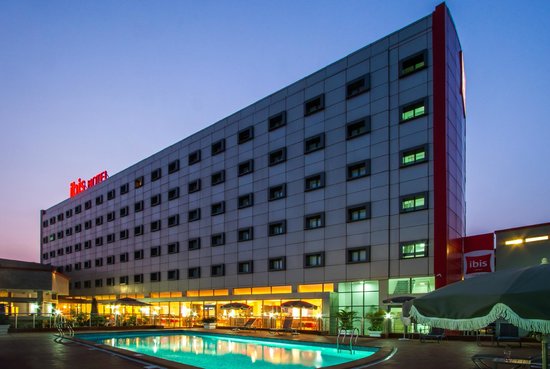
Nigerian hotels deliver stronger value for money and service quality than many of their European counterparts, despite operating under tougher conditions such as poor power supply and high operating cost, CEO of Hospitality Business School, Dr. Chef Mekwunye Eric, has said.
Speaking at the ceremonial graduation of the Hospitality Business School (HBS) in Lagos, Eric said his recent study of several European countries showed that Nigerian hospitality operators often outperform foreign peers in service delivery, even when charging significantly lower room rates.
“All the top hotels I visited, I was paying over 500 euros per night. Which is over N750,000 in naira. There’s no hotel that sells for N500,000 naira in Nigeria that is not equivalent to presidential,” he said.
“What the counterparts do in America and Europe, we work five times a year and yet we don’t give ourselves flowers.”
Eric, however, identified human capital as the most critical challenge facing the Nigerian hospitality sector. He argued that the industry’s problem is not unemployment but the shortage of employable and teachable workers capable of meeting operational demands in hotels, restaurants and allied services.
“I hear people say there are no jobs, that’s a lie. The reality is that we don’t have people who are employable,” he said.
He explained that many university graduates lack basic professional competence, discipline and problem-solving skills required in hospitality operations, even after acquiring multiple academic qualifications.
Eric said HBS was designed as an intensive finishing school to close the skills gap, stressing that its focus is on competence, discipline and industry relevance rather than numbers. “Instead of just saying you are churning out 3,000 graduates who go out and do rubbish, we take them from wherever we meet them and make them industry-ready,” he said.
He disclosed that 30 students participated in the ceremonial graduation, however, noted that graduation at the school is continuous and based on programme completion, while the ceremony is held periodically.
Beyond skills, Eric identified infrastructure deficits, especially electricity, as a major burden on hospitality operators, urging government to focus on providing an enabling environment. “Government should provide enabling environment. Power should be there. If you want to support us, support subsidised power,” he said, adding that government intervention should focus on infrastructure rather than direct financial support to private operators.
Also speaking, President of the Federation of Tourism Associations of Nigeria (FTAN), Badaki Aliyu, said the challenges in hospitality reflect broader weaknesses in Nigeria’s tourism sector, including poor infrastructure, limited access to finance and weak data.
“You cannot do this if there is no conscious effort to have infrastructural development: roads, electricity and transportation,” Ali said.
He called for the creation of a dedicated tourism fund to support investors and urged government to revive the Presidential Council on Tourism to improve coordination across ministries.
On the sector’s economic impact, Ali said tourism’s contribution to Nigeria’s Gross Domestic Product remains uncertain due to data gaps.
Graduating students echoed concerns over manpower and professionalism. One of the graduates, Chef Obike Omon , CEO of Ogik services said staff retention, poaching and internal controls remain major operational risks for hospitality businesses. “The greatest challenge we have is staffing. You train them and they go,” she said.
While commending the HBS for its role in training to close tie skill gap, Omon said that she will utilise the skills acquired at the school to strengthen operations in her business, improve service standards and build internal capacity.
The graduation ceremony, themed Hospitality Change Agents, brought together operators, educators and regulators who agreed that sustained investment in skills development, improved infrastructure and stronger policy coordination were required to position Nigeria’s hospitality sector for long-term growth.