Follow Us on Google

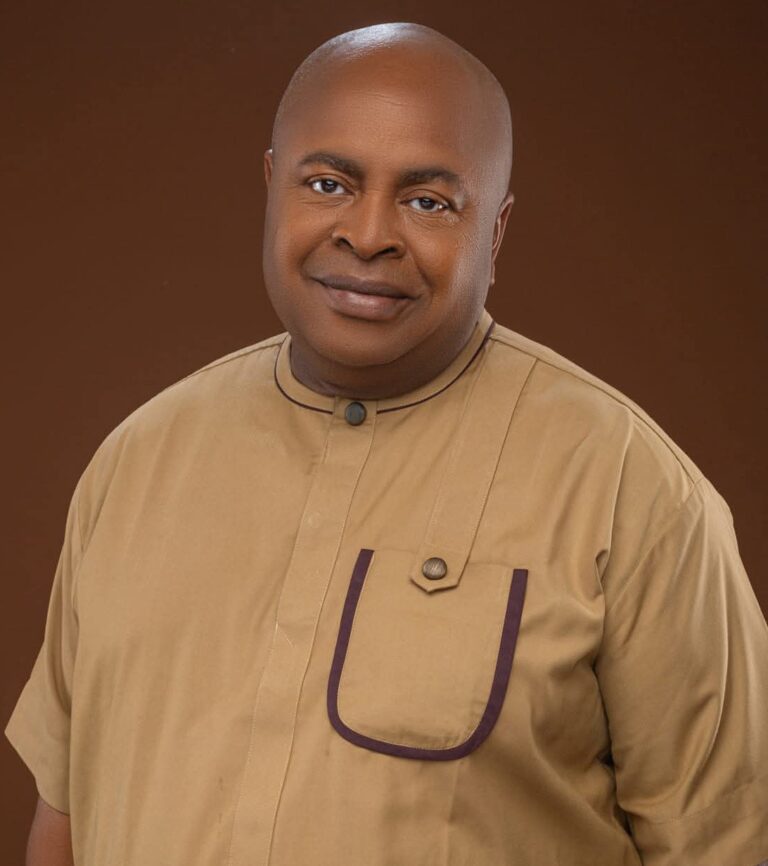
By Ladi Ayodeji
WHILE corruption is not unique to us,
we have to agree that Nigeria has a deep
culture of it. We have a skewed moral
code. Even our Constitution, the rule
book of the country, is like a handbook
of suggestions that may or may not be
strictly followed.
One could almost say it is a Nigerian
thing to look for shortcuts and try to
break rules in order to get ahead. Any-
one who chooses to follow a morally up-
right path is seen as “over sabi” (roughly
meaning, doing too much).
When to you go to a government
office, you expect to pay a bribe to “lubricate your way” for easy access. When you are trying to buy fuel during a scar-
city of petrol (which occurs almost regu-
larly now), you are expected to bribe the
attendants for easy access. The airports
are worse. Customs agents expect bribes
and gifts from travellers, failure to freely
give them may cause the process to be
harder than it needs to be.
In the streets, the so-called area boys
feel entitled to collect money from you
on the road and can even assault you
or destroy your property, if they feel
you are not generous enough. Even the
police who are supposed to enforce
and uphold the rules of the land are no
different from area boys. They are even
worse. They brutalise, rob and kidnap
citizens and this has been documented
extensively in the public domain. It is
easy to demonise the police and high-
light their many atrocities but they are
ordinary Nigerians too. They are just
self-absorbed and intoxicated by power
because they have access to deadly
weapons and can act with impunity
with little to no consequence. They feel
entitled to bribes and believe that they
must be compensated by hook or by
crook by the ordinary Nigerian for doing
their job.
This behaviour is not only limited to
miscreants and law enforcement. Even
friends, acquaintances and family feel
entitled and enable corrupt practices.
Sometimes I do not think they are
consciously aware of it. Most of our
human relationships are intangible and
of no value without monetary incentive.
We have become a society that worship
money and status without regard for
how these things are acquired.
Many parents now encourage their
children to engage in Internet fraud to
pay the bills or pressure them to look for
ways to get rich quick so that they can
“reap the fruits of their labour.” That is
why you see a 23-year-old with no tan-
gible source of income buying a duplex
and cars for his parents and he is not
questioned. In fact, the parents would
invite the local pastor or alfa to pray for
more success in whatever the child is
engaged in. As long as they see money,
they do not care how it is gotten.
It is no surprise that students are
expected to cheat during their WAEC
exams. In fact, some parents pay for so-
called “special centres” for their children
to get ahead. Little surprise then when
such students make it into the university
and do not feel the need to study hard
because they have been encouraged and
shown that there is always an easy way
out.
A child who was encouraged to cheat
through secondary school will continue
to do so into adulthood and once such
a character gets into the real world, cheating will no longer be a bad thing
to him but a smart way to get ahead. We
see this in politics today where many
leaders have questionable and obviously
forged results. Where there is evidence
of this, they are still being supported
and praised because they have money
and power. In the eyes of the average
Nigerian, they can do no wrong worthy
enough of criticism. In fact, any politi-
cian who is not willing to cheat, bribe or
mobilise thugs is seen as an unserious
politician.
We have become so used to corrup-
tion, wrongdoing and violence that
we have led our minds to believe that
corrupt practices and corrupt individu- als are the only ones who can make good
administrators.
This speaks to a larger issue of propri-
ety and values in our culture as a people.
Our love for money seems to drive us.
We are no longer seen as a honest peo-
ple. Cheats, scammers, fraudsters and an
entitled race are the adjectives foreign- ers readily use when asked about what
they think about Nigerians. How do we
repair our image and our mindset?
We must begin at the…
• Ayodeji, author, pastor and life coach,
can be reached on 09059243004 (SMS,
WhatsApp and email: ladiayodeji@
yahoo.com only)