Follow Us on Google
-
Atiku, Hashim, Afenifere, ex-General, SANs, others weigh nation’s gains, pains
-
Hardship suffocating Nigerians, insecurity persists, democracy under strain – Opposition
From Fred Itua, Juliana Taiwo-Obalonye, Romanus Ugwu, Ndubuisi Orji, Okwe Obi, Idu Jude, Abuja; Noah Ebije, Kaduna; Bamigbola Gbolagunte, Akure; Scholastica Hir, Makurdi; Paul Orude, Bauchi; Lukman Olabiyi; Emmanuel Adeyemi, Lokoja; Aniekan Aniekan, Calabar; George Onyejiuwa, Owerri; Sylvanus Viashima, Jalingo and Femi Folaranmi, Yenagoa
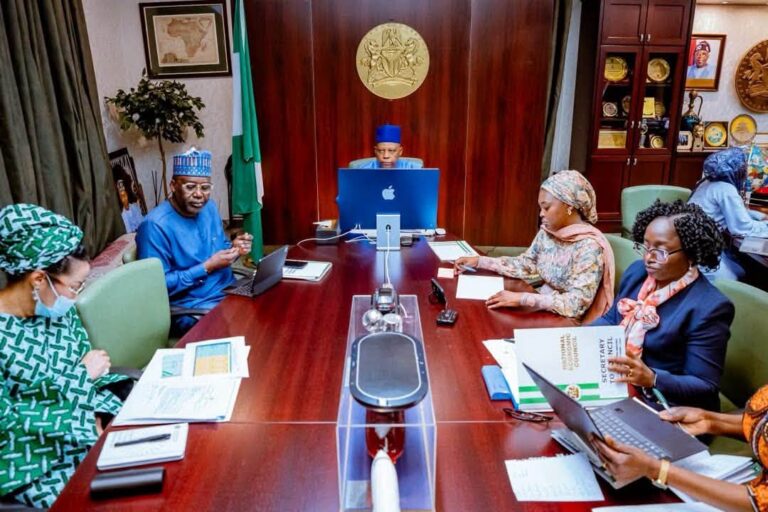
Secretary to the Government of the Federation (SGF), George Akume, yesterday defended the tough economic reforms of the President Bola Tinubu administration, saying the measures were necessary to save Nigeria from imminent collapse.
But as the country marks its 66th independence anniversary, opposition leaders, elder statesmen, lawyers and other stakeholders offered sharply contrasting assessments of the state of the nation, with many lamenting worsening hardship, insecurity, weak institutions and leadership failure.
Former Vice President and African Democratic Congress (ADC) presidential candidate, Atiku Abubakar, said Nigerians were trapped in a cost-of-living crisis, while Accord Party presidential candidate, Dr. Gbenga Hashim, challenged citizens to reject what he called Nigeria’s continued status as a “third-class nation.”
A former military officer, Gen. Yakubu Usman (retd), said the country might have been fortunate to gain independence in 1960 but had not been equally lucky with visionary leaders.
Afenifere, however, backed the direction of the Tinubu administration, insisting that the reforms were gradually reversing years of decline.
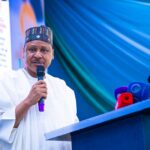
Akume, who spoke at the 66th Independence Anniversary Public Lecture in Abuja, said the removal of petrol subsidy, unification of the foreign exchange market and fiscal reforms were difficult but unavoidable decisions needed to restore economic stability.
He maintained that the reforms had begun to produce measurable gains in economic growth, infrastructure development, agriculture and energy, although he acknowledged that the challenge was to translate the improvements into jobs and higher incomes.
“This administration took office in 2023 and immediately took bold decisions needed to save the nation from imminent collapse. Such decisions include the removal of the petrol subsidy, unification of the foreign-exchange market, tax and other fiscal reforms.
“These were difficult decisions, but necessary to rebuild stability, and we have started enjoying the results,” he said.
Akume cited World Bank figures showing that Nigeria’s real Gross Domestic Product grew by 4.2 per cent in the first half of 2026, compared with 3.9 per cent in the corresponding period of the previous year.
“The task before us now is to ensure that growth translates into jobs and higher incomes for all Nigerians,” he said.
The SGF listed the Lagos-Calabar Coastal Highway, Abuja-Kano Highway, East-West Road, railway modernisation and port reforms among projects expected to improve connectivity, stimulate trade and reduce the cost of doing business.
On power, he said the administration had cleared legacy debts, increased investment and taken steps to improve electricity transmission and billing while harnessing the country’s gas resources.
He said more than 120,000 vehicles had been converted to Compressed Natural Gas through over 400 conversion centres and 90 fuelling stations.
“This shift is cutting fuel costs for motorists and commuters. CNG buses now carry millions of passengers at fares far below those of petrol buses. We will not return to the ruinous petroleum subsidy regime of the past,” he said.
On food security, Akume said the government was prioritising agricultural mechanisation, irrigation, improved seeds, fertiliser distribution, storage and local processing.
He said a $500 million World Bank credit for the Nigeria Sustainable Agricultural Value-Chains for Growth project would support smallholder productivity, strengthen value chains and improve food and nutrition security.
Akume also cited the student loan scheme, technical and vocational education, healthcare interventions and social protection programmes as part of government’s efforts to cushion hardship and expand opportunities.
On security, he said the administration was improving military equipment, intelligence gathering and inter-agency coordination, adding that a new National Threat Assessment and five-year Strategic Defence Plan were being introduced.
“Security and welfare of the people is the responsibility of government. Nothing matters more than the safety of our people,” he said.
He acknowledged that the path ahead would not be easy but insisted that the government’s objective remained shared prosperity.
Minister of Information and National Orientation, Mohammed Idris, also said the reforms of the last three years had begun correcting longstanding structural weaknesses in the economy despite the sacrifices imposed on Nigerians.
He cited 4.43 per cent GDP growth in the second quarter of 2026, expanding domestic refining capacity, renewed investments and infrastructure development as encouraging indicators.
“The reforms of the past three years have not been easy. They have demanded sacrifice and patience from Nigerians. But they have also begun the difficult process of correcting longstanding structural weaknesses and laying stronger foundations for the future.”
Idris urged the media, private sector, civil society, traditional and religious institutions, academia and citizens to contribute to national development, stressing that political differences should not undermine national unity.
Atiku, however, said the economic reality confronting ordinary Nigerians told a different story. Speaking through his Senior Special Assistant on Public Communication, Phrank Shaibu, the ADC presidential candidate said high fuel prices had driven up transport fares, food prices and the cost of operating small businesses.
“Families are working harder simply to afford less,” he said.
According to him, parents are struggling with school fees, traders are losing customers and young entrepreneurs are seeing power and transport costs consume much of their earnings.
Atiku called for greater support for local production, domestic refining and job creation.
“Tinubu made life expensive. I will make life affordable again,” he said.
Hashim similarly argued that Nigeria’s prolonged underdevelopment was not caused by a lack of human or natural resources but by the failure to deploy its enormous capacity for transformation.
In his Independence Day message, the Accord presidential candidate identified poverty, human trafficking, insecurity, institutional capture, weakening of the civil service and breakdown of security infrastructure among the factors holding the country back.
“Nigeria is not a poor country. We have behaved like a poor country because we have consistently underutilised the enormous capacity available to us,” he said.
Hashim said unemployment and insecurity thrived where economic opportunities were limited and institutions too weak to protect vulnerable citizens.
“You cannot permanently defeat trafficking without defeating the conditions that make human beings vulnerable to trafficking,” he said.
He urged voters ahead of 2027 to demand clear visions, measurable targets and accountability rather than allow elections to revolve around personality, ethnicity, religion and slogans. “Nigeria belongs to Nigerians. We must stop behaving as spectators in the affairs of our own country.”
Hashim said his economic programme envisaged transforming Nigeria into a $4 trillion economy within eight years through increased production in manufacturing, agriculture, energy, technology and services.
He proposed raising crude oil production to at least four million barrels per day within 24 months through recovery of commercially viable shut-in wells, improved security, investment in infrastructure, better crude evacuation and reforms in production costs.
But he said additional crude output should not simply mean increased export of raw petroleum.
“Four million barrels a day cannot simply mean four million barrels exported. Nigerian crude must power Nigerian industry,” he said.
Other News
Hashim also reaffirmed his proposal for N605 per litre as a starting sustainable petrol price, with a longer-term objective of reducing it towards N200–N300 through lower production and delivery costs rather than a return to an opaque subsidy regime.
“Nigeria must stop exporting the raw material and importing the finished value. We must capture the value chain here,” he said.
He also advocated deeper West African economic integration, investment in youth skills and employment, as well as rebuilding the civil service and public institutions.
“We cannot build a $4 trillion economy with institutions that cannot perform. The Nigerian state itself must be rebuilt,” he said.
For Gen. Usman, Nigeria’s anniversary should be a moment for sober reflection on what the country had achieved and where it had failed since 1960.
“Nigeria may have been lucky to gain independence in 1960, but may have not been too lucky with visionary leaders,” he said in a goodwill message to Nigerians and the people of Bauchi State.
Afenifere’s National Organising Secretary, Abagun Kole Omololu, took a different view, saying Nigeria was close to collapse because of insecurity and economic instability before Tinubu assumed office.
He praised the removal of fuel subsidy, which he described as a scam, and cited what he considered a relatively stable exchange rate as evidence of improvement.
Omololu accused opposition leaders of failing to present credible alternatives.
“It is mere hate,” he said, urging the government to remain on course.
He also called for state police, devolution of powers, a return to regional government and implementation of the recommendations of the 2014 National Conference.
Founding National Chairman of the ADC, Chief Okey Nwosu, said almost 28 years of uninterrupted democratic rule was one achievement the country could celebrate but argued that Nigeria’s democracy had been weakened by indiscipline, greed and leadership failure.
He accused the National Assembly of becoming a rubber stamp of the Executive and urged voters to resist electoral fraud and demand accountability.
Former National Secretary of the New Nigeria People’s Party, Dipo Olayokun, also said democratic gains had diminished since 2023, citing what he described as restrictions on freedom of speech, association and movement.
He nevertheless urged Nigerians to remain grateful that the country had stayed together despite its numerous challenges.
Labour Party presidential candidate, Chibuzor Okereke, identified lack of visionary leadership as one of Nigeria’s biggest problems and called for institutional and governance reforms.
He said young Nigerians should participate directly in policy formulation and legislation rather than being treated merely as instruments for election mobilisation.
A founding member and former National Auditor of the All Progressives Congress, Chief George Moghalu, identified leadership and insecurity as two critical areas in which Nigeria had fallen short.
He said insecurity was hurting agriculture, tourism and free movement, while noting that the country’s continued unity despite repeated predictions of disintegration was itself significant.
Peoples Democratic Party Board of Trustees member, Eddy Olafeso, also blamed poor leadership for Nigeria’s inability to realise its potential.
“You have more private jets than stomachs that feed on a daily basis,” he said, although he maintained that hope was not lost.
In Benue, former Comptroller of Prisons and elder statesman, Chief Iorbee Ihagh, said Nigerians had little to celebrate, citing high fuel prices, worsening hardship and persistent attacks on communities.
He questioned the country’s rising debt burden and said he had been internally displaced for 16 years and could not bury his wife in his ancestral home because of insecurity.
Ihagh called for free and credible elections in 2027.
Senior Advocate of Nigeria, Mba Ukweni, said low production remained a major threat to the country’s economy.
He blamed poor policies and excessive taxation, particularly in Cross River State, for discouraging businesses and investment.
Former Cross River State Attorney-General, Nella Andem Ewa, said Nigeria had many sound policies but suffered from weak and insincere implementation.
She said many Nigerians were desperate, angry and despondent and called for credible elections with transparent, real-time transmission of results.
In Owerri, former Imo State Attorney-General, Soronnadi Njoku, identified mediocre leadership as one of Nigeria’s major challenges.
He said the country’s inability to successfully weld its ethnic nationalities into a strong nation had compounded its problems and advocated restructuring into stronger sub-national units.
Former Rivers State House of Assembly Speaker, Emmanuel Nwiika Deeyah, criticised the practice of successive administrations abandoning projects initiated by their predecessors.
He also identified poor coordination among the three tiers of government as an impediment to sustainable development.
Former House of Representatives member, Tajudeen Yusuf, questioned how much substantive independence Nigeria had achieved since 1960.
Drawing comparisons with countries such as South Korea, he said Nigeria needed to stop building systems around individuals and develop strong, enduring institutions.
Lagos State Commissioner for Waterfront Infrastructure Development and former House of Representatives member, Ekundayo Bush-Alebiosu, described Nigeria’s story as an unfinished journey.
He cited progress in education, telecommunications and technology as evidence that the country had made gains despite its difficulties.
Chairman of the Bauchi Fertiliser Company, Kefas Musa Magaji, also urged Nigerians to remain hopeful, even as he identified leadership as the country’s greatest challenge.
Professor Jerome Nyame blamed what he described as primitive accumulation of wealth by people entrusted with public leadership.
He also faulted a divided followership which, he said, often overlooked leadership failures because of ethnic, religious and sectional considerations.
Executive Director of the Conscience for Human Rights and Conflict Resolution, Idris Abdul Miliki, called for stronger coordination among the federal, state and local governments in tackling insecurity.
As Nigeria moves towards another general election in 2027, he urged political parties, candidates, institutions and voters to respect the rules and work towards peaceful, transparent and credible polls.