Follow Us on Google
At 66, Nigeria remains one of Africa’s biggest energy powers and reckoned with globally.
The country is blessed with vast oil and gas reserves and huge production potential.
Yet, decades of energy wealth have delivered surprisingly little to citizens.
From high energy costs to epileptic power supply, Nigeria has been described by many as an oil giant offering dwarf dividends.
Experts point to perennial challenges of unbridled corruption, weak refining capacity, power shortages and poor infrastructure.
These continue to expose the country’s unfinished energy story.
After 66 years of independence, the country flaunts widespread energy poverty.
It still imports refined petroleum products with state-owned refineries lying prostrate across the country.
Stakeholders call the scenario a sickening one.
Energy experts who assessed the journey noted that the problem is not simply that Nigeria has produced too little crude or attracted too little investment. It is that the country has repeatedly failed to convert oil, gas and other energy resources into refining capacity, reliable electricity, industrial production, jobs, exports and wider economic value.
Their assessment is that the emerging recovery in crude production and the expansion of domestic refining have created a narrow but significant opportunity to correct the structural weaknesses that have defined Nigeria’s energy sector for decades.
On October 1, 1960, Nigeria attained independence with enormous natural-resource potential and the prospect of building a prosperous, self-sustaining economy.
Oil subsequently became the dominant pillar of the economy, transforming Nigeria into one of Africa’s leading crude producers and exporters.
But the economic transformation expected from that resource wealth remained elusive.
For much of the post-independence era, petroleum was treated principally as a source of government revenue rather than as the foundation for industrialisation, energy security, manufacturing and broad-based economic development.
That, according to energy policy analyst and Partner, Bloomfield Law Practice, Mr. Ayodele Oni, is one of the fundamental reasons Nigeria failed to achieve the level of development associated with its petroleum endowment.
Oni pointed to countries such as Saudi Arabia, the United Arab Emirates and Malaysia, which demonstrated the importance of linking petroleum production with refining, petrochemicals, gas utilisation and other industrial activities.
Nigeria, by contrast, spent decades exporting crude while importing refined petroleum products.
The contradiction is profound: a country exporting the raw material while importing the finished products made from it.
The consequences extended beyond the petroleum industry.
Oil revenues did not produce the level of energy infrastructure, industrial capacity or economic diversification that Nigeria’s resource endowment might have suggested.
Electricity infrastructure remained inadequate. Transmission capacity struggled to keep pace with generation needs. Domestic refining capacity deteriorated or remained insufficient, while gas that could have powered industries and electricity generation was constrained by inadequate infrastructure and, for years, significant flaring.
Yet, by the time Nigeria marked its 66th independence anniversary, there were indications of a possible change in direction.
Developments in upstream production, domestic refining and investment provided evidence of a shift from an overwhelmingly export-oriented petroleum model towards greater domestic value addition.
A new production cycle
The latest production figures provided some encouragement.
The Nigerian Upstream Regulatory Commission (NUPRC) reported that Nigeria produced an average of 1.678 million barrels of crude oil and condensate per day in August 2026, while crude oil production alone averaged 1.500 million barrels per day.
Nigeria consequently met its OPEC crude quota for the fourth consecutive month.
June also produced a strong performance, with combined crude and condensate output reaching 1.735 million barrels per day and crude production hitting 1.56 million barrels per day.
For Oni, reforms undertaken over the preceding three years, including the removal of the petrol subsidy, foreign-exchange reforms, deepwater incentives and faster regulatory approvals, began to influence investor sentiment.
But the emerging recovery raised a bigger question: what would Nigeria do with the additional barrels?
Oni believed the next milestone should be two million barrels per day by 2027.
However, the significance of such a target would depend largely on whether the additional production could be connected to domestic refining, petrochemicals, gas development, power generation and manufacturing.
Higher crude output, in the assessment of the experts, would mean little if it merely produced more export volumes without creating corresponding value within the domestic economy.
Refining renaissance
Perhaps nowhere was the change more visible than in refining.
For decades, Nigeria’s inability to refine enough of its own crude became one of the clearest symbols of its energy paradox.
By 2026, however, the landscape had begun to change.
According to the Publicity Secretary of the Crude Oil Refiners Association of Nigeria (CORAN), Mr. Eche Idoko, Nigeria had entered what he described as a “refining renaissance.”
The emergence of the Dangote Petroleum Refinery, alongside indigenous modular refineries such as Waltersmith and Aradel, demonstrated that Nigerian investors could develop significant refining infrastructure.
The Dangote refinery’s crude distillation capacity reached 700,000 barrels per day following the expansion of its operations.
For Idoko, however, the emergence of Dangote could not be mistaken for the completion of Nigeria’s refining transformation.
His argument was that the country needed an entire refining ecosystem in which large-scale facilities operated alongside modular and conventional refineries.
The objective, he said, should be to move beyond celebrating individual projects to establishing a coherent national industrial policy around refining. And at the centre of that policy had to be crude supply.
Nigeria could increase crude production without necessarily guaranteeing sufficient feedstock for domestic refineries.
Idoko argued that NUPRC’s August production figure of almost 1.68 million barrels per day was encouraging, but production growth had to translate into reliable crude availability for Nigerian refineries rather than simply higher export volumes.
He called for enforcement of the Domestic Crude Supply Obligation, transparent and commercially sustainable long-term crude supply arrangements and the institutionalisation of the Naira-for-Crude initiative for indigenous refineries.
“If Nigeria is serious about ending its historical dependence on imported refined products, its domestic refineries must have reliable access to the crude produced within the country,” he said.
From crude exports to value exports
Idoko’s argument went beyond petrol.
He believes Nigeria should evolve from a crude-exporting economy into a major African refining, petrochemical and energy-manufacturing hub.
The country, in his view, should supply refined petroleum products across West and Central Africa, create jobs, conserve foreign exchange and use its gas resources to power industries, transportation and households.
That would represent a fundamental change in the way Nigeria measured success.
For decades, the key statistics had been barrels produced, barrels exported and government revenue earned.
The next phase, Idoko argued, should be measured by how much value Nigeria retained from those barrels.
That meant refined products rather than crude, petrochemicals rather than raw hydrocarbons, industrial production rather than petroleum revenue, and energy security rather than perpetual dependence on imports. There were already signs of movement in that direction.
NMDPRA data for August showed increased crude receipts by domestic refineries and a decline in petrol imports, reflecting the growing role of domestic refining in the petroleum products market.
The Dangote refinery accounted for a significant share of that domestic refining activity, while modular refineries also contributed to local production.
But the emerging refining renaissance faced its own challenges.
Idoko identified crude supply, financing, infrastructure, competition and the country’s import regime as critical issues.
He called for the government to establish a Refinery Development Fund to address financing challenges facing indigenous refinery developers, supported by concessionary funding, credit guarantees and appropriate fiscal incentives.
He also argued that imports should complement genuine domestic supply shortfalls rather than undermine legitimate investments in local refining.
Pipelines, crude evacuation systems, coastal terminals, storage facilities and distribution infrastructure, he said, also needed to be developed to reduce logistics costs that could make domestic refining less competitive.
The production challenge
While refining was undergoing a transformation, the upstream sector still had to answer a fundamental question: could Nigeria produce enough crude consistently?
The answer had begun to look more encouraging, but the recovery remained vulnerable to operational disruptions, infrastructure problems and investment constraints.
The NUPRC attributed the improvement in August production partly to the resolution of operational challenges at the Erha field and improved crude evacuation.
The regulator’s figures therefore underlined both the opportunity and the fragility of the recovery.
Nigeria had the potential to increase production significantly, but achieving sustained output would require investment in new fields, maintenance of existing assets, pipeline security and faster development of stranded and marginal resources.
Other News
The bigger issue, however, remained what happened to the additional barrels once they were produced.
Higher output that simply fed an export-dependent model would provide only part of the answer to Nigeria’s energy challenge.
The greater opportunity, according to the experts, was to use rising production as the raw material for domestic industrial development.
The electricity contradiction
That brought the conversation to perhaps the most important part of Nigeria’s energy story: electricity.
Lead Consultant at Power Sector Prospective, Mr. Kola Olubiyo, argued that Nigeria’s electricity challenge could not be solved simply by generating more megawatts.
The focus, he said, had to be on the number of Nigerians who actually had reliable access to electricity.
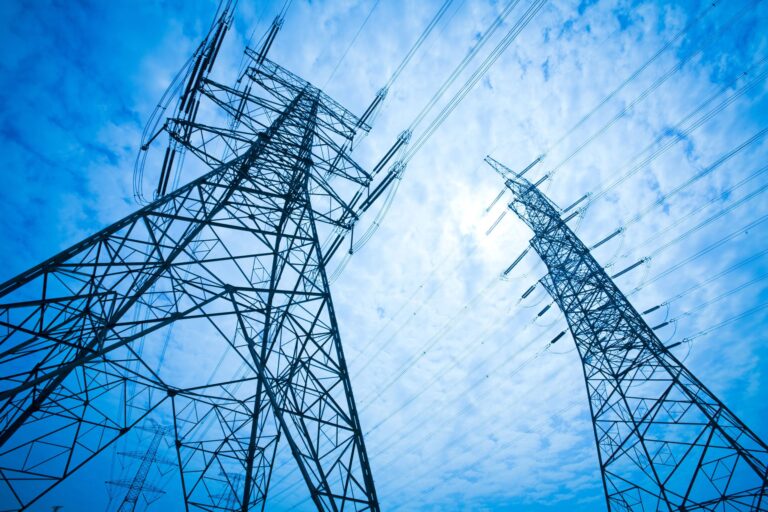
For Olubiyo, inadequate investment in transmission infrastructure remained one of the biggest constraints on the electricity value chain for more than six decades of independence.
Generation could increase, but if the transmission network lacked the capacity, reliability and technology to evacuate and distribute that electricity, consumers would continue to experience inadequate supply.
He, therefore, called for massive investment in transmission infrastructure, including modern monitoring and grid-management systems, replacement of obsolete equipment and stronger maintenance mechanisms.
The challenge was particularly significant because Nigeria needed a power system capable of supporting industrialisation.
Factories could not compete globally on expensive and unreliable electricity.
Businesses could not plan production around unpredictable power supply.
And households could not fully benefit from an economy rich in energy resources when access to reliable electricity remained uncertain.
Olubiyo, therefore, wanted investment to extend beyond generation into the infrastructure required to move electricity efficiently across the country.
He also advocated greater emphasis on local manufacturing of renewable-energy equipment.
Nigeria, he argued, should not merely import the technologies required for its energy transition. It should use its human capital, research institutions and industrial base to develop local manufacturing capacity.
That, he believed, would turn the energy transition itself into an industrial opportunity.
The missing industrial link
National President of the Petroleum Products Retail Outlets Owners Association of Nigeria (PETROAN), Mr. Billy Gillis-Harry, also emphasised refining, capital mobilisation and host-community participation.
Idoko focused on domestic crude supply, refining and value addition.
Their arguments pointed to a common structural concern: Nigeria had too often treated its energy resources as commodities rather than as building blocks for an integrated economy.
The country produced crude without building enough refining capacity.
It produced gas without developing sufficient infrastructure to fully utilise it.
It generated electricity without investing adequately across the transmission and distribution chain.
And it earned oil revenue without consistently converting that wealth into productive infrastructure and industrial capacity.
The result was an economy where the abundance of natural resources did not necessarily translate into abundance of energy.
Bringing communities into the equation
There was also another dimension that could not be ignored: the relationship between energy production and the communities where resources were extracted.
Gillis-Harry believed host-community participation needed to become more integral to crude oil production.
His argument was that communities with genuine economic stakes in oil production would be more likely to support and protect the infrastructure on which production depended.
This was particularly important in an industry that had lost significant production capacity over the years to crude theft, vandalism and pipeline disruptions.
But community participation also had a wider economic dimension.
If petroleum production was to become a foundation for development, communities in producing regions needed to see tangible benefits from the resources extracted from their environment.
That meant jobs, businesses, infrastructure and opportunities, rather than simply watching crude leave their communities while refined products and economic benefits returned at much higher cost.
Six priorities for a new energy era
Idoko identified six areas where government action was particularly important.
First was the enforcement of the Domestic Crude Supply Obligation and ensuring that Nigerian refineries had access to locally produced crude.
Second was financing for indigenous refining through a dedicated Refinery Development Fund, concessionary finance and credit guarantees.
Third was reforming the petroleum import regime so that imports filled genuine supply gaps without undermining domestic investment.
Fourth was investment in pipelines, crude evacuation systems, terminals, storage and distribution infrastructure.
Fifth was unlocking marginal fields and gas resources by addressing financing and regulatory constraints facing indigenous operators.
And sixth was making energy affordability part of industrial policy.
Rather than returning to broad petroleum subsidies, Idoko advocated targeted support for productive capacity and domestic refining.
The objective, he argued, should be to make energy cheaper by increasing productive capacity rather than permanently subsidising consumption.
Where should Nigeria be at 66?
For the experts who assessed Nigeria’s energy journey, the country should be much further ahead after six decades of oil production.
Oni’s assessment was that Nigeria had failed for too long to link petroleum production with the wider industrial economy. Rather than using oil and gas as a platform for refining, petrochemicals, manufacturing and economic diversification, the country largely relied on petroleum as a source of government revenue.
Idoko’s concern was that even as Nigeria’s refining capacity began to expand, the country could not afford to repeat the mistakes of the past by focusing only on production. For him, the real test was whether Nigerian crude could be converted into refined products, petrochemicals and other industrial outputs within the country.
Olubiyo, meanwhile, focused on the electricity dimension of the energy equation. In his view, increased generation alone would not solve Nigeria’s power problem unless corresponding investments were made in transmission infrastructure, grid management and the wider electricity value chain.
For Gillis-Harry, the missing link also included the communities from which the resources were extracted. Host communities, he argued, needed to have a genuine economic stake in petroleum production if the country was to achieve sustainable production and protect the infrastructure required to support it.
Taken together, their assessments pointed to a common conclusion: Nigeria’s energy challenge has never simply been about the volume of resources beneath its soil. It has been about how effectively those resources are converted into economic value and shared across the economy.
Nigeria has produced crude for decades, but much of the value has historically been captured outside the country through refining and other downstream activities.
It has possessed some of the world’s largest natural gas reserves, yet gas infrastructure and utilisation have not developed at the pace required to transform the electricity and industrial sectors.
It has generated electricity, but inadequate investment across transmission and distribution has limited the benefits that additional generation can deliver to businesses and households.
And it has earned enormous petroleum revenues without consistently translating those revenues into the infrastructure and productive capacity required to sustain long-term economic growth.
The next 66 years
The experts saw the developments that emerged in refining, upstream production and domestic value addition as an opportunity to change that trajectory.
The emergence of the Dangote refinery demonstrated that large-scale private investment in domestic refining was possible. Indigenous modular refineries showed that local investors could also participate in the refining value chain. The recovery in crude production provided additional opportunities for domestic supply, while reforms in the upstream sector began to support investment.
But Idoko warned that the refining renaissance could only deliver its full economic impact if domestic refineries received reliable crude supplies.
Oni stressed that higher production would have greater significance if it was connected to industrialisation rather than simply additional exports.
Olubiyo argued that the benefits of increased energy production would remain limited without massive investment in transmission and the infrastructure required to deliver reliable electricity.
And Gillis-Harry maintained that communities in producing areas needed to become genuine participants in the economic benefits of petroleum production.
Their positions suggested that Nigeria’s next phase of energy development would have to go beyond the traditional measurement of success through barrels produced and revenue earned.
The greater measure would be what those barrels generated within the Nigerian economy.
How much crude was refined locally,how much petrochemical capacity was created, how many industries were powered by domestic gas.
Others are: How much electricity reached homes and factories, how many jobs were created, how much foreign exchange was conserved, how much value was retained within the country and how much of the wealth generated from Nigeria’s energy resources reached the communities and citizens who had lived with the consequences of their extraction.
At 66 years, the more fundamental issue, as the experts argued, is whether those resources can finally become the foundation for energy security, industrialisation, value addition and broader economic prosperity.
That, in the assessment of the experts, is the unfinished business of Nigeria’s energy sector as the country marks 66 years of independence.