Follow Us on Google
By Chinenye Anuforo
[email protected]
There is a nexus between Nigeria’s gradual economic growth and the catalytic effects of the telecoms industry.
The nation’s technological landscape has evolved dramatically, from colonial-era telegraphs to the digital ecosystem that now connects over 220 million lines. The journey mirrors the nation’s ambition, resilience and occasional frustrations.
As the country marks its 65th year of independence, the Information and Communications Technology (ICT) and telecommunications sectors stand out as key engines reshaping both the economy and society.
Historically reliant on oil, Nigeria has found a new growth fulcrum in ICT and telecoms. The sector’s contribution to the national Gross Domestic Product (GDP) has become increasingly significant. According to the National Bureau of Statistics (NBS), the ICT sector accounted for 19.78 per cent of real GDP in Q2 2024, highlighting its resilience against commodity price swings. Telecoms themselves have consistently contributed around 14 per cent of GDP, supporting e-commerce, FinTech, and social connectivity at unprecedented scale.
The National Commissioner of the Nigeria Data Protection Commission (NDPC), Dr. Vincent Olatunji, emphasised that the digital economy sector is the most consistent in growth. “This growth is fueled by high mobile penetration, over 157 million active connections reported by the Nigerian Communications Commission (NCC) and broadband access reaching nearly 48 percent by 2024, aided by 5G rollout”, he said.
Nigeria’s telecom journey reflects decades of policy, reform and investment. From the first telegraphic link established by Cable & Wireless in 1886 to 18,724 fixed lines at independence in 1960, the industry has grown exponentially. The 1985 creation of NITEL, later liberalization in the 1990s, and the establishment of the NCC in 1992 paved the way for competition, culminating in the 2000 National Telecommunications Policy and GSM licensing in 2001. Operators like MTN and Glo transformed access, while infrastructure milestones such as the Glo-1 submarine cable demonstrated Nigeria’s global connectivity ambitions.
The ICT revolution has democratised economic opportunity. FinTech has become Nigeria’s most visible digital export, bringing millions into the formal financial system via mobile banking, digital wallets, and payment platforms. The sector has also become a major job creator, projected to generate over 3 million new roles by the end of 2025, particularly in AI, cloud computing, and cybersecurity. The government’s 3 Million Technical Talent (3MTT) programme has already trained over 117,000 Nigerians, exceeding initial targets.
ICT tools have further strengthened governance, from the Treasury Single Account (TSA) to the Bank Verification Number (BVN), enhancing transparency and improving access to essential services like education and healthcare. Foreign direct investment in ICT surged ninefold from $22 million to $191 million in Q1 2024, while initiatives like the National AI Strategy position Nigeria as a continental leader in emerging technologies.
MTN Nigeria Chief Executive Officer, Karl Toriola, highlighted the sector’s progress stating, “Stable policies and regulatory clarity are enabling us to reinvest in quality of service. It is a testament to how far the sector has come and how much more it can deliver.”
Other News
Yet challenges persist, broadband penetration, though improving, remains below the 70 percent target set in the National Broadband Plan, while rural areas continue to struggle with power shortages, multiple taxation, and high Right-of-Way costs.
The Chairman, Association of Licensed Telecommunications Operators of Nigeria, Gbenga Adebayo, noted that “multiple taxation and high cost of Right of Way are still major problems that need to be addressed to encourage more investments.”
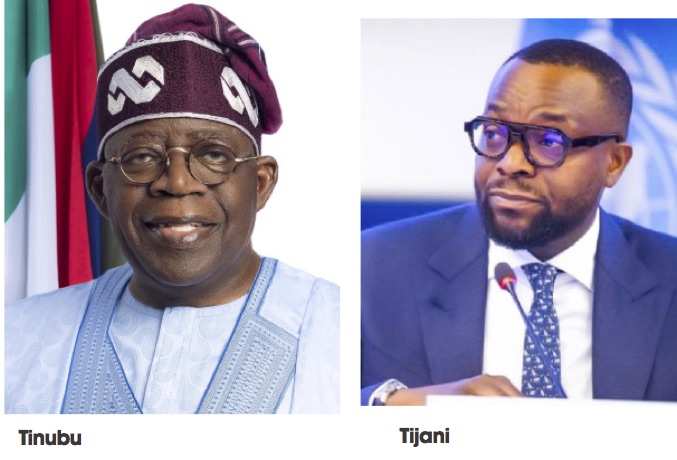
The government plans to expand fiber and tower infrastructure through Project BRIDGE, adding 90,000 km of fiber and 7,000 new towers, 80 percent of which will target underserved areas. Minister of Communications, Innovation and Digital Economy Dr. Bosun Tijani stated: “We believe we should build and are building a resilient global system to ensure Nigeria is not just keeping pace with digital infrastructure but also strengthening it.”
Africa’s digital economy could reach $712 billion by 2050, with Nigeria as its powerhouse. The country is a hub for cloud computing, projected to reach $1.5 billion by 2025, and AI, expected to grow over 28 percent through 2030. Platforms in AgriTech and HealthTech are attracting global attention for solving scalable, real-world problems.
Nigeria is also witnessing a surge in digital entrepreneurship and innovation hubs. Tech clusters such as Co-Creation Hub (CcHub) in Lagos, Ventures Platform, and Yaba Tech Hub are nurturing startups in FinTech, HealthTech, AgriTech, and AI, producing success stories like Paystack, Flutterwave, and Andela. Ifeoma Nwankwo, CcHub program manager, said, “We are creating spaces where young innovators can turn ideas into businesses that solve real problems and scale globally.”
Women and youth are increasingly at the center of Nigeria’s digital revolution. Programs under 3MTT and initiatives by private sector players are focused on mentorship, training, and scholarships to close the gender and skills gap in tech. Aisha Bello, a 3MTT graduate working in HealthTech, stated, “This program gave me the skills and confidence to develop digital solutions that impact communities.”
Consumer adoption trends highlighted how digital services are reshaping everyday life. Over 100 million Nigerians now access the internet, with social media penetration at around 55–60 percent, fueling e-commerce, ride-hailing, online education, and digital finance. Tech analyst Emeka Okafor noted, “The rise in digital adoption is not just economic, it is cultural, changing how Nigerians live, work, and learn.”
Cybersecurity and regulatory frameworks have grown alongside expansion. Policies like the Nigeria Data Protection Regulation (NDPR) and emerging cyber policies are designed to protect users, ensure data privacy, and foster investor confidence. Dr. Chinyere Okoro, cybersecurity consultant, added, “Strong regulatory frameworks give investors confidence and safeguard citizens’ data, critical for a growing digital economy.”
Sustainability is also gaining attention as telecom operators are increasingly exploring renewable energy-powered towers and energy-efficient data centers, aligning growth with environmental consciousness. Gbenga Adeyemi, sustainability lead at Airtel Nigeria, stated, “Green ICT is no longer optional; it’s central to building resilient and scalable networks.”
As Nigeria reflected on 65 years of independence, the ICT and telecoms sectors exemplify the transformative power of connectivity. From 18,724 lines in 1960 to over 220 million today, the story is one of remarkable achievement, tempered by unfinished work. The next phase, closing the broadband gap, ensuring equitable access, strengthening infrastructure, and nurturing local talent will define how fully Nigeria delivers on its promise of inclusion in Africa’s largest economy.