Follow Us on Google
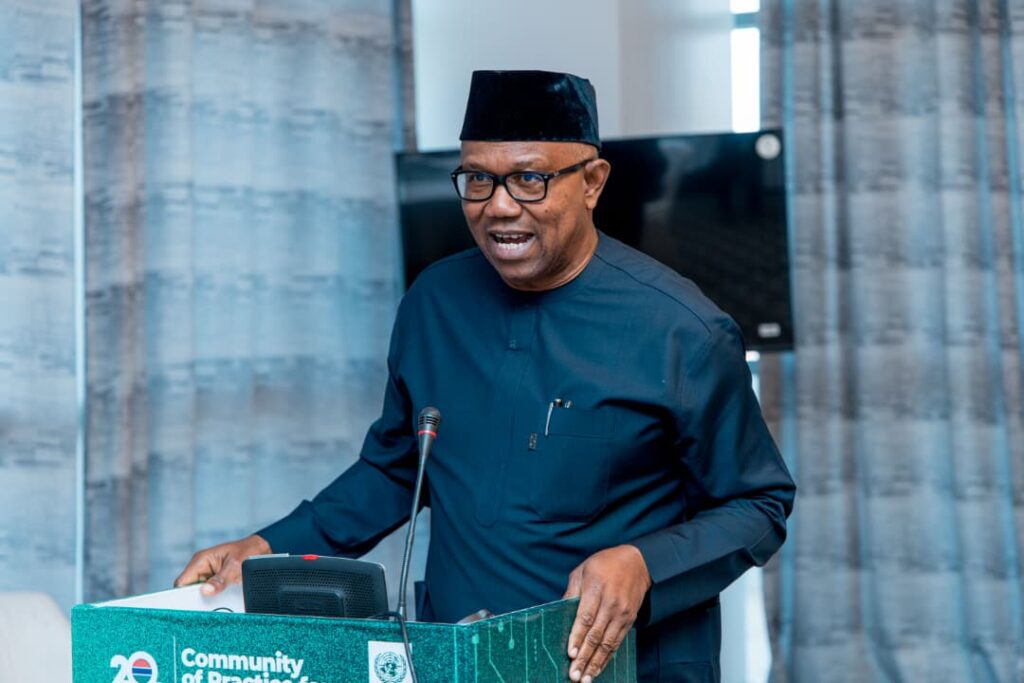
Debate over Nigeria’s electricity crisis and the credibility of political campaign promises resurfaced after Peter Obi, the Nigeria Democracy Congress (NDC) President candidate insisted that he would deliver 10,000 megawatts of electricity within four years if elected president, while declining to outline the technical pathway for achieving the target.
The issue came up during the Exclusive Live Conversation Peter Obi, aired on the Nevon HQ with journalist Rufai Oseni, where Obi was pressed on criticisms that his policy positions often lack detailed implementation frameworks.
“People say your criticism of President Tinubu is shallow, and you hardly proffer solution to what you’d have done differently. For instance, you said you’ll add 4,000 megawatts of electricity. How will you do that?” Rufai asked.
Obi responded that political messaging is often misrepresented and that expectations are not always applied evenly across politicians.
“What people do is to make sure because I don’t have sophistication of media that they make it look like nobody has said it… Somebody said if I don’t give you power, don’t vote for me. Did he tell you how he’s going to give you power? So why must my own be in the marketplace?” he said.
Pressed further, Obi pointed to his record as governor of Anambra State as evidence of his capacity to deliver on infrastructure commitments.
“I promised it as governor and delivered it to Anambra State. In four years as president, we will generate, transmit, and distribute 10,000 megawatts of electricity,” he said.
Other News
When asked how the target would be achieved, Obi declined to provide technical details, arguing that such explanations are not typically part of campaign discussions.
“I’m not going to tell you how. It is not for me to tell you how, it is for you to look at the man who is saying this… go and check political promises all over the world,” he added.
He maintained that voters should assess candidates based on credibility and past performance rather than detailed policy breakdowns during campaigns.
Rufai also noted that Nigeria’s power generation has reportedly improved compared to 2023 levels, but Obi disagreed, insisting that no new power plants had been commissioned in recent years.
“Since 2015 no new power plant has been commissioned by this government and it will not happen in the next year because it takes at least three years to make one,” he said.
The interview continues to generate reactions online, with renewed debate over political accountability, feasibility of campaign promises, and Nigeria’s electricity challenges.